By Dr. Gyan Pathak
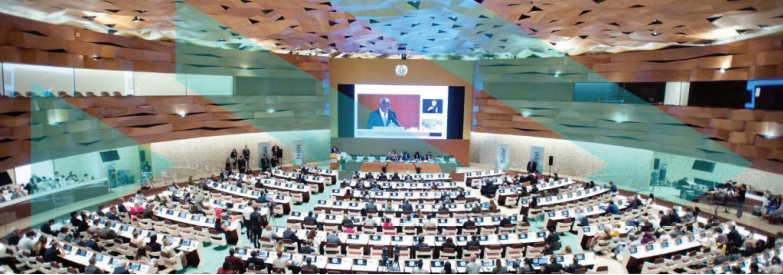
When the ILO Governing Body meets in Geneva from November 17 to 27, 2025 for its 355th Session, it will confront a world of work that looks increasingly unstable—and increasingly unequal. The global labour market is being reshaped simultaneously by artificial intelligence, geopolitical realignments, climate transition pressures, and deepening social divides. The question for the ILO is whether its tripartite model—governments, employers, and workers—can still produce meaningful governance in such a fractured world.
The session is expected to bring together representatives of governments, workers, and employers from around the world to deliberate on a broad agenda encompassing standard-setting, labour market policies, institutional priorities, and programme and budgetary matters. With the Decent Work Agenda now intersecting more directly than ever with digital transition, climate commitments, demographic shifts, and widening inequalities, the decisions taken in this session will carry significant implications for national labour policies and the future direction of international cooperation.
As the global economy enters a delicate phase marked by uneven recovery, labour market fragmentation, and persistent informality, the ILO’s Governing Body faces the complex task of steering the organization’s work through a rapidly changing world of work. The 355th Session is therefore expected to set the strategic tone for 2026 and beyond, reinforcing the ILO’s mandate to promote social justice and ensuring that workers and employers are not left behind amid global transitions.
The agenda will include key policy discussions shaping the future of work, such as the follow-up to the Second World Summit for Social Development and an update on the Global Coalition for Social Justice. Members will also review proposals to strengthen the ILO’s effectiveness and efficiency in a changing multilateral environment.
According to an ILO brief, the Governing Body will further consider country-specific developments, including the implementation of resolutions concerning Belarus, Myanmar, Venezuela and Guatemala.
This ILO session is significant in the current fractured and tense global scenario. Moreover, the Governing Body is the ILO’s Executive Body, which meets three times a year – in March, June and November – to take decisions on ILO policies, set the agenda for the International Labour Conference, and adopt the Programme and Budget.
This session matters because the ILO’s voice is urgently needed. Work in 2025 is no longer governed by the institutions of the 20th century, yet the norms of the 21st are still under construction. Algorithms increasingly make managerial decisions that once required human judgment. Digital labour platforms—untethered to geography—create new dependencies and new vulnerabilities. Additionally, the push for decarbonization is reconfiguring entire sectors, often without adequate protections for workers caught in the transition. The stakes are high: if global labour standards do not keep pace with these transformations, inequalities will widen even further.
At the heart of the Geneva session will be debates on how the ILO can redefine its strategic priorities for the coming years. Member states and social partners must decide whether to take bolder steps in governing AI-mediated work, shaping protections for gig workers, and ensuring fair transitions for workers in climate-sensitive industries. The world is watching to see if the Governing Body can translate broad commitments to “decent work” into actionable governance that responds to the realities of 2025—not those of the past.
An equally pressing concern is institutional capacity. The ILO is expected to do more than ever—provide guidance on digital work, strengthen social protection systems, support countries through economic shocks, and help manage climate-related restructuring. Yet its financial and operational resources remain under strain. The Governing Body will therefore need to address a hard truth: without strengthening the organization itself, expectations will continue to outstrip its ability to deliver.
This year’s session will also test the resilience of tripartism. Workers’ groups are demanding firmer safeguards against algorithmic surveillance and deteriorating wage conditions. Employers seek greater flexibility to adapt to fast-changing markets. Governments are torn between competing pressures—ensuring competitiveness while maintaining social protection and rights. Whether consensus can emerge from these divergent starting points will reveal much about the future of social dialogue as a tool for global governance.
Ultimately, the 355th Session is not just a meeting of an international institution; it is a reflection of the world’s struggle to redefine fairness and justice in an era of rapid change. If the ILO can chart a credible path that protects workers, supports responsible enterprises, and strengthens social protection, it will demonstrate that multilateral cooperation still has the power to shape the future of work. If not, the risk is that labour governance will drift into a patchwork of national rules, corporate prerogatives, and digital market forces—with social justice left behind.
The Geneva session will not resolve every challenge. But it can send a powerful message: that even in times of fragmentation and uncertainty, the world is still willing to come together to negotiate the rules that protect human dignity in the workplace. That message is more important today than at any point in the last decade.
With critical debates ahead, the Geneva session will be watched closely by policymakers, trade unions, employer bodies, and development partners worldwide, all looking for clear signals on how the ILO plans to address emerging challenges while strengthening its foundational commitment to decent work for all. (IPA Service)