Chander Mohan Sharma
Nestled along the western coast of India, the Jawaharlal Nehru Port Authority (JNPA) has long stood as the country’s premier container-handling port, a critical gateway linking India’s economy to global trade networks. Established in 1989 and evolving into India’s first Landlord Port, JNPA has set benchmarks in operational efficiency, digital innovation, sustainability, and trade facilitation, positioning itself as a cornerstone of India’s maritime infrastructure.
During the recent PIB J&K Media Tour to Mumbai, journalists from Jammu and Srinagar were given an exclusive insight into JNPA’s transformative role in national and regional development. Addressing the delegation, Unmesh Sharad Wagh, Chairman, JNPA, described the port as “not just a port, but the heartbeat of India’s economic connectivity.” For Jammu and Kashmir, this connectivity is more than symbolic. The Union Territory’s economy depends heavily on exports such as handicrafts, dry fruits, and horticultural produce, all of which require timely and cost-effective logistics to reach domestic and international markets.
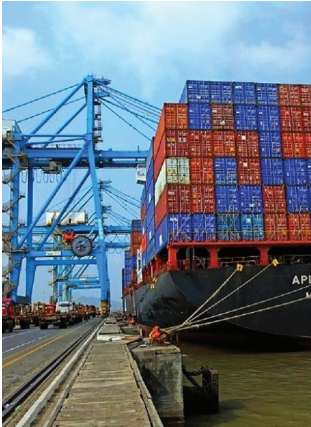
JNPA currently operates five major container terminals — BMCT (PSA), NSICT and NSIGT (DP World), GTI (APM Terminals), and NSFT (JNPCT) — handling 10.1 million TEUs and 155 million tonnes of cargo annually. The port’s modernization projects, including BMCT Phase-II and additional liquid terminals, are designed to accommodate growing cargo volumes while enhancing operational efficiency. Initiatives like RFID and OCR-based gate automation, Sagar Setu digital platform, e-delivery orders, and ERP-integrated mobile apps have reduced dwell time, streamlined operations, and reinforced JNPA’s standing as India’s top port in the World Bank Container Port Performance Index 2024, rising from 96th to 23rd globally.
The port’s sustainability drive aligns with India’s green port policy. Over 1.1 lakh trees have been planted using the Miyawaki method in the Special Economic Zone (SEZ), electric and CNG vehicles reduce over 200 tons of CO₂ annually, and battery-swapping electric trucks and shore power supply cut emissions by an additional 500 tons each year. Plans are underway to deploy 632 electric trucks by 2029, further reducing the carbon footprint of port operations.
JNPA’s SEZ, spanning 277 hectares, is a hub for port-led industrialization. With over 54 plots leased to businesses in warehousing, manufacturing, and food processing, the zone not only facilitates exports but also generates employment opportunities, enhancing economic linkages for regions like Jammu and Kashmir. Improved multi-modal connectivity via NH-348, SH-54, Amra Marg, and the Western Dedicated Freight Corridor, alongside the upcoming Indore-Manmad rail line, ensures faster cargo movement, reducing logistics costs for northern states, including J&K.
For Jammu and Kashmir, JNPA’s operational and infrastructural excellence translates directly into tangible benefits: quicker export of local produce, better access to international markets, and integration of regional industries into national and global value chains. By linking landlocked regions with the world, JNPA enables local artisans and farmers to compete on a global stage, boosting economic resilience and fostering entrepreneurship.
The port also prioritizes skill development and global collaboration. Through the JNPA-Antwerp Port Training and Consultancy Foundation, over 1,000 port officers from India and abroad have undergone specialized training, enhancing maritime expertise. Such programs open opportunities for J&K stakeholders to engage with global best practices, further strengthening the Union Territory’s trade capabilities.
The PIB J&K Media Tour highlighted how strategic infrastructure like JNPA is not merely about moving cargo — it is about connecting regions, empowering economies, and facilitating growth. For Jammu and Kashmir, JNPA is more than a distant port; it is a lifeline that ensures the Union Territory’s products, talent, and potential reach markets far beyond its borders, embodying the promise of inclusive national development.