By Ravi Rohmetra
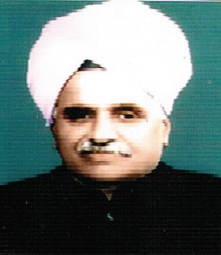
The world has witnessed rulers, conquerors, saints, sages, scientists, and thinkers who shaped human civilization. Equally significant have been reformers who risked their lives to fight social evils, eradicate outmoded customs, and guide society toward progress. India has been blessed with many such noble sons and daughters, and one of the most illustrious among them was Sher-e-Duggar Lala Hans Raj Mahajan, whose life and teachings form a golden chapter in the history of Duggar land and the nation.
Early Life and Education
Born on 2nd October 1866 at Hamirpur Sidhar in Akhnoor, Jammu, Lala Hans Raj was the son of Lala Harish Chand Mahajan. Initially educated in Persian and Urdu by Mian Innam-ud-Din at his village mosque, his brilliance caught the attention of Maharaja Ranbir Singh during a village visit. Impressed by young Hans Raj’s intelligence, the Maharaja arranged for his higher studies in Jammu under Choba Ganesh Prasad and Choba Janki Prasad.
The date of his birth holds special significance, as it coincides with the birthdays of Mahatma Gandhi and Lal Bahadur Shastri, two other stalwarts of India. Lala Hans Raj later studied law, securing his degree with distinction, and soon became known both as a lawyer and a compassionate social worker.
The Emergence of a Social Reformer
By the late 19th century, political activity was still restricted in Jammu and Kashmir, but the winds of social awakening were being felt. In 1892, Lala Hans Raj entered public life and founded the Mahajan Sabha, laying the foundation of a lifelong mission dedicated to social service. Over the next five decades, until his death in 1944, he dominated the region’s social reform movement.
He pioneered the formation of various organizations such as the Rajput Sabha, Anjuman-i-Islamia, Dogra Sadar Sabha, and later the Akhil Bharatiya Mahajan Shiromani Sabha, working tirelessly for communal harmony, education, and social justice. These secular associations promoted cooperation among Hindus, Muslims, and Sikhs in the spirit of unity and reform.
Reformist Initiatives and People’s Welfare
Lala Hans Raj’s reformist zeal extended to almost every sphere of public life. His areas of work included:
Campaigning for Swadeshi and urging people to adopt khadi.
Founding a Khaddar workshop at Purani Mandi, Jammu.
Advocating temperance, women’s rights, and widow remarriage.
Fighting against dowry, child marriage, untouchability, and caste discrimination.
Simplifying rituals at marriages, deaths, and other ceremonies to discourage wasteful expenditure.
Establishing Ved Mandir Ashram in 1916, which provided shelter to orphans and promoted Vedic learning while supporting cow protection.
Championing education and economic betterment of backward regions.
Assisting widows, orphans, and destitute families with compassion.
His guiding principle was simple: “Service to humanity is service to God.” This earned him the love and reverence of the masses, who fondly called him their “Godfather.”
Journalism and Advocacy
Understanding the power of ideas, Lala Hans Raj started two monthly newspapers in 1907—The Dogra Gazette and Mahajan Niti Patra—which became platforms for raising social issues, demanding justice, and promoting indigenous industries. Through these, he forcefully advocated job reservations for locals, ultimately compelling the State to introduce the State Subject Certificate for employment opportunities.
Role in Communal Harmony
His dedication to peace was most visible during the 1932 Srinagar riots, when clashes broke out between Muslims and Kashmiri Pandits. Risking his own life, he saved the family of Pandit Amarnath Kak from an enraged mob and relocated them to safety. Later, with Hindu leader Keshav Bandu, he convened a conference of Hindus, Muslims, and Sikhs to restore communal harmony. His impartiality and courage won him respect across communities.
Legislative Role and Development Work
Elected as a member of the State Assembly in 1936, Lala Hans Raj focused on the needs of neglected regions, particularly the Kandi belt, where water scarcity caused immense suffering. His initiative of introducing tube wells proved a path-breaking solution, benefiting generations.
His persistent efforts also led to the construction of a bridge over the Chenab at Akhnoor and the establishment of Prince of Wales College in Jammu, an enduring contribution to higher education.
Founder of Multiple Institutions
Lala Hans Raj Mahajan founded or helped establish numerous organizations that continue to impact society:
Dogra Sadar Sabha and Rajput Sabha
Mahajan Sabha and later Akhil Bharatiya Mahajan Shiromani Sabha
Anjuman-i-Islamia (for communal harmony)
Istri Jeevan Sudhar Sabha (for women’s empowerment)
Ved Mandir Ashram (for orphan care and spiritual growth)
Justice Mehar Chand Mahajan Charitable Hospital, Jammu
Hans Raj Mahajan Women & Child Welfare Society
Various community bhawans, schools, and welfare centers
These institutions reflect his vision of collective upliftment, transcending caste, creed, and religion.
Tributes and Legacy
On 26th/27th February 1944, Sher-e-Duggar breathed his last at the age of 77. His passing left a void mourned by people of every community. Political and non-political organizations alike condoled his death, recognizing the immense loss to Jammu and the nation.
Today, his memory lives on through institutions such as Lala Hans Raj Park in Jammu, Hans Raj Bhawan, community halls, welfare societies, and charitable hospitals. Every year, his birth anniversary on 2nd October is commemorated at his statue in Jammu, where people gather for prayers, hawan, and distribution of prasad. Awards are also conferred on achievers from different walks of life, keeping his ideals alive.
A Visionary Far Ahead of His Time
Lala Hans Raj was not just a reformer; he was a visionary far ahead of his time. He foresaw the need for education in Urdu for government employment, pressed for local job reservations, stood against orthodox evils, and encouraged progressive customs like widow remarriage. Known as both “Sher-e-Duggar” and the “Dogra General,” he combined fearlessness with humility, wisdom with tolerance, and compassion with discipline.
To this day, he is remembered as a true karmayogi, a man who placed service above self, embodying the highest moral values. His ideals of harmony, self-reliance, simplicity, and social justice remain relevant in contemporary society.
Conclusion
The best tribute to Sher-e-Duggar Lala Hans Raj Mahajan is not merely to celebrate his anniversaries or name landmarks after him, but to emulate his life of dedication to the downtrodden, his fight against injustice, and his vision of a just and compassionate society.
He was indeed one of the tallest leaders of his time, loved across communities and classes. His life’s work—spanning social reform, philanthropy, communal harmony, and institution-building—makes him an enduring icon of Jammu’s history and India’s social awakening. For generations to come, his name will remain alive in the hearts of the people as their “Guiding Star.”
(Ravi Rohmetra is a Social Worker and a freelance writer. He os an Executive Member Jammu Central Mahajan Sabha & can be reached at 9419652999(M)