By Omkar Dattatray
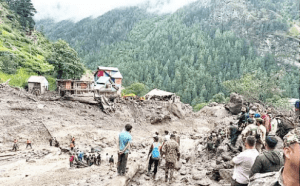
Those gathered at Chisoti village for breakfast on their way to the Machil Mata Yatra were caught unawares by nature’s fury. A sudden cloudburst, followed by flash floods and landslides, washed away everything in its path. The devastation claimed at least 65 lives, mostly pilgrims, left hundreds injured, and 33 people still missing. Makeshift shops were destroyed beyond repair, and silence now prevails in the tragedy-hit areas. Both the central government and the UT administration are leaving no stone unturned in rescue and rehabilitation efforts.
We live in an age of science and technology where weather forecasting is a critical tool for early warnings to help people avoid natural calamities. Unfortunately, no such forecasts or warnings were issued, leaving the people of Chisoti and surrounding areas vulnerable. Timely alerts could have saved many lives and minimized destruction.
What has happened cannot be undone, but in the future, we must establish robust forecasting and forewarning systems. This would allow people to move to safer places during natural calamities, reducing the loss of lives and property. The real question is: have we learnt any lessons from this tragedy? Sadly, human memory is short, and as the old Urdu saying goes, “Raat gayi, baat gayi.”
Our central and UT governments, along with NDRF, SDRF, NSS, local volunteers, and security agencies, must remain prepared to help people during such calamities. Disaster management agencies, police, CRPF, and other forces should make all necessary preparations based on weather forecasts to mitigate risks. Had there been scientific forecasts and early warnings, the loss in Kishtwar could have been reduced significantly.
Even a week after the incident, the Jammu and Kashmir government was unable to identify whether the disaster was caused by a cloudburst or a glacial lake outburst. Chief Minister Omar Abdullah, after chairing a review meeting, admitted the cause was still unknown. He rightly observed that the tragedy struck during the busiest time of the year at Chisoti, which worsened the impact. The CM emphasized the need for long-term strategies to safeguard vulnerable areas and stressed that advisories and SOPs for high-risk regions must be strictly followed.
This tragedy once again highlights J&K’s growing vulnerability to extreme weather events caused by climate change. It also raises questions about disaster preparedness. While nature’s fury cannot be controlled, adequate planning and precautions could certainly minimize the damage. Living in eco-fragile mountainous terrain, J&K is prone to floods, landslides, earthquakes, and cloudbursts. Climate change has only increased their frequency.
Unfortunately, both governments and people fail to learn lessons. The devastating floods of September 2014, which ravaged Srinagar, are already a forgotten chapter. Authorities continue to allow the destruction of floodplains and wetlands, which once served as natural reservoirs. Encroachments, deforestation, and unregulated development have all contributed to the fragility of our environment. These so-called “natural” disasters are, in many ways, man-made.
In the aftermath of the Kishtwar and Kathua cloudbursts, the CM rightly directed experts to identify vulnerable places and suggest preventive measures. He also called upon religious leaders to regulate smaller pilgrimages in mountainous regions. The need of the hour is to strengthen disaster prevention rather than merely manage disasters after they occur.
To conclude, it is evident that we have not learnt enough from tragedies like Kishtwar and Kathua. Both the government and people must strike a balance between development and environmental protection. If we continue to exploit nature recklessly, disasters will keep claiming lives. Only by respecting ecological balance and preparing adequately can we hope to minimize the impact of future calamities.
The author is a columnist, social and KP activist, and freelancer.