
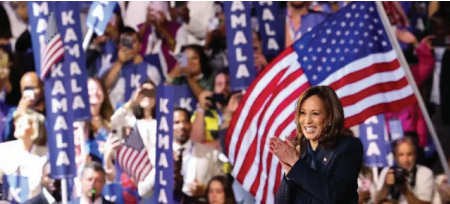
Former Vice President’s memoir is a sort of testament for her 2028 bid
By T N Ashok
NEW YORK: Former U.S. Vice President Kamala Harris’s forthcoming memoir “107 Days” represents more than just a post-campaign reflection—it signals a calculated political repositioning that could reshape Democratic leadership dynamics ahead of the 2028 presidential race.
Her pointed criticism of Joe Biden’s reelection decision-making process marks a dramatic departure from the loyalty that defined her vice presidency, raising critical questions about Democratic strategy, missed opportunities, and the party’s future direction.
Harris’s decision to publicly critique Biden stems from a recognition that unwavering loyalty became her campaign’s fatal flaw. Her memoir reveals frustration with Biden’s inner circle, whom she accuses of actively undermining her visibility and success. “When polls indicated that I was getting more popular, the people around him didn’t like the contrast that was emerging,” Harris writes, exposing deep-seated tensions within the administration.
This break with Biden represents Harris’s attempt to establish independent political credibility after being perceived as his dutiful deputy. By calling Biden’s solo decision-making “reckless,” she positions herself as someone who would have made the tough calls necessary to prevent Trump’s return. The critique serves dual purposes: it distances her from an unpopular administration while demonstrating the political courage she failed to show during the campaign.
The timing is deliberate. With Biden’s political career effectively over and Trump’s second term already generating controversy, Harris can afford to burn bridges with her former running mate while building new ones with frustrated Democratic voters who felt betrayed by the party’s 2024 performance.
Harris’s memoir inadvertently highlights one of 2024’s greatest Democratic miscalculations. Had she differentiated herself from Biden’s policies during the campaign—particularly on Gaza, immigration, and economic messaging—she could have retained crucial voting blocs that abandoned Democrats.
Arab and Palestinian Americans, frustrated with Biden’s Israel policy, might have stayed home rather than defecting. Latino voters, concerned about both border security and economic opportunity, could have been reassured by a more nuanced approach.
Her infamous “View” appearance, where she couldn’t name a single thing she’d do differently than Biden, exemplifies this strategic error. A candidate willing to acknowledge policy shortcomings while highlighting economic successes—job growth, controlled inflation trajectory, and concrete plans for grocery price relief—might have presented a more compelling alternative to Trump’s populist messaging.
The irony is stark: Harris now criticizes the very loyalty that prevented her from making these distinctions when they could have changed the election outcome. Her retrospective clarity underscores the missed opportunity to build a broader, more diverse coalition by offering policy contrasts rather than continuity.
Harris’s criticism must be viewed through the lens of her unique path to the nomination. When Biden withdrew in July 2024, Democratic leaders quickly coalesced around Harris to avoid a divisive primary battle with limited time before the general election. This expedited process, while pragmatically necessary, created political obligations that constrained her campaign messaging.
Her memoir suggests she felt beholden to defend Biden’s record rather than chart an independent course. “As loyal as I am to President Biden, I am more loyal to my country,” she writes, implying that this loyalty hierarchy should have been reversed during the campaign. The expedited nomination process denied her the opportunity to develop distinct policy positions through primary competition, leaving her tethered to an administration facing headwinds on multiple fronts.
This dynamic raises questions about whether Harris’s current criticisms represent genuine policy disagreements or post-hoc rationalization of campaign failures. Either way, her willingness to break with Biden now suggests she won’t repeat the mistake of excessive deference in future political endeavours.
Harris’s campaign decision to emphasize “democracy under threat” while underplaying economic achievements represents another strategic miscalculation her memoir implicitly acknowledges. While Trump effectively exploited voter frustration over prices and living costs, Harris focused on constitutional and democratic norms that, while important, felt abstract to struggling families.
The bitter irony is that Trump has now validated Harris’s democracy warnings while simultaneously worsening the economic conditions he promised to fix. Grocery prices have continued rising under Trump’s early policies, vindicating Democratic economic stewardship while proving Harris’s democratic concerns prescient. Yet this vindication comes too late for electoral purposes, highlighting the importance of message timing and voter priorities.
Harris’s current positioning suggests she understands this lesson. Her emphasis on Biden’s policy successes—job creation, inflation management, and economic stability—indicates a future approach that would lead with economic competence while weaving in democratic preservation themes.
Despite public statements about focusing on her memoir and other pursuits, Harris’s strategic positioning strongly suggests preparation for another presidential run. Her Biden critique serves multiple 2028 primary purposes: establishing independence from an unpopular predecessor, demonstrating lessons learned from 2024, and positioning herself as the candidate who can unite Democratic factions while appealing to swing voters.
However, Harris faces significant primary competition from governors like J.B. Pritzker and Gavin Newsom, who offer different strengths and regional appeals. Her memoir’s timing—early in Trump’s second term when Democratic frustration peaks—allows her to shape the post-Biden narrative before other candidates fully engage.
The challenge for Harris lies in convincing Democratic voters that her 2024 failures stemmed from structural constraints rather than personal limitations. Her willingness to criticize Biden suggests she’s prepared to run a more aggressive, independent campaign next time.
Harris’s critique exposes a broader problem facing Democrats: the absence of unified, effective opposition to Trump’s agenda. Her complaints about lacking support from Biden’s team mirror current Democratic struggles to present coherent resistance to Trump’s policies. The fragmentation she describes within the Biden administration now characterizes the entire party.
The potential coalition she envisions—Harris providing national experience, Pritzker offering Midwestern pragmatism, and Newsom delivering West Coast innovation—could address this leadership vacuum. Such cooperation, whether formal or informal, might help Democrats develop more effective messaging and policy alternatives ahead of the 2026 midterms.
Yet this coalition remains hypothetical. Harris’s memoir represents her opening move in what promises to be a competitive race for Democratic leadership, one where past loyalty matters less than future vision.
Kamala Harris’s memoir represents a high-stakes political gamble. By breaking with Biden, she risks alienating loyalists while potentially attracting voters who want fresher Democratic leadership. Her retrospective insights about coalition-building, economic messaging, and political independence suggest hard-won wisdom that could serve her well in future campaigns.
Whether this represents genuine evolution or calculated repositioning remains unclear. What is certain is that Harris has chosen to fight for Democratic leadership rather than fade into post-defeat obscurity. Her success will depend on whether voters view her Biden critique as evidence of growth or an excuse for previous failures.
As Democrats grapple with Trump’s return and their own strategic failures, Harris’s memoir serves as both confession and campaign document—a rare political hybrid that could reshape the party’s future or represent the final chapter of a promising but ultimately unsuccessful national political career. (IPA Service)


