PRABHU RAZDAN
There must be hardly any legal expert, lawyer, judge–serving or retired or student of law who does not know or have heard or read about Kesavananda Bharati.
And there is no future student of law who won’t be studying Kesavananda Bharati and the basic structure doctrine of the Indian Constitution.
Who is Kesavananda Bharati and his case that helped establish the basic structure doctrine of the Indian Constitution. Let’s have a look.
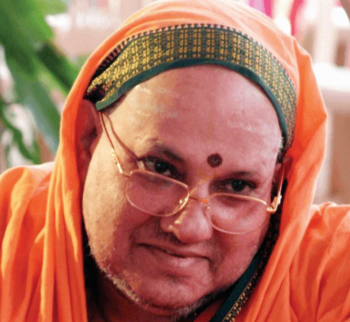
Kesavananda Bharati was born on December 9, 1940 who passed away on September 6, 2020. He was an Indian Hindu monk and the Shankaracharya of Edneer Mutt, a Hindu monastery in Kasaragod district, Kerala, India, from 1961 until his death.He shot into prominence as the petitioner in the landmark Supreme Court case, Kesavananda Bharati v. State of Kerala (1973), which established the Basic Structure Doctrine of the Indian Constitution, a pivotal moment in Indian constitutional, legal and democratic history.
Early Life and Background
Born to Manchthaya Sreedhara Bhatt and Padmavathi Amma in Kerala, India, Kesavananda Bharati embarked on a
spiritual journey at the age of 19 who took sanyasa and was appointed as the head of Edneer Mutt in 1961. He belonged to the lineage of Thotakacharya, one of the four original disciples of Adi Shankaracharya, the proponent of Advaita Vedanta.
As the Peetadhipathi (head) of Edneer Mutt, he was conferred the honorific title Srimad Jagadguru Sri Sri Sankaracharya Thotakacharya Keshavananda Bharathi Sripadangalavaru.
He was a patron of Kannada culture, arts, and education in the border district of Kasaragod. Under his guidance, the mutt was established.
Reason for attaining fame:
It was the Landmark Case of Kesavananda Bharati v. State of Kerala which made Kesavananda Bharati famous.
The background of the case is that in 1970, Kesavananda Bharati challenged the Kerala government’s attempts to acquire land owned by the Edneer Mutt under the Kerala Land Reforms Act of 1963, as amended in 1969 and 1971. He argued that these actions violated his fundamental rights under the Indian Constitution, including:
Article 25 (Right to practice and propagate religion)
Article 26 (Right to manage religious affairs)
Article 14 (Right to equality)
Article 19(1)(f) (Freedom to acquire property, later removed as a fundamental right)
Article 31 (Compulsory acquisition of property)
Noted jurist Nani Palkhivala, along with Fali S. Nariman, represented him and expanded the case to challenge the constitutional validity of the 24th, 25th, and 29th Constitutional Amendments, which aimed to enhance Parliament’s amending powers and limit judicial review.
The case was heard by a 13-judge bench, the largest in Supreme Court history for over 68 days from October 31, 1972, to March 23, 1973. The 703-page judgment, delivered on April 24, 1973, resulted in a 7:6 majority verdict.
The bench comprised of Chief Justice S. M. Sikri, Justice J.M.Shelat, Justice K.S. Hegde, Justice A.N.Grover, Justices A.N. Ray, Justice P. Jaganmohan Reddy, Justice D.G. Palekar, Justice H.R. Khanna, Justice K.K. Mathew, Justice M.H. Beg, Justice S.N. Dwivedi, Justice A.K. Mukherjee and Justice Y.V. Chandrachud.
Outcome of the case: The Supreme Court upheld the land reform laws, meaning Kesavananda Bharati did not win direct relief for his mutt. However, the case led to the establishment of the Basic Structure Doctrine, which limits Parliament’s power to amend the Constitution’s fundamental features, such as democracy, secularism, and judicial review.
The case is celebrated for safeguarding Indian democracy by ensuring that Parliament cannot alter the Constitution’s core principles, earning Kesavananda Bharati recognition as a key figure in constitutional history.
Legacy
Kesavananda Bharati’s name is synonymous with the Basic Structure Doctrine, which remains a cornerstone of Indian constitutional law, influencing subsequent cases like Minerva Mills v. Union of India (1980) and S.R. Bommai v. Union of India (1994).
Though he lost his case in terms of personal relief, his legal challenge, driven by Nani Palkhivala’s advocacy, is credited with preserving the democratic and federal character of the Indian Constitution, preventing potential authoritarian amendments.
Kesvananda Bharati is
remembered as a spiritual leader who inadvertently shaped India’s constitutional landscape through his fight to protect his mutt’s property, earning him the title of the seer who saved Indian democracy. He may have lost his case, not being able to protect his property, but through his case Indian constitution won.
So, the landmark judgment is on the tips of the legal luminaries, lawyers, judges and students and teachers of law and this and other landmark judgments find mention in the law books for the students to pursue.