Discriminatory criteria favor external firms, marginalizing local talent
Northlines Desk
JAMMU: The Jammu and Kashmir Energy Development Agency (JKEDA), the nodal body for solar project development in the Union Territory, has come under fire for its recently issued tender for 70 MW of rooftop solar installations on government buildings.
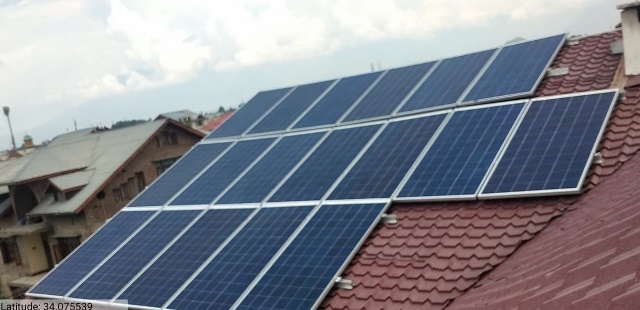
The project, encompassing solar plants ranging from 1 kW to 100 kW across various districts, is part of a broader initiative to solarize all government buildings, as approved by the Administrative Council led by Lieutenant Governor Manoj Sinha. The project’s estimated cost is Rs 400 crore in Capex mode, with an additional 200 MW in RESCO mode.
Despite the ambitious scope, the tender process has sparked controversy due to its exclusionary selection criteria, which many local vendors argue are heavily biased in favor of external firms. If sources are to be believed, the technical and financial requirements set by JKEDA are so stringent that 98% of local vendors are effectively disqualified from participating. This has led to accusations of favoritism and manipulation to benefit a select few non-local vendors.
Local vendors, who have played a significant role in promoting solar and renewable energy in J&K, feel betrayed. They argued that JKEDA could have designed more inclusive criteria that would allow experienced local vendors to compete. Instead, the current framework appears to be tailored to ensure the participation of preferred vendors from outside the UT, thereby sidelining local businesses.
The discontent among local vendors culminated in a pre-bid meeting on June 26, 2024, where JKEDA officials assured them of considering their concerns. However, these assurances have done little to alleviate fears of systemic bias. The tender’s discriminatory nature highlights a broader trend of excluding local vendors in favor of larger, external firms across various departments in J&K.
In stark contrast, states like Ladakh, Uttarakhand, Punjab, and Jharkhand have implemented similar solar tenders that prioritize local vendors, fostering local economic growth and capacity building. The marginalization of J&K’s local vendors in the solar project tender not only hampers their growth but also denies the local youth and workforce critical employment opportunities.
Awarding contracts to local vendors and startups would have a transformative impact on their development, enabling them to scale up and contribute more significantly to the region’s renewable energy landscape. It would also stimulate the local economy by creating jobs and fostering a more inclusive growth model.
The ongoing controversy calls for a reevaluation of the tender criteria to ensure a level playing field for local vendors, whose contributions to J&K’s renewable energy sector cannot be overlooked. Without such measures, the promise of sustainable development in the UT remains hollow, overshadowed by allegations of favoritism and inequity.