
Analysis
by Dr. Jaipal Singh
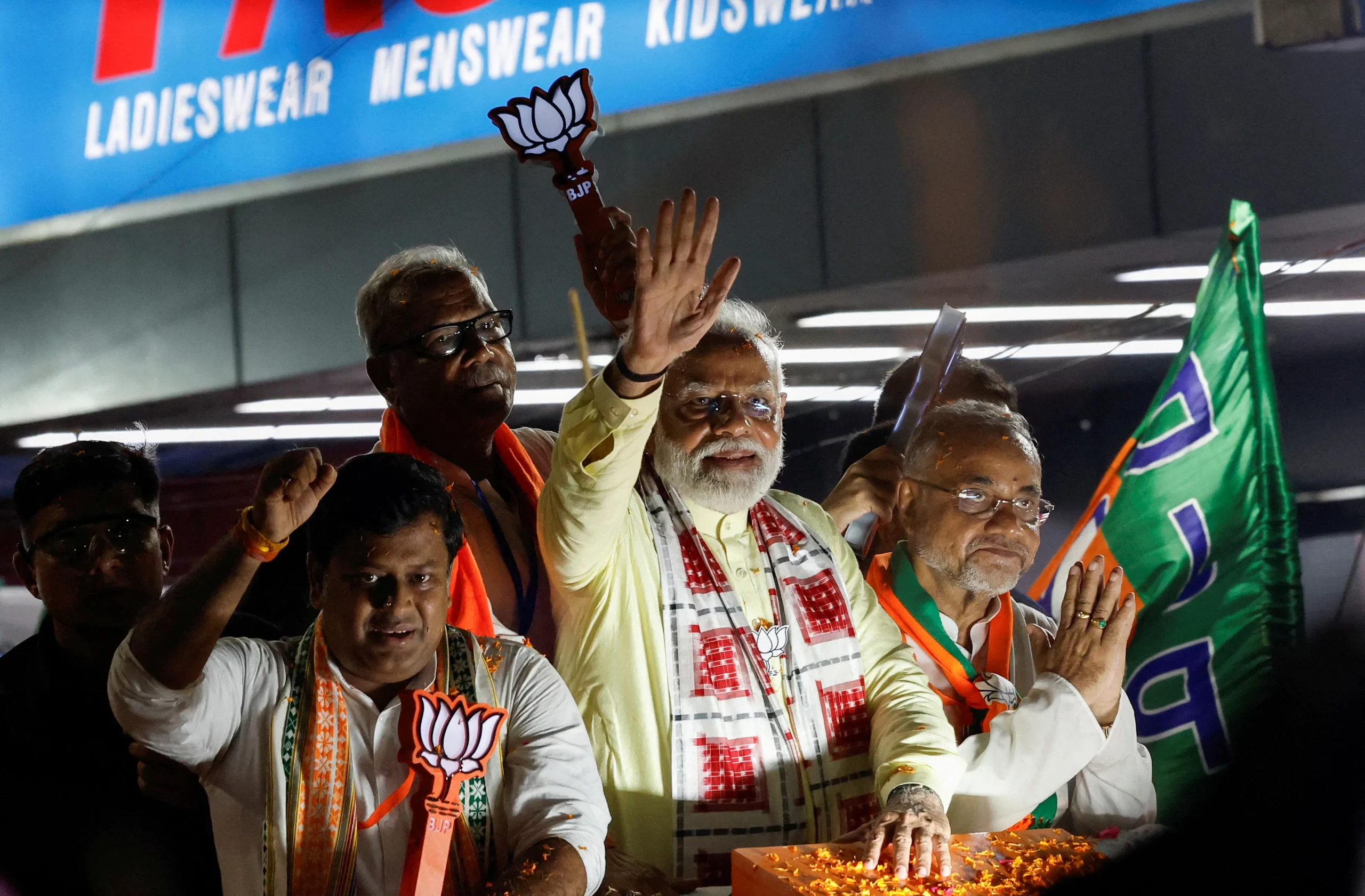
Recently, the largest democracy in the world, Bharat, more commonly known as India worldwide, has undergone through the electoral process to elect members (lawmakers) for the Lok Sabha (Lower House of the Parliament). General elections were held in seven distinct phases from 19 April to 01 June 2024 to seek franchise for 543 Lok Sabha seats. The counting of votes was carried out on 04 June, the incumbent Prime Minister Narendra Modi led National Democratic Alliance (NDA) informed the President Droupadi Murmu on 07 June their desire to form government claiming the support of 293 newly elected members of Parliament, and in turn, the President invited him to take oath on 09 June to constitute the government for the 18th Lok Sabha. The occasion marked Mr. Modi taking the oath as prime minister for the consecutive third time since May 2014 to form a coalition government with two major allies, namely the Telugu Desam Party of Andhra Pradesh and Janata Dal (United) of Bihar, along with several other smaller coalition partners.
However, the results of the elections show a significant variation from what has been forecast in the electronic and print media as also political analysis by the experts nationally and internationally for the several months preceding the Lok Sabha poll. It is difficult to conclude if it was more of a psychological strategy and mind game of the Bhartiya Janta Party (BJP) high command or real expectations or aspirations-based party calculations when they gave a pre-poll slogan “abki baar, char sau paar (this time, more than four hundred)” and maintained its pace aggressively through the poll process. Even the majority of exit-poll surveys endorsed this thesis at the end of the last phase of elections on 1st June 2024. However, the end results were very different with major surprise and shock from the electorate especially in some of the crucial states like Uttar Pradesh, Maharashtra and Bengal. The BJP could not achieve even absolute majority unlike the last two elections in 2014 and 2019, the only saving grace was that Mr. Modi succeeded in forming the third consecutive NDA government with the support of allies.
The Electoral Verdict
During the current poll process, of the total population of about 1400 million people, nearly 968 million people were eligible to vote that constitutes over 69% of the total population. Of this, about 642 million adult voters exercised their right of franchise with the women constituting approximately 312 million (48.6%) of the total voters. For the records sake, this was the largest ever election held in terms of numbers, deployment of the election manpower and machinery and expenditure spanned over the nearly one and a-half months across the length and breadth of the country. Simultaneously, the legislative assembly elections were also carried out for the states of Andhra Pradesh, Odisha, Arunachal Pradesh, and Sikkim as also by-elections for 25 constituencies in a total of 12 state legislative assemblies. The direct contest for the Lok Sabha elections was between two fronts of coalition political parties: The NDA led by the BJP, a coalition of some 30 plus regional parties, with the Telugu Desam Party in Andhra Pradesh and Janta Dal (United) in Bihar as major allies, while the I.N.D.I.A. (Indian National Developmental Inclusive Alliance), a loosely held coalition of 28 parties, with the Congress in lead and Samajwadi Party in Uttar Pradesh, Dravida Munnetra Kazagam in Tamil Nadu and All India Trinmool Congress in West Bengal as crucial regional partners.
The BJP and Congress are two national parties with their presence in most parts of the country with a sizeable electoral base. The ruling Bhartiya Janta Party (BJP) released its national election manifesto on 14 April 2024 and named it as “Sankalp Patra”, while the Congress had earlier declared their manifesto on 04 April 2024 calling it the “Nyay Patra”. The Congress Nyay Patra was characterized with the scathing attacks on the BJP and the incumbent Prime Minister with the allegations of spreading hate, fear, mismanagement and violation of the Constitution thereby promising the reversal of the NDA policies, doubling the economic progress and removing poverty with free disbursement of Rs one lakh to each poor family under ‘Mahalaxmi’ scheme. The BJP Sankalp Patra recounted a number of measures already taken for the Vikas (development) and Virasat (heritage) of the nation during the last ten years of their reign highlighting the schemes and programmes as envisaged along with the targets and timeframe (quantified in many cases) for the inclusive growth and development of the country during the next five years and beyond. Contrary to the Congress criticism, the BJP manifesto did not make any reference to their arch rival Congress.
During electoral campaign, the BJP and allies regularly kept talking about the socio-economic development and progress of the country led by Mr. Narendra Modi, with the former occasionally raising the cultural and religious rights of the Hindu population. On the contrary, the Congress and allies emphasized on the welfare of the minority population and economic parity through wealth redistribution with the focus on the Muslims, Other Backward Classes (OBCs) and SCs/STs. In the aforesaid context, two promises of the Congress viz. 1) the freedom of the choice of dress, food, language and personal laws, and 2) addressal of the inequality of wealth and income by changes in policies through caste census, financial and institutional surveys, might prove divisive and disastrous for the security, integrity and oneness of the country. On many occasions, the top Congress leadership aggressively spoke about carrying out an X-ray of India to ascertain the population of various caste groups as also a financial & institutional survey with an aim of the redistribution of wealth. The election results declared on 4 June 2024 show the following position.
N.D.A No. of MPs I.N.D.I.ANo. of MPs
BJP 240 Congress 99
TDP 16 SP 37
JD(u) 12 AITC 29
SS 7 DMK 22
LJP(RV) 5 CPI(M) 4
JD(S) 2 AAP 3
Others 11 Others 40
Total 293 Total 234
The NDA led by Narendra Modi obtained an absolute majority with 293 seats of the total Lok Sabha seats 543 but with the following remarkable difference. In 2014, the NDA had won a total of 336 seats with the BJP alone garnering 282 seats, suffice to form the government even without support of its allies. The same feat was repeated in 2019 general elections with further improvement in that the NDA won 352 seats with the BJP alone winning 303 seats. With this numerical strength, the Modi government was able to take several bold political decisions too such as abrogation of the Article 370, abolition of triple talaq among Muslims and the amendment of the Citizen Act to pave way for granting Indian citizenship to thousands of refugees from the neighbouring Islamic countries, majority of them as Hindus and Sikhs, besides implementing several socio-economic reforms. The outcome of the recent elections was a dampener in the sense that the NDA received significantly less number of seats, so also the BJP too, compared to what had been predicted by various opinion and exit polls.
The alliance lost 59 Lok Sabha seats and the BJP 63 compared to the 2019 general elections. Nonetheless, as already referred to earlier, Narendra Modi confirmed the support of 293 MPs to President Droupadi Murmu and he was sworn in as prime minister for the third consecutive term by the latter on 9 July 2024 heading a coalition government in true sense for the first time with the Telugu Desam Party and Janta Dal (United) as two major allies. On the other hand, the opposition I.N.D.I. Alliance too considerably improved their tally of MPs to 234 seats, of which the Congress alone secured 99 seats. Seven independent MPs and ten MPs from the non-aligned parties also registered victories in election. The opposition alliance has been projecting it as their victory and moral defeat of the BJP since the results were declared on 4 June, and some political analysts define it as the NDA victory that sounds like a defeat. In the following paragraphs, the author proposes to briefly analyze the so-stated debacle of the NDA and BJP.
Poor Performance in Key States & Reasons Therefor
After independence, the Indian National Congress by and large dominated the Indian political scenario more or less for five decades with their ample presence and support for them in the most of the Indian states. This scenario started gradually changing in late 1980s onwards with the advent of regional parties in various parts due to dissatisfaction with the Congress as also internal discontent among various factions and consequent breakage within the Congress itself forming many socialist parties. Till then, sans 1977 Janta Dal experiment following the 1975 Emergency imposed by late Indira Gandhi, the Congress monopoly was largely maintained in the country. Some of the states such as Uttar Pradesh (then 85, now 80), Bihar (then 54, now 40), Maharashtra (48), West Bengal (42), etc. returning a large number MPs in the Lok Sabha have played a crucial role for securing a majority in the Parliament. This trend has continued till date and it is very difficult for any political party/alliance to obtain absolute majority without performing well in these states. (To be continued….)
(This Article is reproduced in three episodes from www.boloji.com for fair information of our readers)
The Author is a retired civil servant of GoI; His core areas of specialization have been public administration, finance, information technology, human resource development, budget and planning, and legal matters. Currently, he is engaged in an Advisor capacity with one illustrious Central Autonomous Body; He has own literary website and his works are also available on https://www.myhummingword.com/)


