
-Anvi Jain, IIMC Jammu
There are over 32.97 crore of LPG consumers in India, making it one of the biggest consumers of cooking gas. As per fiscal year 2024-25, the consumption of LPG in India is more than 31.2 million tonnes. Today, LPG is an indispensable part of Indian households and has taken up a prominent position in households irrespective of their socio-economic condition. This is especially true in North India; be it middle class residents of Delhi or the villagers of Uttar Pradesh, Punjab, and Haryana, LPG cylinders play an important role in meeting household requirements for cooking. About 88% of the fuel is supplied directly to households. Any shortage in this regard not only creates budgetary problems for individuals but can also lead to economic woes like inflation and scarcity in other aspects.
North India, being a consumer-centric market for LPG, makes it all the more dangerous. A significant proportion of LPG consumed in India is imported from Middle Eastern countries such as Saudi Arabia, Qatar, and UAE. Most of this fuel passes through the highly sensitive geographical route of Strait of Hormuz. Hence, any disturbance to the Western corridor can cause a delay in supply, increase costs, and create a problem.
This reflects India’s huge domestic dependence on a single geographic region for such an important household fuel.
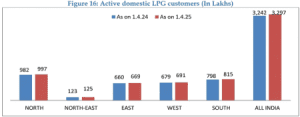
Figure 1– Active domestic LPG customers (in lakhs): source- Ministry of Petroleum and Natural Gas, Government of India
ACTIVE DOMESTIC LPG CUSTOMERS
As per the data provided by Ministry of Petroleum and Natural Gas, Government of India, India has 3,297 lakh active domestic LPG customers as of April 2025. The Northern region topping the chart with the highest number of LPG users, which surprisingly increased from 982 lakh to 997 lakh customers. However, an increase can be seen from 798 lakh to 815 lakh consumers in the southern Indian region. LPG usage is also increased in the Western region, growing from 679 lakh to 691 lakh customers. While the Eastern region recorded an increase from 660 lakh to 669 lakh consumers. Wherein, The North-East region records the lowest LPG penetration, with customers rising slightly from 123 lakh to 125 lakh.
This widespread reliance on the LPG across Indian region exposes that any disruption in global supply chains can affect millions of households across the country.
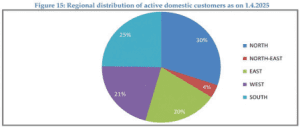
Figure 2: Regional distribution of active domestic LPG customers as on 1.04.2025
NORTH INDIA TOPS THE LIST
The Northern Indian region relies on the LPG in India the most with about 30% of the consumption, with Southern and Western part being accountable for an about 25% and 21% respective usage. However, The Eastern region shows about 20% of LPG users. While, The North-Eastern region has the smallest share with about 4%. This distribution shows that LPG dependence is widespread across India’s major regions, meaning supply disruptions could affect households nationwide.
The demand and supply in the Indian Market have grown drastically over the past four decades. As per the report, in 1980, the country had only 0.31 crore LPG customers, which indicates a very limited access to LPG. By 2001, the number had increased significantly to 5.78 crore consumers. The usage accelerated further, reaching 14.52 crore LPG customers in 2014. It has observed the most rapid growth, with customers rising to 32.42 crore in the last decade 2024. As of April 2025, India has about 32.97 crore LPG customers, showing the increase in the usage of the clean cooking fuel network. And this rapid expansion of LPG can signify the possible risk due to the global supply chain disruption, which can affect the household of India.
CURRENT MARKET SITUATION
Surprisingly, India’s LPG storage capacity can provide only about 16 days of supply cover, which shows that the country relies heavily on the import of the gas. And, Conflicts in West Asia, a major LPG supplying region, therefore pose a potential risk to India’s energy security. Limited storage buffer increases India’s vulnerability to geopolitical shocks and supply disruptions.
Countries like Saudi Arabia, Qatar, UAE, Kuwait, Oman are the major LPG supporters of the import and overall supply of the gas and majority of the Gulf LPG shipments pass through Strait of Hormuz, which is being the major global tension region at the present. This situation can also impact the Indian economy and increase inflation and create a trade deficit pressure.
ALTERNATIVE SOURCE OF ENERGY
India should also work on optimal use of the Solar cooking as an alternative for cooking and promote the usage of solar power even in rural areas to minimise dependency on the global import. Other means of cooking fuel can also be utilised such as piped gas and natural gas for the cooking in the Indian household to reduce the dependency of 32 crore Indian households.
(The writer is a student of MA in New Media Communication at IIMC Jammu)