By Omkar Dattatray
It is very unfortunate, sad, and most disturbing that nature played havoc with the yatris of the Machail Mata Yatra at a langar in Chasoti village, when a massive cloudburst triggered flash floods on Thursday, 14th August, at around 12:25 pm. The disaster not only destroyed the langar but also washed away hundreds of pilgrims, including two CISF personnel.
The cloudburst and resulting flash floods led to the tragic death of more than 65 yatris, while hundreds of others were reported missing, buried under debris, or swept away by the gushing waters. This natural calamity in Kishtwar, Jammu and Kashmir, is unprecedented in scale and impact. To many, it seemed as though the Mother Goddess herself was displeased, allowing nature to unleash its fury upon the unsuspecting pilgrims en route to the shrine of Machail Mata.
A pall of gloom, despair, and grief descended not only over Jammu and Kashmir but across the entire nation. President Droupadi Murmu, Prime Minister Narendra Modi, Home Minister Amit Shah, Lieutenant Governor Manoj Sinha, Chief Minister Omar Abdullah, NC President Dr. Farooq Abdullah and a host of political, social, and religious leaders expressed deep sorrow over the tragedy. They urged the administration to expedite rescue and relief operations and ensure that the injured were shifted quickly to hospitals for treatment.
The Scale of Devastation
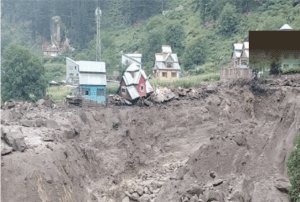
The cloudburst was massive, leaving behind a trail of death and destruction that words fail to capture. The tragedy was sudden and overwhelming, catching pilgrims unawares as they were having breakfast at the langar in Chasoti, the base camp of the Machail Mata Yatra. Within minutes, everything was swept away—people, tents, trees, rocks, and belongings—giving little or no chance for escape.
The official death toll quickly rose to 60, with fears that more bodies remained buried under rubble and debris scattered across the area. Rescuers described scenes of horror: bodies, trees, and boulders tossed together by raging waters. The flash floods washed away men, women, livestock, and property, leaving survivors in shock and disbelief.
Eyewitnesses reported cries, wails, and desperate calls for help as terrified pilgrims clung to each other or to rocks, but immediate assistance was unavailable. The base camp lacked protective measures or adequate disaster-preparedness infrastructure, making the tragedy even more devastating.
Rescue Efforts and Official Response
Despite intermittent rain, multi-agency search operations were launched, involving the NDRF, SDRF, Police, Army, and local volunteers. By late evening, 46 bodies had been recovered, 167 injured rescued, and 69 others were still missing. Among the dead were two CISF personnel. Rescuers worked under difficult conditions, braving heavy rain, blocked roads, and the risk of fresh landslides.
Chief Minister Omar Abdullah, while confirming 60 deaths, said the administration would examine whether lapses occurred. “We already had a weather forecast about the possibility of heavy rains and flash floods. Could we have taken more steps to save lives? We must make ourselves accountable,” he remarked during his Independence Day address at Srinagar’s Bakshi Stadium.
Prime Minister Narendra Modi spoke with Chief Minister Abdullah and Lieutenant Governor Manoj Sinha, assuring full support from the Centre. However, Kishtwar Deputy Commissioner Pankaj Kumar Sharma admitted that helicopters could not be deployed due to adverse weather, forcing NDRF teams to arrive by road from Udhampur.
Trail of Destruction
The deluge flattened a makeshift market, the langar site, and a security post. Sixteen residential houses, government buildings, three temples, four water mills, a 30-metre bridge, and more than a dozen vehicles were damaged or destroyed. Video footage showed torrents of muddy water mixed with silt and rocks tearing down slopes, sweeping away everything in their path. Houses crumbled like a pack of cards, while massive boulders blocked rescue routes.
The annual Machail Mata Yatra had begun on July 25 and was scheduled to continue until September 5. Chasoti, about 90 km from Kishtwar town, is the last motorable point on the 8.5 km trek to the 9,500-foot-high shrine. The Yatra was suspended for the third consecutive day on Saturday, 16th August.
Comparisons and Warnings from the Himalayas
This tragedy once again highlights the fragile nature of the Himalayan ecosystem. The Kishtwar disaster occurred just nine days after flash floods wreaked havoc in Dharali village of Uttarkashi district, Uttarakhand, where one person died and 68 remain missing. These events underline how Himalayan slopes are increasingly vulnerable to destruction during the monsoon months of July and August.
Experts have repeatedly warned that indiscriminate deforestation, unplanned construction, and reckless exploitation of riverbanks disturb the natural balance. Roads, hotels, and structures built too close to rivers obstruct natural flows, intensifying the fury of cloudbursts and flash floods. The Kishtwar calamity is yet another reminder of the need for sustainable planning and environmental consciousness.
Human Toll and Local Impact
Medical records revealed that most victims were from Jammu city, Samba, Akhnoor, and Udhampur areas of Jammu province. According to eyewitness accounts, at least 1,000 people, mostly pilgrims, were present in Chasoti at the time of the cloudburst. Sunil Sharma, BJP legislator, described the damage as “massive,” warning that the final toll might rise further.
For the survivors, the memories of that day will remain etched in their minds for years to come. Shivers run down the spine on hearing their accounts—moments of sudden darkness, deafening roars, and walls of water swallowing entire families within seconds.
Lessons and Accountability
While faith may compel us to interpret the tragedy as divine displeasure, the hard reality is that human negligence has played a bigger role. Deforestation, reckless development, and encroachment on riverbeds have weakened nature’s resilience. In return, nature has struck back with fury.
The Kishtwar tragedy must serve as a wake-up call. It is imperative to investigate whether inadequate planning, lack of disaster-preparedness, or failure of forecasting systems contributed to the loss of lives. Those responsible for negligence must be identified and held accountable, so that in the future, administrations are better prepared to respond to such calamities.
The Machail Mata Yatra is a symbol of faith, devotion, and resilience. But the tragedy at Chasoti has reminded us of the fragile balance between man and nature. While the calamity has left families devastated and communities grieving, it must also drive us to adopt responsible practices in development, environmental management, and disaster preparedness.
Faith must go hand in hand with foresight. Pilgrimages to the Himalayas should not turn into tragedies. Unless lessons are learnt and corrective measures taken, disasters like Kishtwar will continue to haunt us.