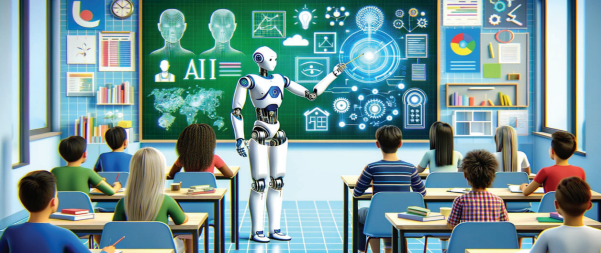
Reimagining Learning in the Age of Intelligent Systems
Prof. Dr. Jayadeba Sahoo
“सा विद्या या विमुक्तये” (Sā Vidyā Yā Vimuktaye) — True education is that which liberates.
— Vishnu Purana
This timeless Indian wisdom captures the central challenge of the Artificial Intelligence (AI) age. Humanity today enjoys unprecedented access to information and knowledge. Yet a fundamental question remains: Can technological intelligence help create wise, ethical, and enlightened human beings?
A New Educational Era
The twenty-first century has witnessed an extraordinary technological transformation driven by Artificial Intelligence, Big Data, Machine Learning, Robotics, Quantum Computing, and the Internet of Things. As these innovations reshape society, education finds itself at a historic turning point.
Traditional educational models are gradually giving way to Education 5.0, an emerging philosophy that seeks to combine technological advancement with human values, creativity, ethics, emotional intelligence, and spiritual wisdom.
While the Fourth Industrial Revolution has fused physical, digital, and biological systems, education must address a deeper concern: Is intelligence alone sufficient?
Educational philosophy, neuroscience, and India’s wisdom traditions suggest that information and intelligence, though important, cannot replace wisdom, character, compassion, and self-awareness. Education 5.0 therefore seeks to harmonize artificial intelligence with human intelligence.
Humanity’s Long Quest for Artificial Intelligence
Human fascination with intelligent machines is not new. Ancient myths and philosophical traditions imagined artificial beings capable of thought and action. The modern journey of AI began with Alan Turing’s pioneering work on machine intelligence in 1950. In 1956, John McCarthy coined the term “Artificial Intelligence,” laying the foundation for a new scientific discipline.
Over the decades, AI has evolved through several stages:
Symbolic AI (1950s–1980s)
Early AI relied on logical programming, expert systems, and rule-based decision-making. Educational applications were limited to basic computer-assisted instruction.
Machine Learning Revolution (1990s–2010s)
Computers began learning from data rather than depending solely on pre-programmed rules. This led to adaptive learning systems, educational analytics, and intelligent tutoring platforms.
Deep Learning Era
Inspired by neural networks, deep learning enhanced speech recognition, language processing, image analysis, and automated translation, significantly transforming digital education.
Generative AI Era
The emergence of Large Language Models (LLMs) has revolutionized learning. Generative AI can create educational content, design assessments, explain complex concepts, support multilingual learning, and function as a virtual tutor.
Ancient Indian Insights on Intelligence
Long before modern computer science, Indian thinkers explored the nature of cognition, learning, and consciousness.
The Rigveda proclaims:
“Ā No Bhadrāḥ Kratavo Yantu Viśvataḥ”
“Let noble thoughts come to us from every direction.”
Indian philosophy distinguishes between:
- Jnana (Knowledge)
- Buddhi (Intellect)
- Viveka (Discriminative Wisdom)
- Prajna (Higher Consciousness)
Artificial Intelligence can process knowledge and simulate analytical reasoning, but it cannot fully replicate wisdom, ethical judgment, self-awareness, or spiritual consciousness. These remain uniquely human qualities.
This distinction is critical because education is not merely about accumulating information; it is about cultivating wisdom, character, and moral responsibility.
Why AI Matters in Education
The modern economy increasingly demands critical thinking, creativity, digital literacy, problem-solving abilities, and lifelong learning. Traditional classroom systems often struggle to meet the diverse needs of learners.
AI offers several advantages:
- Personalized learning
- Greater accessibility
- Scalability of education
- Enhanced efficiency
- Data-driven decision-making
Consequently, AI is becoming more than a technological tool; it is evolving into an educational ecosystem.
Personalized Learning: A New Frontier
One of AI’s most celebrated contributions is personalized education.
Traditional classrooms generally follow a one-size-fits-all approach. AI systems can analyze a learner’s pace, strengths, weaknesses, and performance patterns to provide customized learning experiences.
A student struggling with algebra can receive additional exercises, simplified explanations, and targeted feedback, while advanced learners can access enrichment opportunities.
In many ways, this mirrors the ancient Gurukul tradition, where instruction was adapted to each learner’s aptitude and temperament.
Intelligent Tutoring Systems
AI-powered tutoring systems function as virtual mentors by providing:
- Immediate feedback
- Continuous assessment
- Personalized guidance
- Error diagnosis
Platforms such as Khan Academy, Duolingo, and other adaptive learning systems demonstrate how AI can supplement classroom teaching and improve learning outcomes.
AI and Inclusive Education
One of AI’s most promising contributions is expanding educational inclusion.
Support for Students with Disabilities
AI-assisted technologies support learners through:
- Speech-to-text tools
- Text-to-speech systems
- Real-time captioning
- Assistive communication devices
Multilingual Learning
In a linguistically diverse country like India, AI-powered translation technologies can make educational resources available in multiple languages. Students from remote regions can access quality learning materials in their mother tongues, helping bridge long-standing educational gaps.
Educational Analytics and Better Decision-Making
Educational institutions generate enormous amounts of data. AI helps convert this information into actionable insights.
Its applications include:
- Identifying students at risk of failure or dropout
- Improving curriculum effectiveness
- Enhancing instructional strategies
- Optimizing resource allocation
- Streamlining administrative functions
Such capabilities enable more informed and effective educational planning.
Generative AI in Teaching and Learning
Generative AI has dramatically expanded educational possibilities.
Teachers can use AI to:
- Develop lesson plans
- Create assessments
- Design case studies
- Produce multimedia content
Students can use AI for:
- Research assistance
- Concept clarification
- Language learning
- Writing support
A learner studying a complex topic such as quantum mechanics can receive explanations tailored to different learning styles—mathematical, visual, narrative, or conceptual—making learning more accessible and engaging.
Democratizing Knowledge
Historically, access to education has been constrained by geography, economics, and social barriers. AI has the potential to democratize learning through:
- Open educational resources
- Virtual classrooms
- Affordable learning platforms
- Personalized tutoring systems
This vision resonates with the Upanishadic prayer:
“Tamaso Ma Jyotirgamaya”
“Lead me from darkness to light.”
When used responsibly, AI can extend the light of knowledge to underserved communities across the world.
Challenges and Ethical Concerns
Despite its immense promise, AI presents significant challenges.
Data Privacy
Educational AI systems collect large amounts of student data, raising concerns regarding privacy, consent, ownership, and cybersecurity.
Algorithmic Bias
Biased datasets can result in unfair assessments, unequal recommendations, and the reinforcement of social inequalities.
Academic Integrity
Generative AI has intensified concerns about plagiarism, ghostwriting, and excessive dependence on machine-generated content.
Digital Divide
Unequal access to technology, internet connectivity, and digital literacy continues to prevent many learners from benefiting from AI-driven education.
These challenges must be addressed if AI is to promote equity rather than deepen existing disparities.
Can AI Replace Teachers?
A common misconception is that AI will eventually replace teachers. This view misunderstands the true nature of education.
Teaching is not merely the transmission of information. It involves empathy, inspiration, mentorship, ethical guidance, and emotional connection—qualities that machines cannot replicate.
The future lies not in AI replacing teachers but in AI-empowered teachers who can combine technological tools with human wisdom and care.
India’s Response to AI in Education
India has increasingly embraced AI within its educational vision. The National Education Policy (NEP) 2020 emphasizes digital literacy, emerging technologies, computational thinking, and multidisciplinary learning.
Initiatives such as DIKSHA, SWAYAM, and the National Digital Education Architecture (NDEAR) are laying the foundation for technology-enabled and inclusive educational ecosystems.
Education 5.0: The Way Forward
The future points toward Education 5.0, characterized by:
- Human-AI collaboration
- Immersive learning through Virtual and Augmented Reality
- Lifelong learning ecosystems
- Ethical AI frameworks promoting transparency, accountability, and fairness
As AI becomes increasingly powerful, the need for ethical intelligence and spiritual wisdom becomes even more important.
Conclusion
Artificial Intelligence possesses enormous potential to expand educational access, personalize learning, foster creativity, and democratize knowledge. Yet technology alone cannot fulfill education’s highest purpose.
AI can generate answers, but it cannot cultivate conscience. It can process information, but it cannot embody wisdom. It can support learning, but it cannot replace character formation.
The challenge before modern educators is not whether to embrace AI, but how to harmonize technological intelligence with human intelligence, emotional intelligence, ethical judgment, and spiritual wisdom.
Only when technology remains guided by values can education achieve its ultimate mission—not merely preparing individuals for employment, but nurturing enlightened, compassionate, and responsible human beings capable of building a better civilization.
(The author is Sr. Professor (Ex-Dean & Head), Faculty of Education, Rajiv Gandhi (Central) University, Itanagar; He can be reached at Cell: 8837245051, 9436042658; Email: [email protected] , [email protected] )