Rayees Ahmad Kumar
Rafia Rasool Magmoom is among those few women writers who have established a distinct identity in the world of fiction within a short period of time. Primarily known as a cartoonist and journalist, she has successfully ventured into literature and earned a prominent place in Urdu literary circles. Hailing from Buchwara, Dalgate, Srinagar, this talented and well-known writer once dreamed of becoming a doctor, but destiny had different plans. Today, she is recognized as a successful cartoonist, journalist, and author. Pehchan Aansoo Ki is her first literary work. Comprising 96 pages, the novel is a thoughtful and emotionally moving creation dedicated to cancer patients who departed from this world and to the memory of her late father. The publication of the book was supported financially by the Jammu and Kashmir Academy of Art, Culture and Languages.
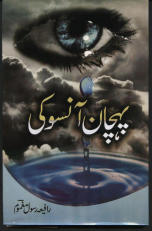
In the introductory note titled Harf-e-Chand, noted writer Dr Farid Parbati observes that the novel’s language is simple, fluent, and engaging, much like contemporary fiction. The author also pays a heartfelt tribute to her father and, under the section Apne Bare Mein, recounts her educational journey and professional experiences, explaining how circumstances led her from a dream of medicine to cartooning, journalism, and ultimately literature. The story revolves around two close friends, Qainat and Ghazala, who studied together from school through college. Ghazala, brought up with great affection and luxury, possessed extraordinary beauty but was equally proud and self-centered. She was admired by almost every young man in college, yet she remained indifferent to all attention. Qainat, in contrast, was a sensible and compassionate young woman. Having lost her parents in a road accident and been raised by her maternal uncle, she carried within her a deep sense of empathy and kindness. Her dream was to become a doctor. Salim, a brilliant and hardworking student one year senior to them, fell deeply in love with Ghazala. One day, at a coffee house, he finally confessed his feelings and expressed his wish to make her his life partner. Ghazala, however, rejected him harshly, humiliating him with the remark that he should have considered his “status” before making such a proposal. Despite Qainat’s later advice to forget Ghazala and focus on his future, Salim continued to cherish his love for her. As time passed, Salim became a successful physician, Qainat fulfilled her dream of becoming a doctor, and Ghazala pursued engineering. Their paths diverged, and Ghazala gradually disappeared from the lives of her friends. Years later, fate brought them together again under tragic circumstances. A critically ill and unconscious woman was admitted to a hospital where Dr Qainat was serving. To her astonishment, the patient turned out to be Ghazala, though greatly changed by suffering, illness, and the hardships of life. When Ghazala regained consciousness, she narrated the painful story of her life. During her engineering studies, she had fallen in love with a senior student named Wasim. Their friendship blossomed into a deep relationship, and eventually Wasim expressed his love through a letter. Ghazala, equally devoted, believed she had found the companion of her dreams. They exchanged promises of lifelong loyalty and envisioned a future together. However, after graduating, Wasim abruptly distanced himself from her. He neither met her nor showed any concern for her wellbeing. His indifference shattered Ghazala’s dreams and plunged her into despair. Despite medical consultations and family support, she found no relief from her emotional wounds. She rejected every marriage proposal, unable to erase Wasim from her heart. Eventually, through Wasim’s friend Aamir, she learned the devastating truth, Wasim had married a close relative at the insistence of his parents. The news struck her like a thunderbolt. Soon afterward, her parents also passed away, leaving her utterly alone. The combined burden of loneliness, grief, and failed love reduced her to a state of physical and emotional collapse. While caring for Ghazala, Dr Qainat unexpectedly discovered that Salim was still unmarried and continued to hold affection for her. She began to hope that Ghazala might finally find companionship and happiness. Yet fate had another twist in store. During a visit to the hospital, Salim’s sister-in-law passed away. Amid the mourning crowd, Ghazala suddenly recognized someone and exclaimed in shock, “This is Wasim!” The story then moves toward an even more tragic conclusion. A month later, when Dr Salim returned to meet Dr Qainat, he learned that she had succumbed to cancer. Standing silently beside her grave, he reflected on how life often takes away the very things people hold most dear. In the stillness of the graveyard, dreams, loves, and unfulfilled hopes seemed forever buried beneath the earth. Rafia Rasool Magmoom’s novel is not merely a tale of love and loss; it is also a powerful reflection on materialism, declining human values, and the emotional struggles of modern life. The novel demonstrates that the women fiction writers of Kashmir possess remarkable creative depth, artistic maturity, and intellectual insight. Through graceful language, effective storytelling, and strong characterization, the author succeeds in keeping readers engaged from beginning to end. Her command over language and narrative technique is evident throughout the work. The simplicity, fluency, and emotional strength of her prose enhance the novel’s appeal and make it a valuable contribution to contemporary Urdu literature. Such quality literary creations deserve appreciation and encouragement, for they not only enrich literature but also inspire future generations of writers and readers alike.
Writer is a columnist based in Qazigund Kashmir