A Father’s values, sacrifices and unwavering integrity continue to inspire us even after sixteen years of his passing
By Omkar Dattatray
As the world observed Father’s Day on June 21, I felt compelled to pay tribute to my beloved father, Late Shri Badri Nath Koul, whose life remains a guiding force for our family even sixteen years after his passing away.
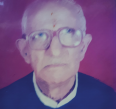
For me and my sister, Mrs Dulari Koul Raina, our father was not merely a parent; he was our greatest strength, mentor, role model and inspiration. He lived by the ideals of simple living and high thinking, and his honesty shone like a beacon throughout his life. He firmly believed that one should perform one’s duties with sincerity, dedication and selflessness, and he expected the same values from others.
Born on October 23, 1923, in village Hanand, Chowalgam, then in Tehsil Kulgam, Pt. Badri Nath Koul belonged to a respected Kashmiri Pandit family. His father, Late Laxman Koul, served as a Patwari in the Revenue Department.
He received his early education at Government High School, Kulgam, and later moved to Srinagar to pursue higher studies. There, he stayed with relatives from his paternal side, the Dhar family. He completed his matriculation from DAV School, Srinagar, in 1942 and subsequently joined Amar Singh College, Srinagar, passing his Intermediate examination in April 1944 from the Punjab University.
He carried the distinction of being the first graduate from his village, a remarkable achievement in those days, earning him widespread respect in society. He completed his Bachelor of Arts degree in 1946, again from Punjab University, securing good marks.
Despite his educational attainments at a time when graduates were few and highly respected, he did not obtain employment commensurate with his qualifications. Nevertheless, he never allowed disappointment to diminish his zeal or commitment to work.
He joined the Health and Jails Department as a Tehvildar when both departments functioned under a common administrative structure. Later, he was posted in the Health Department as a clerk and, over the years, rose to become Head Clerk. Most of his service tenure was spent at District Hospital Anantnag and the District Medical Officer’s Office in Anantnag before retiring in 1978.
My father believed deeply in the maxim “Work is Worship.” I vividly remember seeing him immersed in office files and paperwork with complete dedication, often oblivious to what was happening around him. Honesty was the hallmark of his personality. He never compromised on principles, nor did he extend undue favours to anyone during his long government service.
He was punctual, disciplined and transparent in his dealings. Though graduation carried immense prestige in those days, he never flaunted his educational qualifications. He remained humble throughout his life.
Before Independence, he had even travelled to Lahore to learn typing. However, he had to return home following the tribal invasion of Jammu and Kashmir in 1947. During his service career, he also spent a few years in Jammu and had firsthand experience of the region’s hot and humid climate. For this reason, he initially declined an opportunity to purchase a government-allotted plot in Jammu.
History, however, had other plans. Following the migration of the Kashmiri Pandit community in the early 1990s, our family was compelled to leave the Valley and settle in Jammu. Fortunately, my father had purchased a ten-marla plot at Gole Gujral in 1986, where our family continues to reside today. We owe that home and much else in our lives to his foresight, blessings and sacrifices.
My father attached immense importance to education. He ensured that I received quality education and extended unwavering financial, moral and emotional support. It was because of his encouragement that I pursued a Master’s degree in Commerce and eventually joined the School Education Department.
I fondly recall that when the results of my Bachelor’s degree were declared, I was away on a college tour. It was my father who obtained the application form from the University of Kashmir and personally completed the formalities for my admission to M.Com. I owe my education, career and many of life’s opportunities to the support of my parents, especially my father.
He was also a deeply religious person. Worship formed an integral part of his daily routine. He devoted much of his life to the worship of Lord Shiva and was known to have worshipped a silver Parthishur Shivling for many years before eventually donating it in his advancing age.
Many sacred hymns and scriptures had been memorised by him. He regularly recited the Bhagavad Gita, Ramayana and studied the Mahabharata. He narrated stories from these epics to family members and instilled in us a deep appreciation for our spiritual and cultural heritage. I learnt several revered hymns and stotras, including the Mahamnapar and Bhavani Sahasranam, from him.
My beloved father passed away at our Jammu residence on May 17, 2010, at the age of 87, after a brief illness. His demise coincided with Yashak Chourm.
As Father’s Day was observed once again on June 21, 2026, I, along with my entire family, remembered him with affection and gratitude. Though he is no longer physically with us, I continue to feel that he guides and inspires us from wherever he is.
His values, integrity, faith and unwavering commitment to family remain our greatest inheritance.
May his noble soul rest in eternal peace.
(The author is a columnist, social activist and freelance writer associated with the Kashmiri Pandit community)