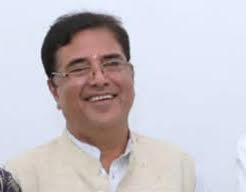
GL Raina, Ex-MLC J&K
From freezing representation during the Emergency to opposing its correction today, Congress continues to place political expediency above constitutional principles—and now, above women’s empowerment.
At a time when India stands on the cusp of a long-overdue democratic correction, the resistance mounted by the Congress party against delimitation—and by extension, the effective implementation of women’s reservation—reveals a troubling pattern. It is not merely a disagreement over policy; it is a reflection of a deeper malaise within a party that increasingly appears disconnected from both constitutional clarity and ground realities.
The latest attempt to stall the Women’s Reservation framework by invoking delimitation concerns is telling. It suggests either a profound misunderstanding of the Constitution or a deliberate attempt to weaponize procedural arguments for political gain. In either case, it exposes a striking contradiction: a party that claims to defend the Constitution while simultaneously resisting one of its most essential mechanisms.
Delimitation is not an optional exercise. It is a constitutional imperative enshrined in Articles 81 and 82 of the Indian Constitution. These provisions mandate the periodic readjustment of parliamentary constituencies based on changes in population, ensuring that the principle of “one person, one vote” is upheld in both letter and spirit. Representation, in a functioning democracy, must evolve with demographic realities. Anything less distorts the very foundation of electoral fairness.
Yet, if one traces the historical trajectory of delimitation in India, it becomes evident that the Congress party has long been at odds with this principle. The most significant rupture occurred in 1976, during the period of the Emergency in India under Prime Minister Indira Gandhi. In what remains one of the darkest chapters in India’s democratic history, the process of delimitation was effectively suspended through the 42nd Constitutional Amendment.
This decision was taken at a time when democratic institutions were under severe strain—opposition leaders were imprisoned, fundamental rights suspended, civil liberties curtailed, and dissent stifled. Freezing the number of Lok Sabha seats based on the 1971 Census, the amendment decoupled political representation from subsequent population growth. What should have been a routine constitutional exercise was turned into a political tool.
The consequences of that decision have been profound and long-lasting. Over the decades, India’s population has grown exponentially, but the number of parliamentary constituencies has remained largely static. The average population represented by a Member of Parliament has increased from approximately 7 lakh in the early 1950s to over 25 lakh today. Similarly, the voter-to-representative ratio has surged dramatically, making Indian MPs among the most overburdened in the world. While the electorate has increased over six-fold since 1951, the number of parliamentary seats has only increased by 11% (from 489 to 543) during the same period.
This imbalance has not been uniform. Rapid urbanization has led to disproportionately large constituencies in cities, where a single vote carries significantly less weight than in less populated regions. Based on the 2024 Lok Sabha election data, the constituencies with the maximum and minimum number of voters in mainland India are highly imbalanced, fueling the debate for new delimitation. Malkajgiri (Telangana) is the largest Lok Sabha constituency in India, with over 37.80 lakh voters and Lakshadweep (UT) with approximately 58,000 voters is the smallest.
The principle of electoral equality—central to any democracy—has thus been steadily eroded. What was once a temporary freeze has, in effect, become a structural distortion.
It is against this backdrop that the current push for delimitation assumes critical importance. The proposed Constitution (131st Amendment) Bill, 2026 seeks to address these accumulated imbalances by aligning representation with contemporary demographic realities. Crucially, it also creates the framework necessary to operationalize women’s reservation in Parliament—an objective that has been delayed for decades despite broad rhetorical support across political parties.
And yet, the Congress party now finds itself opposing this very process.
The argument advanced by sections of the opposition—that delimitation could disadvantage certain states or disrupt existing political balances—may appear, at first glance, to be grounded in federal concerns. But this line of reasoning collapses under closer scrutiny. The Constitution itself anticipates demographic variations and provides mechanisms to address them. Delimitation, conducted through an independent and legally mandated process, is designed precisely to ensure fairness and neutrality. The Narendra Modi government proposed a fifty percent increase in seats across the board to ensure that the present ratio of representation is not disturbed.
To oppose delimitation, therefore, is to oppose the constitutional method of correcting representational inequities.
More troubling, however, is the linkage being drawn between delimitation and women’s reservation. By insisting on procedural objections that delay or dilute the implementation of quotas for women in legislative bodies, the opposition can be seen as placing political calculations above the empowerment of half the population. This is not merely a legislative delay; it is a denial of opportunity.
The irony is difficult to ignore. The same party that once froze delimitation during a period of authoritarian excess now raises objections to its revival in a democratic context. The same political formation that claims to champion inclusivity appears hesitant when structural reforms threaten established power equations.
To be clear, delimitation is not about favoring one region over another, nor is it about granting undue advantage to any political party. It is about restoring balance—about ensuring that each citizen’s vote carries roughly equal weight, regardless of where they live. It is about updating a system that has remained frozen in time while the country around it has transformed.
Equally, women’s reservation is not a partisan issue. It is a long-pending reform aimed at correcting gender imbalances in political representation. Linking its implementation to delimitation is not a procedural hurdle but a necessary step to ensure that the reservation is applied fairly across constituencies. Delaying one inevitably delays the other.
India’s Constituent Assembly, in its debates on representation, was acutely aware of the challenges of balancing population, geography, and governance. It chose a system that prioritized direct elections, territorial constituencies, and periodic readjustment. The framers understood that democracy must be dynamic—that it must adapt to changing realities while remaining anchored in core principles.
What we are witnessing today is, in many ways, a test of that vision.
Will India move towards a more equitable and representative system, or will it remain constrained by outdated structures and political hesitations? Will constitutional mechanisms be allowed to function as intended, or will they continue to be contested for short-term advantage?
The answers to these questions will shape not just the future of delimitation or women’s reservation, but the credibility of India’s democratic institutions.
Political parties, especially those with a legacy as significant as the Congress, bear a special responsibility in this regard. They are expected to rise above immediate calculations and engage with reforms in a spirit of constitutional fidelity. Opposition, in a democracy, is vital—but obstruction that undermines foundational principles is not.
The path forward requires clarity, consistency, and commitment to the Constitution—not selective invocation of its provisions.
India cannot afford a democracy where representation is increasingly unequal, nor can it sustain a system where necessary reforms are indefinitely postponed. Delimitation is not the problem; it is part of the solution. Women’s reservation is not a bargaining chip; it is a democratic necessity.
To resist these changes is to resist the evolution of Indian democracy itself. And history, as it has shown before, is rarely kind to those who stand in the way of its rightful course.
(GL Raina is a former Member of the legislative council of Jammu Kashmir and spokesperson of BJP JK-UT)