
From slow burn to full-blown emergency
ARTICLE BY- SOLDIER & MONK
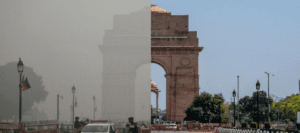
For years, Delhi’s Air Quality Index(AQI) has been a source of alarm. In winter 2025 alone, readings regularly soared above 450, well into the “hazardous” category, affecting visibility, delaying flights, forcing office and school closures and choking 30 + million residents in the capitol region. AQI levels have worsened sharply over the last decade, turning episodic smog into a predictable annual crisis. Where some clean air days used to exist, now early every winter day registers ”very poor” or “severe” air quality with grave health implications. This downward trend is driven by construction dust, industrial pollutants, crop residue burning in neighboring states, vehicle emission and stagnant winter weather. The situation is not seasonal, its structural.
THE REAL DAMAGE: PEOPLE, CHIDLREN AND FUTURE GENERATIONS
The effects are more than inconvenient:
Respiratory disease, heart conditions, strokes and reduced immunity are rising.
Children suffer slanted lung development, exposed from infancy to toxic PM 2.5 and PM 10 levels.
Long-term exposure shaves years off expected lifespan, particularly among the elderly and vulnerable. Experts warn pollution harms DNA and cognitive development in children.
The trauma doesn’t stop with one season, years of exposure accumulate, creating a health legacy and haunts generations.
This is not hypothetical. Courts and health authorities have repeatedly stressed that masks and temporary measures are insufficient to prevent lasting harm from sustained exposure.
THE BLAME GAME: CENTRE Vs STATE GOVERNMENTS
Every year, the same script plays out:
Centre blames Punjab and Haryana farmers for stubble burning.
States blame vehicular and industrial emissions and delayed policy actions by the Centre.
Municipal authorities bicker over jurisdiction and enforcement power.
Citizens inhale toxic air.
Interestingly, recent data shows stubble burning incidents have dropped significantly, by upto 90% in Punjab, yet pollution persists, proving the problem is multi-source not one factor alone. Politically each actor deflects accountability. Meanwhile the smog remains a trophy for neither side and a crisis for all residents.
HEALTH, ECONOMY, PROPERTY AND DEATHS- WORSE THAN COVID
Lets be blunt, air pollution today kills silently, every year, affecting far more people cumulatively than the peak of COVID-19 in terms of chronic disease burden, loss of productivity and long term morbidity.
Healthcare costs are skyrocketing due to pollution related illnesses.
Property prices near Delhi are likely to stagnate or fall in the coming years as residents seek cleaner air in adjacent regions.
Thousands die prematurely every year because of toxic polluted air. Independent estimates suggest thousands of pollution linked deaths annually, fare above many publicized singular events.
Pllution isn’t dramatic, its persasive. That’s why its worse than a one-time pandemic. There is no definite endpoint and no singular lockdown moment.
HOW OTHER COUNTRIES TACKLE POLLUTION
CHINA- Enforced mass factory reforms and relocation with real penalties.
LONDON’S ULTRA-LOW EMISSION ZONE radically discouraged polluting vehicles.
Paris and Tokyo restrict cars and invest heavily in green infrastructure.
These countries treat air pollution not as an afterthought but as a health emergency requiring real, long term structural reform.
PARLIAMENT IGNORED WHILE CITIZENS CHOKE
During the 2025 winter session, Parliament did not meaningfully discuss Delhi’s air pollution. A scheduled Lok Sabha debate was cancelled due to unruly proceedings, even as MPs had been poised to start discussion on air quality. Instead , the session focused on other legislative business and soon concluded, sending parliamentarians off into 45 days of vacations while millions breathe toxic air. MP’s will be on holiday while the capital lives in a gas chamber. Opposition members did try, even demanding pollution be declared a national health emergency, but were stonewalled, distracted or simply overruled. This is political negligence with a death toll.
THE 10 POINT EMERGENCY DOCTRINE TO RESCUE DELHI’S AIR
Declare Air Pollution a Permanent National Health Emergency- Air pollution must be officially classified as a year-round national health emergency, not a seasonal inconvenience. This automatically triggers priority funding, inter-ministerial coordination and emergency powers, similar to disaster management protocols.
Establish a Statutory NCR Air Quality Command- Create a single empowered authority for Delhi-NCR with legal, financial and enforcement powers that override political boundaries. Fragmented governance is the biggest enabler of pollution.
End Seasonal Firefighting,Enforce 12- Month Monitoring- Pollution control cannot wake up only in October. Continuous monitoring, monthly targets and quarterly audits must replace reactive winter bans and symbolic restrictions.
Zero Tolerance for High Emission Vehicles- Vehicles failing emissions norms must be immediately deregistered, not selectively restricted. Scrappage policies should be enforced without political exemptions, especially for commercial fleets and government vehicles.
Public Transport Expansion as Pollution Weapon- Fast-track electric buses, inter state rail connectivity and last mile public transport. No citizen should be forced to use private vehicles due to lack of viable alternatives.
Shut Down or Relocate Chronic Industrial Polluters- Industries repeatedly violating pollution norms should face mandatory shutdown or relocation, not warnings. Pollution cannot be cheaper than compliance.
Construction Dust : Enforce, Monitor, Punish- Make dust-control compliance digitally monitored and non-negotiable. Any violation should trigger instant site closure, not paperwork or notices.
Farmers First, Not Farmers Alone- End the hypocrisy of blaming farmers without support. Ensure timely supply of crop-residue management machinery, assured procurement and direct financial incentives before the burning season begins.
Accountability, Not Press Conferences- Every pollution spike must result in named accountability department wise. If AQI worsens, someone in authority must answer with action, not statements.
Make Clean Air Politically Non-Negotiable- Pollution control must be election-relevant. Any party seeking votes in Delhi-NCR should be forced to publish a time-bound clean air road-map, open to public and judicial scrutiny.
SILENT AT THE TOP: WHY THE GOVERNMENT HASN’T MADE THIS A PRIORITY
We have a dynamic, high visibility Cabinet of Ministers, known for decisive national leadership on issues from infrastructure to geopolitics. Yet on air pollution, arguably one of the most direct threats to citizen’s daily lives, there has been a frustrating vaccum:
No sustained national campaign.
No headline-level policy commitment.
No leadership on coordinated regional governance of NCR air.
Why? Some political analyst suggests that pollution doesn’t yield easy political wins. It doesn’t polarize voters the way other issues do. It doesn’t offer quick sound bites. And it doesn’t break neatly along ideological lines. But while strategic narratives are debated in political circles, citizens are suffocating without answers. Are we expecting too much? Or is clean air simply not visible enough to stir political urgency.