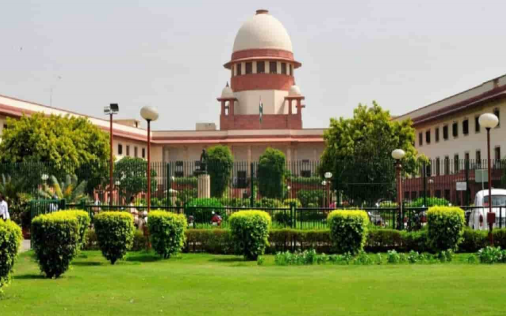
Dangers of Judicial decision guided by extraneous considerations
By K Raveendran
A pointed observation from the apex court has opened an uncomfortable but necessary conversation about judicial integrity, a subject that has long been discussed in hushed tones but rarely confronted head-on within the system itself. A bench of the Supreme Court of India headed by Chief Justice Surya Kant warned against judges passing orders based on extraneous considerations, a phrase that carries far more weight than its measured wording suggests. The significance of this remark lies not merely in its content but in the fact that it acknowledges the existence of a problem that many within the legal fraternity have privately recognised for years yet hesitated to articulate openly.
For any institutional malaise to be addressed, its existence must first be acknowledged. In that sense, the court’s observation marks a crucial starting point. The Indian judiciary, admired globally for its constitutional activism and independence, has also faced periodic allegations that certain judgments, particularly those involving the executive, appear curiously aligned with the prospect of post-retirement appointments. Until now, these allegations have largely been confined to academic commentary, media analysis, and informal conversations among lawyers and judges. The reluctance to confront the issue publicly has stemmed from a fear that doing so might erode public faith in the judiciary. Yet silence has arguably inflicted greater damage by allowing suspicion to fester.
The concern is not about isolated errors of judgment or ideological leanings, which are inevitable in any system that relies on human decision-making. It is about decisions influenced, or perceived to be influenced, by considerations unrelated to law, evidence, and constitutional principle. When a judge appears to tailor reasoning in a manner that benefits the executive of the day and is subsequently rewarded with a gubernatorial post, a tribunal chairmanship, or another government-linked assignment after retirement, the damage extends far beyond the individual case. Even if no quid pro quo exists, the appearance of impropriety can be as corrosive as actual misconduct.
Judicial corruption is often imagined in crude terms: bribery, direct financial inducements, or overt misuse of office. The phenomenon hinted at by the Supreme Court’s remark is subtler and, in many ways, more dangerous. A judgment shaped by the anticipation of future favour undermines the very foundation of judicial independence. The power of the judiciary rests on public confidence that judges are insulated from political or personal gain. Once that belief is shaken, every verdict in a politically sensitive case becomes suspect, regardless of its legal soundness.
It is telling that the observation came while the court was dealing with the conduct of a very junior judicial officer. On one level, this may appear ironic, even misplaced. The systemic issues that plague judicial integrity are more often associated, at least in public perception, with higher echelons of the judiciary, where the stakes are larger and the proximity to power more pronounced. Yet the choice of context may also be deliberate. By articulating the principle in a case involving a junior officer, the court has framed the problem as one of institutional culture rather than individual culpability at the top alone. It signals that susceptibility to extraneous considerations can take root at any level if left unchecked.
This universality of the problem is precisely what makes it so troubling. From trial courts to constitutional benches, the judiciary operates within a broader ecosystem that includes the executive, the legislature, the media, and public opinion. Judges are not immune to ambition, recognition, or the desire for relevance after retirement. In a system where post-retirement positions are routinely offered by the government of the day, the temptation, whether conscious or subconscious, is real. The absence of clear, enforceable norms governing such appointments only exacerbates the risk.
Defenders of the status quo often argue that post-retirement roles allow the state to benefit from judicial expertise and that to deny such opportunities would be wasteful. There is merit in the claim that experienced judges can contribute meaningfully to commissions, tribunals, and constitutional bodies. The problem arises when these appointments are made at the discretion of the executive without transparent criteria or cooling-off periods. In such circumstances, even the most upright judge may find it difficult to dispel doubts about motivation, particularly if appointments follow closely on the heels of favourable rulings.
The Supreme Court’s warning against extraneous considerations must therefore be read as a call for introspection rather than mere admonition. It invites the judiciary to examine its own structures and incentives. Ethical codes and oaths, while important, are insufficient if institutional arrangements continue to create conflicts of interest. Meaningful reform would require a rethinking of how post-retirement appointments are handled, possibly through independent selection mechanisms or mandatory intervals that separate judicial service from executive engagement.
Equally important is the need for internal accountability and peer scrutiny. Judicial independence does not imply immunity from criticism, especially when that criticism is grounded in reasoned analysis rather than populist outrage. A mature institution should be capable of distinguishing between attacks on its authority and legitimate concerns about its integrity. By acknowledging the problem, the Supreme Court has taken a step towards fostering such maturity.
The larger implication of the court’s remark lies in its potential to reshape expectations. If the judiciary itself recognises the danger of extraneous considerations, litigants, lawyers, and citizens may feel emboldened to demand higher standards of conduct and clearer safeguards. This, in turn, could generate pressure for legislative or administrative measures that reduce the scope for perceived conflicts of interest.
Ultimately, the strength of a judiciary is measured not by its infallibility but by its willingness to confront uncomfortable truths. The observation by the Supreme Court bench does not resolve the problem it identifies, nor does it pretend to. What it does is puncture a long-standing silence. That alone makes it consequential. Whether this moment becomes a turning point or a footnote will depend on what follows: sustained dialogue, institutional reform, and a collective commitment to ensuring that justice is not only done but seen to be done, free from the shadow of personal or political gain. (IPA Service)