
By K K Sharma, Former Director Agriculture Jammu
In a bid to tackle rising air pollution and urbanization challenges, Jammu Smart City is set to launch a large-scale plantation drive during current mosoon season, which should be inspired by scientific research on air pollution-tolerant plants. The initiative can create urban forests that will improve air quality, reduce noise pollution, and enhance the city’s green cover. The air pollution index of the city of temples generally ranges between satisfactory to moderate which is a matter of concern for Jammu being developed as a Smart city.
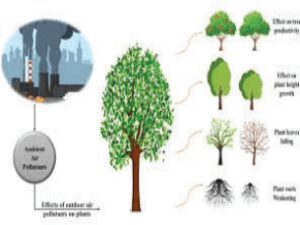
The plantation drive should use findings from a study conducted in BHU, which evaluated 29 plant species based on their ability to tolerate air pollution. In this study, species like *Ficus benghalensis* (Banyan tree) and *Ficus religiosa* (Peepal tree) were identified as “excellent performers” for urban forests due to their high tolerance to pollutants. Other species such as *Polyalthia longifolia* (Ashoka tree), *Ficus glomerata* (Cluster fig/Gular tree), *Anthocephalus indicus* (Kadamba tree), and *Mangifera indica* (Mango tree) were rated as “very good performers.”
Additionally, plants like *Cassia fistula* (Golden shower tree/Amaltas), *Drypetes roxburghii*(Jiyapota tree), *Terminalia arjuna* (Arjuna tree), *Psidium guajava* (Guava tree), *Millingtonia hortensis* (Indian cork tree/Akash neem), and *Dalbergia sissoo* (Indian rosewood/Sheesham tree) were ranked as “good performers.” These species should be planted along roadsides, parks, and residential zones besides industrial units to create green belts that act as natural filters for harmful pollutants.
Moderate performers such as *Delonix regia* (Gulmohar), *Kigelia pinnata* (Sausage tree/Balam Khira), *Azadirachta indica* (Neem tree), *Terminalia bellirica* (Bahera tree), *Murraya peniculata* (Madhu Kamini), and *Syzygium cumini* (Jamun tree)
should also be included in the plantation drive to diversify the urban forest.
However, species like *Zizyphus jujuba* (Ber tree), *Albizia lebbeck* (Siris tree), *Nerium indicum* (Oleander/Kaner), and *Bauhinia purpurea* (Orchid tree/Kachnar) were ranked as “poor performers” and should be planted in limited numbers. Trees such as *Tectona grandis* (Teak) and *Bauhinia variegata* (Kachnar tree) were deemed “not recommended” due to their low tolerance to air pollution.
The plantation will not only improve air quality but also help mitigate the urban heat island effect and enhance the city’s aesthetic appeal. The initiative should also involve local communities in plantation drives and raise awareness about the importance of urban greenery on scientific lines. Plantation of seedling mango should be encouraged to promote desi sucking mango varieties as heritage . Tall growing Ashoka plant (longifolia) should be promoted around indurial and mining areas.Moreover, plants of the fig family such as Peepal, Banyan, and Gular will also help in controlling the growing monkey menace if planted in large areas in forests surrounding the Jammu city.
With this step, Jammu Smart City can have a significant stride toward sustainable urban development, setting an example for other cities to follow.
(The writer can be reached at [email protected])