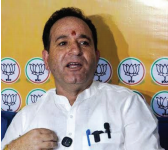
Rajinder Dhamija
A year ago the Coronavirus made its entry into the country. Since then, we have come a long way from the hard lockdown beginning in March-end to the second phase of the vaccine rollout which started from Monday with Prime Minister Narendra Modi taking a shot. By opting for the ICMR vaccine, he sent a clear signal that our indigenous vaccines are safe. Right now we are at a crucial stage of the pandemic’s trajectory as we still have a narrow window for vaccinating the maximum number of people amid the falling number of new infections in most parts of India. This is the time to focus on mitigation with no scope for complacency. The pandemic is not over until it is actually over in all States and the virus does not have an adequate number of susceptible individuals to infect and survive. We need to chase the virus aggressively rather than the contagion chasing us.
It has been a sort of partial success so far as we have managed to keep infections as well as mortality rates low as compared to many countries in the West with a better infrastructure and capacity to contain and mitigate the virus. However, still more needs to be done as we enter into the next stage of the trajectory with an upsurge in cases in Kerala, Maharashtra, Tamil Nadu, Punjab, Gujarat and looming signs of increasing numbers in Delhi. Vaccine hesitancy remains an issue, with half of the eligible people coming forward for the inoculation. This is a universal phenomenon seen across the globe. Much of this is due to misinformation on social media and the tendency of many individuals to wait and watch. This needs to be aggressively countered and the State has made all efforts to quell this phenomenon. This all-out effort by the Government needs to continue in order to accelerate the vaccination drive which can gain momentum if more vaccines are made available to the public and in the open market so that everyone can get the jab on demand both through the public as well as private healthcare system.
The second strategy should be to continue mass-scale RT-PCR testing. There is no reason to scale down testing as we have seen lately in many States because that can be disastrous, especially with new mutant variants of the virus making entry into our cities. These variants will be seen in India as it is difficult to stop the transmission in view of relaxation of movement in an era of necessary international travel. More genomic sequencing would perhaps help us in early detection of these new variants arriving in the country and within India. We need to prepare for the inevitable and the focus should remain on both Covid-appropriate behaviour as well as vaccinating the masses.
Third, we need to create resilient district health systems. A weak link in most States is the poor status of district hospitals. In contrast to the prevailing political and bureaucratic response with focus on hardware (beds, ventilators, oxygen, and so on) in healthcare facilities, we should also focus on software development (capacity building and better-quality health workers) which is more important. The current pandemic provides us opportunity and finances to influence politicians and bureaucrats to build resilient and responsive health systems at both primary and secondary healthcare centres in States. Since health is a State subject, a collaborative and collective effort both by States and the Centre should be made to augment these district hospitals. Excellence in secondary healthcare is crucial and well-placed, well-funded, well-staffed and well-equipped district hospitals should be developed as the most important component of the healthcare chain to respond to future outbreaks. We have the opportunity to create a resilient secondary district healthcare system that is responsive to the needs of the public with focus on preventive, promotive, curative and restorative patient care.
(The writer is Head of Neurology Department, Lady Hardinge Medical College and SSK Hospital, New Delhi. The views expressed are personal.)