Puran Chand Sharma
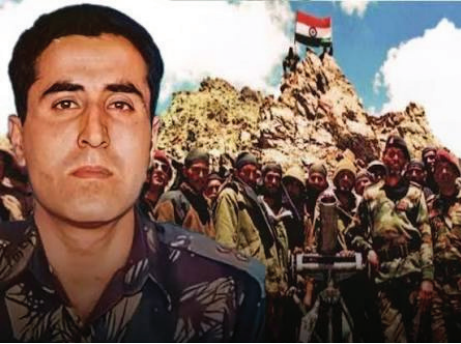
The story of Captain Vikram Batra is not merely one of military bravery; it is a saga of patriotism, courage, leadership, sacrifice, and unwavering commitment to duty. His life and supreme sacrifice during the 1999 Kargil War transformed him into a national icon and an eternal inspiration for generations of Indians.
Early Childhood and Education
Captain Vikram Batra was born on September 9, 1974, in Palampur, Himachal Pradesh. He was the son of Girdhari Lal Batra, a school principal, and Kamal Kanta Batra, a school teacher. He had a twin brother, Vishal, and was known for his energetic personality from an early age.
As a child, Vikram excelled in academics, sports, and extracurricular activities. He was particularly fond of table tennis, karate, and outdoor adventures. His teachers and friends remembered him for his fearless nature, leadership qualities, and willingness to help others. He completed his schooling in Palampur and later graduated from DAV College, Chandigarh. During his college years, he actively participated in the National Cadet Corps (NCC), where his inclination towards military life became even stronger.
Journey into the Indian Army
Although selected for the Merchant Navy—a lucrative career option—Vikram chose to serve the nation by joining the Indian Army. He joined the Indian Military Academy and was commissioned into the Indian Army in December 1997. He was posted to the 13 Jammu and Kashmir Rifles, the regiment that later played a decisive role in the Kargil conflict. Even before the war, his colleagues recognized him as a bold, cheerful, and highly motivated officer who always led from the front.
Kargil War: The Test of Courage
In 1999, Pakistani soldiers and intruders occupied strategic mountain peaks in the Kargil sector. Reclaiming these heights was an extremely difficult task because the enemy occupied superior positions at altitudes exceeding 16,000 feet. Captain Vikram Batra was entrusted with some of the most dangerous missions.
Victory at Point 5140
His company was assigned the task of capturing Point 5140, a heavily fortified enemy position. Despite steep cliffs, freezing temperatures, and intense enemy fire, Captain Batra led his men fearlessly. He personally attacked enemy bunkers and inspired his troops to advance relentlessly.
After successfully capturing the peak, he radioed the now-famous message, “Yeh Dil Maange More.” Originally a popular advertising slogan, Captain Batra transformed it into a symbol of determination, courage, and victory. It reflected his belief that one success was never enough when the nation’s honour was at stake.
Why He Stayed Ahead of the Enemy
Several qualities distinguished Captain Batra as an exceptional military leader:
- Leadership from the front: He never asked his soldiers to do what he was unwilling to do himself.
- Fearlessness: He believed courage could overcome even the toughest battlefield disadvantages.
- Tactical initiative: He often adopted bold and unexpected strategies to surprise enemy forces.
- Exceptional morale: His optimism and confidence inspired his fellow soldiers even under the harshest conditions.
- Commitment to the mission: For him, personal safety was secondary to the success of the operation and the welfare of his men.
The Supreme Sacrifice
Following the success at Point 5140, Captain Batra volunteered for another critical mission to capture Point 4875. During fierce combat on July 7, 1999, he noticed a fellow officer in danger and moved forward without hesitation to rescue him. While leading the attack and protecting his comrades, he was fatally wounded. He was only 24 years old.
His sacrifice contributed significantly to India’s victory in the Kargil War. For his extraordinary gallantry and conspicuous bravery, he was posthumously awarded the Param Vir Chakra, the nation’s highest wartime gallantry award.
The Enduring Significance of His Sacrifice
Captain Batra’s martyrdom symbolizes the spirit of selfless service and demonstrates that national duty transcends personal interests. His supreme sacrifice boosted the morale of the entire nation during the war, became a shining example of military leadership, and reinforced faith in the courage and professionalism of the Indian Army.
His famous slogan, “Yeh Dil Maange More,” acquired a timeless meaning beyond the battlefield. It came to represent:
- More courage in adversity.
- More commitment to duty.
- More service to the nation.
- More excellence in every endeavour.
- More determination to overcome challenges.
It reflects the spirit of never settling for mediocrity and always striving to give one’s best for the nation.
Captain Vikram Batra’s legacy reminds every Indian that true greatness lies not in what we take from our nation, but in what we give to it. His martyrdom remains one of the defining moments of modern Indian military history, and his life continues to inspire countless young Indians to serve the nation with courage, honour, and dedication.
Let us always remember and honour our war heroes.
(The author is President, Ved Mandir Management Committee, Ambphalla, Jammu.)