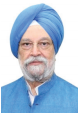
By BK Prof. (Dr.) Jayadeba Sahoo
“Charaiveti, Charaiveti” — Move onward, ever onward. — Aitareya Brāhmaṇa
Political leadership in India has traditionally been viewed not merely as the exercise of power but as a sacred responsibility towards public welfare, national security and collective prosperity. Few contemporary leaders have embodied this expectation as dramatically as Prime Minister Narendra Modi.
From humble beginnings in Vadnagar, Gujarat, Modi’s rise to lead the world’s largest democracy represents one of the most remarkable political journeys in modern India. For millions, it symbolizes aspiration, perseverance and social mobility. Yet, Narendra Modi is more than an individual success story. He has become an institution, a political brand, a movement and, for many supporters, a symbol of national resurgence. For critics, however, he represents centralization of power, ideological majoritarianism and growing pressures on liberal democratic norms.
Understanding the Modi era, therefore, requires moving beyond simplistic binaries. Twelve years after assuming national leadership, India has undergone significant transformation. Economic modernization, digital innovation, infrastructure expansion, welfare delivery, diplomatic visibility and renewed cultural confidence have become defining themes of public discourse. Simultaneously, concerns regarding democratic pluralism, institutional autonomy, media independence and social cohesion continue to shape scholarly debate.
The Rise of a Political Phenomenon
Modi’s ascent cannot be separated from the broader transformation of Indian politics in the early twenty-first century. By 2014, public dissatisfaction over corruption scandals, administrative inertia and slowing economic growth had generated a demand for decisive leadership.
His slogan, “Minimum Government, Maximum Governance,” captured aspirations for efficiency and accountability. The subsequent call of “Sabka Saath, Sabka Vikas” articulated a developmental vision centred on inclusion.
Political observers attribute his electoral success to a combination of charismatic leadership, the BJP’s organizational strength, aspirational politics, effective communication, digital outreach, youth mobilization and anti-incumbency sentiment. The victories of 2014 and 2019, followed by the formation of the NDA government in 2024, established Modi among India’s most electorally successful leaders.
Governance Through Technology
The Bhagavad Gita reminds us: “Yogaḥ Karmasu Kauśalam”—Excellence in action is yoga.
One of the defining features of the Modi era has been the attempt to improve governance through technology and direct citizen engagement. The traditional welfare model, often criticized for leakages and bureaucratic delays, has increasingly given way to digital integration.
The JAM Trinity—Jan Dhan, Aadhaar and Mobile connectivity—became the backbone of this transformation. Direct Benefit Transfers enabled subsidies and welfare benefits to reach intended beneficiaries more efficiently, reducing opportunities for corruption and duplication.
This marked a transition from discretionary welfare delivery to technology-enabled governance.
Development and Economic Reform
Economic transformation has remained central to the Modi government’s agenda.
The introduction of the Goods and Services Tax (GST) in 2017 sought to create a unified national market by simplifying indirect taxation and improving compliance, though small businesses faced initial adjustment challenges.
The Make in India initiative aimed to position India as a global manufacturing hub, contributing to growth in electronics production and attracting investment. Yet manufacturing’s share in GDP remains below expectations.
Perhaps the most visible success has been India’s digital revolution. Unified Payments Interface (UPI) transactions have created one of the world’s largest digital payment ecosystems, demonstrating India’s capacity for technological innovation.
At the same time, demonetization in 2016 remains the Modi government’s most debated reform. Supporters viewed it as a bold strike against black money and counterfeit currency, while critics highlighted disruptions to the informal economy and questioned its long-term effectiveness. The episode continues to symbolize the Modi paradox: ambitious policymaking that inspires both admiration and controversy.
Welfare as Governance
A defining aspect of the Modi era has been welfare delivery through technology-driven mechanisms.
Schemes such as Pradhan Mantri Jan Dhan Yojana, Ujjwala Yojana, PM Awas Yojana, Jal Jeevan Mission, Ayushman Bharat and PM-Kisan have expanded the state’s direct engagement with citizens.
Supporters regard these initiatives as evidence of responsive governance. Critics argue that structural challenges relating to employment, education and healthcare still require deeper reforms.
India’s Digital Transformation
Digital India represents more than digitization; it reflects a vision of a digitally empowered society.
Expansion of broadband access, growth of fintech platforms, e-governance initiatives and digital public infrastructure have drawn international attention. Increasingly, India’s model of Digital Public Goods is being cited as an example for developing nations seeking inclusive technological progress.
India’s Expanding Global Profile
The Rigveda declares: “Ā No Bhadrāḥ Kratavo Yantu Viśvataḥ”—Let noble thoughts come to us from every side.
Modi’s foreign policy has sought to elevate India’s international standing through stronger engagement with major powers, the Neighbourhood First policy, Act East initiatives and Indo-Pacific partnerships.
India’s G20 Presidency, Vaccine Maitri outreach during the pandemic and leadership in initiatives such as the International Solar Alliance enhanced the country’s diplomatic visibility and reinforced its image as the voice of the Global South.
National Security and Cultural Confidence
The Modi years have also witnessed a more assertive national security posture, exemplified by the 2016 surgical strikes and the 2019 Balakot airstrike, alongside emphasis on defence modernization and border infrastructure.
Equally significant has been the revival of civilizational consciousness through initiatives such as the Kashi Vishwanath Corridor, Mahakal Lok, Kartavya Path, the new Parliament building and the Ram Mandir at Ayodhya.
Supporters view these developments as restoring cultural pride. Critics raise concerns about secular pluralism and the relationship between religion and the state.
Democracy and Dissent
No appraisal of Modi’s legacy can ignore debates surrounding democracy and institutions.
Critics point to centralization of authority, reduced parliamentary deliberation, media polarization and concerns regarding institutional autonomy. Supporters argue that decisive leadership enhances governance effectiveness, electoral mandates validate policy choices and democratic participation remains robust.
The persistence of vigorous political contestation itself reflects the vitality of India’s democratic process.
The Modi Enigma
The Bhagavad Gita observes: “Nothing is more purifying than true understanding.”
Narendra Modi continues to evoke sharply divergent responses because he simultaneously embodies multiple identities: reformer and traditionalist, nationalist and globalist, welfare provider and market modernizer, centralizer and mass mobilizer.
Each perspective highlights a different dimension of his leadership. Consequently, the Modi era resists simplistic judgments.
Towards Viksit Bharat 2047
The vision of Viksit Bharat 2047 seeks to transform India into a developed nation by the centenary of Independence. Its pillars include sustained economic growth, technological leadership, human capital development, sustainability, social inclusion and greater global influence.
Whether this aspiration is realized will depend not solely on leadership but also on institutions, citizen participation and collective national effort.
Narendra Modi’s tenure has undeniably reshaped India’s welfare architecture, digital ecosystem, foreign policy profile and developmental discourse. At the same time, questions surrounding democratic pluralism, institutional balance and social cohesion remain integral to assessing his legacy.
History seldom delivers immediate verdicts. The final judgment on Modi’s place in India’s political evolution will emerge through the long arc of historical reflection. What is already evident, however, is that he has become a defining figure of contemporary India—one whose leadership continues to shape the nation’s aspirations, achievements, anxieties and debates as it journeys towards Viksit Bharat 2047.
( The author is a Sr. Faculty Trainer, Brahma Kumaris, RERF & Professor, (Ex-Dean & Head), Faculty of Education, Rajiv Gandhi (Central) University, Itanagar-, Arunachal Pradesh. Mobile:91- 883l245051, 9436042658,)