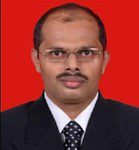
By Sudhansh Pant
From India’s villages and small towns to the corridors and lush green gardens of Oxford and John Hopkins University, the National Overseas Scholarship (NOS) Scheme is powering journeys of aspirations across continents.
In one of the remote and disadvantaged villages of Tripura, Dipayan Bhowmick once dreamt of becoming an architect despite growing up far away from the opportunities usually associated with international education. Yet, through academic perseverance and the support of the National Overseas Scholarship, Dipayan went on to pursue a Master of Science in Architecture and Urban Design at the University of Stuttgart, Germany.
Living, studying and working in Germany exposed him to a diverse international environment that transformed not only his academic understanding, but also his outlook towards society, sustainability and urban development. Drawing inspiration from both Indian and German approaches to architecture and urban design, he returned to India determined to use his learning. Today, Dipayan runs his own architectural practice, contributing towards society through his professional work while also creating opportunities for others.
He is one amongst hundreds of Scheduled Caste students whose life trajectory has dramatically altered due to the National Overseas Scholarship (NOS), a Government of India initiative that funds postgraduate and doctoral studies at top foreign universities. The Scheme covers tuition, travel, living expenses and other academic requirements, ensuring that securing an admission into a world-class university is not determined by the economic circumstances of a student’s family.
There are hundreds of such stories where a passport has been seen by the families for the first time ever and instances of so many parents who send their children off to distant countries whereas they themselves have not even set foot in colleges within the country.
Since 2014, the NOS Scheme has supported students from families earning less than Rs. 8 lakh annually to universities across 21 countries, from UK to Germany, US to Australia. For many such families, even applying for admission to a foreign university would have required them to visit a cybercafé nearby.
Dr. Vaithilingam Rajendiran, a Senior Scientist, who pursued a PhD in Chemistry at Oklahoma State University in the United States, grew up as the son of daily wage parents. He completed his schooling and undergraduate education in nearby government institutions and struggled through financial hardships while pursuing higher studies. Yet, with determination and relentless efforts, he completed his doctoral studies successfully and went on to build a distinguished scientific career.
What these students bring back is not just a degree or a high-paying job but hopes, numerous opportunities and aspirations for people in their community. Scholarships such as the National Overseas Scholarship are often viewed merely as financial assistance programmes. In reality, they are long-term investments in human capital and knowledge creation. Developed countries are not built by roads, bridges or airports alone. They are also built in classrooms. Every student who crosses borders with such scholarships carries back the confidence and abilities to contribute to India’s vision of Viksit Bharat@2047. This is the compounding return of a single scholarship.
The significance of scholarships lies not only in funding education but in creating an ecosystem of stability around students who are often navigating academic and social worlds for the very first time. For many first-generation learners, the challenge is not limited to securing admission. It is sustaining the journey thereafter, managing living expenses in expensive cities, purchasing books or digital devices, paying for accommodation and other costs that accompany such opportunities. Scholarships act as a crucial support system that enables students to focus on learning rather than worry about such day-to-day challenges.
The scholarship operates without fanfare. There are no glossy campaigns and no celebrity endorsements. Over 12 years, 764 students have been selected on their academic merit to take admission in the most prestigious international colleges. In many ways, the National Overseas Scholarship Scheme is different due to the assistance it extends to each student. For a single scholar pursuing higher education at a leading global university, the cumulative financial aid, covering tuition fees, living expenses, airfare, insurance and other academic costs over the duration of the course often exceeds Rs. 1 crore and may even go up to Rs. 2 crore.
There are only a few public scholarship programmes in the world that make such a substantial investment in an individual student from a socially aspirational background. The significance of this support lies not only in the financial aid provided but also in what it intends to achieve. It envisions a national commitment to ensure that financial circumstances do not limit access to opportunities for students from certain communities. It is one of the most ambitious examples of educational investment in individual human potential.
India’s scholarship ecosystem for Scheduled Caste students, spanning domestic premier institutions as well as overseas education, reflects this vision. It recognises that upliftment requires continuity, stability and sustained support. In many villages and small towns, the success of a single scholar changes the imagination of an entire generation. A younger sibling begins preparing for competitive examinations with greater confidence. A village sees international education not as an impossible dream, but as a reachable destination. The classrooms of Oxford, MIT or Columbia may appear geographically distant from India’s villages and small towns. Yet, through scholarships such as the National Overseas Scholarship, these distances are slowly shrinking.
Applications for the National Overseas Scholarship are administered by the Ministry of Social Justice and Empowerment. Eligible candidates may apply through the National Scholarship Portal by 2nd June 2026.
(The author is Secretary, Department of Social Justice & Empowerment, Government of India. Views expressed are personal)