Fresh death threat exposes ISI’s terror shadow in Jammu Kashmir
RS Gill
Jammu/Srinagar: Pakistan-sponsored terror networks operating in Jammu Kashmir have widened their campaign of intimidation, moving beyond civilian targets to openly threaten Kashmiri analysts who challenge Islamabad’s narrative at international forums.
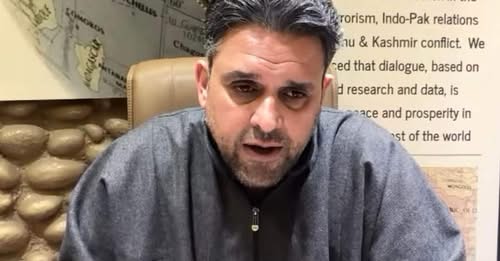
In a fresh escalation, Lashkar-e-Taiba (LeT), acting through its front organisation The Resistance Front (TRF), has issued a death threat against noted counter-terrorism expert Junaid Qureshi, Director of the European Foundation for South Asian Studies (EFSAS). The threat was delivered through an end-to-end encrypted messaging platform and carried TRF branding.
According to the message, Qureshi was labelled a “traitor”, with the terror outfit warning that it would have “no hesitation” in assassinating him. This marks the second such threat in the last six months against individuals who have exposed Pakistan’s proxy war in Jammu and Kashmir before global audiences.
Pattern of Violence and Silencing of Dissent
Security analysts say the threat fits a long-established pattern of violence aimed at silencing Kashmiri voices that oppose Pakistan-backed militancy. Official data indicates that over 5,000 civilians, journalists, politicians and intellectuals were killed by Pakistan-sponsored terror outfits between 1989 and 2020 for resisting extremist narratives.
High-profile assassinations have underlined the danger. The killing of Rising Kashmir editor Shujaat Bukhari in June 2018, after repeated threats by Hizbul Mujahideen, remains one of the most chilling examples. More recently, social activist Ghulam Rasool Magray was shot dead in Kupwara in April last year by suspected terrorists.
ISI Role Alleged
Speaking to the media, Qureshi alleged direct involvement of Pakistan’s Inter-Services Intelligence (ISI) in planning the threat, claiming it was executed through Lashkar-e-Taiba and its commander Sheikh Sajjad Gul.
He pointed out that the threat message referred to confidential details of a proposed Kashmiri intellectual think tank, information not available in the public domain and known only to a small circle. This, he said, strongly indicates intelligence-level coordination.
Qureshi added that the message explicitly mentioned his efforts to dismantle Pakistan’s propaganda on Kashmir and present documented evidence of state-sponsored terrorism at international platforms—work he believes Pakistan’s security establishment considers a serious challenge.
Rejecting a Legacy of Extremism
Junaid Qureshi is the son of Hashim Quraishi, one of the hijackers of Air India flight IC-405 in 1971. However, he has consistently and publicly rejected his father’s ideology, describing the hijacking as an act of terrorism that occurred before his birth and distancing himself from extremism.
Through EFSAS, Qureshi has systematically countered Pakistan’s claim of a “freedom struggle” in Kashmir, arguing that it is a state-sponsored terror campaign involving Lashkar-e-Taiba, Hizbul Mujahideen and Jaish-e-Mohammed, allegedly operating under ISI direction.
Pakistan-Based Command and Control
Intelligence sources confirmed that the encrypted account used to issue the threat is operated from Rawalpindi and is allegedly controlled by LeT commander Sheikh Sajjad Gul. The account, created on August 24, 2025, is regularly used to disseminate TRF propaganda, operational updates and photographs.
Security officials say this establishes a Pakistan-based command-and-control structure behind the intimidation campaign.
Wider Implications
The latest threat has once again highlighted allegations that Pakistan continues to employ terror proxies to intimidate and silence Kashmiri voices—both within the region and abroad—who expose its role in sponsoring violence.
Observers note the contradiction between Islamabad’s annual observance of so-called “Kashmir Solidarity Day” and persistent accusations that its intelligence establishment backs targeted threats and killings to suppress dissenting narratives on Jammu and Kashmir.