Immigration and national security emerge as top political agenda for Trump in 2026
By Ashok Nilakantan Ayers
NEW YORK: The Trump administration is preparing to dramatically widen its travel ban, potentially restricting entry from more than 30 countries, in what officials describe as an urgent response to national-security concerns and a series of violent incidents involving foreign nationals.
The proposed expansion, confirmed this week by Homeland Security Secretary Kristi Noem, would mark one of the broadest assertions of immigration authority in recent U.S. history — and one certain to ripple across global politics, diplomacy, and America’s standing as a magnet for migrants, students, and skilled workers.
“I won’t be specific on the number, but it’s over 30,” Noem said in an appearance on Fox News’ The Ingraham Angle. Though she declined to identify the countries under review, her remarks signalled that the administration is moving rapidly to extend the parameters of an already controversial travel regime.
The existing ban covers 19 countries, most of them in Africa and the Middle East, along with a handful in Asia and the Caribbean. It restricts or blocks the issuance of U.S. visas, largely on the grounds that their governments lack the capacity to reliably identify or screen individuals who pose security risks.
But in Washington, the political atmosphere shifted sharply after a highly publicized shooting earlier this year involving an Afghan national admitted under a resettlement program. The incident — in which one National Guard member was killed and another wounded — quickly became a rallying point for the administration’s argument that America had lost control of its borders.
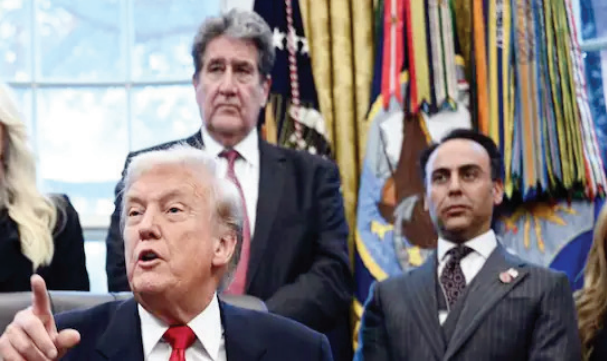
President Donald Trump, who campaigned on cracking down on illegal migration and restoring “law and order,” has made the episode central to his renewed effort to expand travel restrictions. His advisers frequently describe the U.S. immigration system as dangerously porous, and argue that nationality-based bans are necessary to prevent terrorists, criminals, or “undesirable elements,” as Noem put it, from gaining entry.
In speeches and social-media posts, Trump has portrayed certain foreign countries as failing states whose citizens arrive in the U.S. without adequate vetting. “We are not obligated to import the world’s problems,” he said at a recent rally in Arizona. “If a country can’t tell us who their citizens are, we will not allow those citizens in.”
Though Noem did not reveal the list of new countries under consideration, senior officials have hinted that the expansion could bring the total to as many as 32 nations. People familiar with internal discussions say the administration has reviewed intelligence assessments related to document fraud, inadequate identity records, porous borders, and the presence of extremist networks.
Yet the secrecy surrounding the list has fuelled anxiety globally — particularly in South Asia and Southeast Asia, home to large migrant populations, U.S.-bound students, and thriving diaspora communities.
Indian, Pakistani, Bangladeshi, Sri Lankan, Nepali, and Maldivian officials say they have received no indication that their countries are being considered. Several diplomats, speaking on background, said they do not expect South Asia to be included, given the region’s generally strong cooperation on security screening and counterterrorism. Still, the absence of clarity from Washington has intensified speculation.
“We are watching the situation closely,” one senior South Asian foreign-ministry official said. “The U.S. has not communicated any concerns to us, but we cannot ignore the political climate.”
The policy expansion arrives at a moment when Trump and his allies have sought to link immigration directly to violent crime — a narrative that polls suggest resonates with parts of the American electorate despite the lack of evidence that immigrants commit crimes at higher rates than native-born citizens.
In recent weeks, Trump has repeatedly cited isolated incidents involving undocumented migrants, portraying them as emblematic of a broader threat. Administration officials have highlighted episodes of gang violence, drug trafficking, and human smuggling, arguing that the U.S. is being “taken advantage of” by countries exporting criminals.
Homeland Security Secretary Noem has gone further. In one widely circulated social-media post, she described certain nations as sources of “killers, leeches, and entitlement junkies.” Critics seized on the language as xenophobic, but Noem’s comments reflect a broader intellectual shift within the administration: an embrace of categorical restrictions based not on individual risk but on nationality.
Trump aides argue that individualized screening is insufficient in environments where documentation standards are weak or corrupt. The ban, they say, is a preventative measure — not a punitive one.“We are not judging individuals,” a senior DHS official said. “We are assessing government capacity. The United States has the right to decide who enters.”
Reaction in world capitals has been swift. Leaders from Africa and the Middle East — already home to the 19 countries under the current ban — expressed dismay, calling the policy discriminatory and harmful to ordinary citizens seeking educational and economic opportunity.
Human-rights groups sharply criticized the plan. “It is collective punishment, plain and simple,” said a spokesperson for Human Rights First. “Entire populations are being barred from the United States based on the actions of a few or the administrative limitations of their governments.”
European diplomats privately voiced concern about the precedent: a major Western democracy imposing blanket nationality bans at a scale more commonly associated with authoritarian states.
China, which has its own restrictions on foreign visitors, used the moment to criticize what it called “unilateral and politicized immigration controls” by Washington — a statement American officials dismissed as propaganda.
While none of the major South Asian nations appear likely to be included — at least based on public information — the region’s reaction has been cautious. India, Pakistan, and Bangladesh together send hundreds of thousands of students, workers, and tourists to the U.S. annually; any restriction could have major economic and social consequences.
India, in particular, maintains close security cooperation with Washington. Officials in New Delhi suggested they were not concerned but noted that “any change affecting Indian citizens would be taken seriously.”
Southeast Asian governments, especially Vietnam, Indonesia, and Malaysia, have urged Washington to release the list sooner rather than later to avoid confusion among travellers. Diplomats also warn that a broad expansion risks alienating countries whose citizens have long contributed to the U.S. economy — especially in sectors like technology, academia, healthcare, and hospitality.
The administration has not provided a timeline for publication of the expanded list or explained whether exceptions will be made for students, skilled workers, or family reunification cases. Legal challenges are expected, as civil-rights groups argue that nationality-based bans violate constitutional protections.
For now, uncertainty prevails — both for the millions abroad who dream of studying or working in the United States and for the governments scrambling to assess how sweeping Trump’s next move may be.
In Washington, though, the message is clearer: immigration and national security remain at the center of Trump’s political agenda, and the travel ban — once a symbol of the early Trump presidency — may soon become even more expansive, more controversial, and more consequential. (IPA Service)