
By Ravi Rohmetra
North India’s biggest fair, celebrated on Kartik Purnima, honours the sacrifice and spirit of honesty, courage, and selflessness.
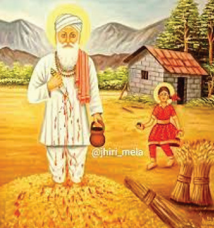
According to an ancient legend, there was an honest, truthful, and simple farmer called Baba Jitto, a Brahmin and devotee of Mata Vaishno Devi and Raja Mandalik. Jitto lived in Aghar village, near Katra, Vaishno Devi.
He grew fed up with the attitude of his aunt Jojan and decided to leave the village. He met Mehta Bir Singh, the Kardar of Ambgrota in Jammu, and urged him to provide a piece of land for tilling. Bir Singh gave him a piece of barren land after signing an agreement, which was written and signed by King Ajaib Dev. Jitto was asked to give one-fourth of his produce to the King.
He worked hard day and night and transformed the barren land into lush green fields. His dream was realized when he had a luxuriant yield. As soon as Bir Singh got the news of the good harvest, he arrived at the fields along with his men and asked them to take three-fourths of the crop, leaving only a quarter for Jitto.
However, Baba Jitto prayed to follow the terms of the agreement, but all his requests fell on deaf ears. Most of the farmers from nearby areas who had gathered could not stop Mehta due to fear of the King’s men.
Left with no solution and no means of help, he committed suicide, leaving all the surrounding grains red with his blood. His very young daughter sat at the funeral pyre of her father and was burnt along with the dead body of Baba Jitto. A fierce storm came, and all the blood-stained crops were washed away. All those people—and even birds—who ate it fell ill, and finally, deaths and misfortune came upon them.
In order to seek pardon from the great soul, people worshipped him and prayed for forgiveness. They asked their future generations to visit Jhiri every year to pay tribute to Baba Jitto and made it mandatory. They also began to worship him as Kuldevata. Thus, from those good olden days, people from North India visit Jhiri village to pay homage to the great soul.
Celebrations
The festivities during the mela last for a week, with the main day of the fair being held on Kartik Purnima. People pay obeisance at the Baba Jitto Temple and seek his blessings and the blessings of his daughter Bua Kouri, who, as per legend, also took her life by jumping onto her father’s funeral pyre.
Devotees also take a customary dip in the Baba-da-Talab (pond)—a natural spring four kilometres from the temple—which is believed to have curative powers. The Jhiri Mela is also called the Farmers’ Fair, as it is celebrated to worship the holy soul of the farmer Baba Jitto.
This fair also provides a significant selling outlet for the sugarcane crop, which is brought by most visitors and farmers to the mela. It is a big occasion for family outings and is particularly rejoiced by children and women. There are numerous stalls loaded with a range of eye-catching goods—from pottery and vases to toys, utensils, and books.
The mela, which lasts nearly a week, also features dances, songs, and a variety of local foods to purchase and taste. Cultural programs and rustic sporting events such as wrestling are among the highlights.
People from the North Indian states of Punjab, Haryana, Himachal Pradesh, and Delhi visit Jammu and Kashmir to pay obeisance and seek blessings from Baba Jitto. The visitors enjoy the fair and remember the sacrifice of Baba Jitto and his daughter.
All civic arrangements, including transport, are made by the District Administration, Jammu. There is great hustle and bustle in Jhiri village during the mela.
May the great soul of Baba Jitto continue to inspire us and our future generations. May we imbibe his qualities of honesty, selflessness, courage, bravery, and humility. That will be the truest tribute to this great soul.
(Ravi Rohmetra is Social worker & freelancer writer Mob: 9419652999)

