
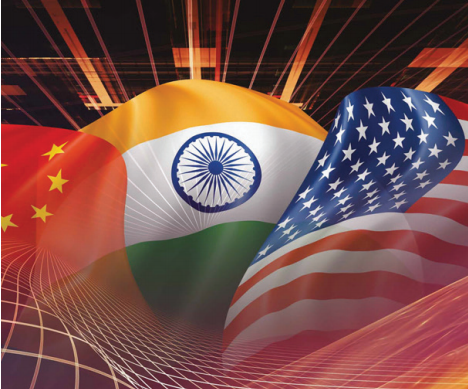
PM Narendra Modi must be emphatic on standing with Global South
By Dr Arun Mitra
The shifting contours of global geopolitics have placed India at a critical juncture. The United States, along with certain other former colonial powers, is once again striving to reassert global dominance. Their strategy is clear – prevent developing nations from advancing, while sustaining their own supremacy. Wars and conflicts across the globe, from the Middle East to Africa and Eastern Europe, and now rising tension around Venezuela bear the imprint of their overt or covert involvement through weapons supply, diplomatic pressure, and outright blackmail.
The World Trade Organization once offered a platform for collective decision-making, albeit imperfect. The US had a powerful voice in the WTO, but there was a scope of amendments to the various clauses which did not favour the interests of the developing countries. This multilateral framework has been dismantled by Donald Trump. In the name of “Making America Great Again,” Washington decided to pursue bilateral trade deals and impose tariffs tailored to each country. Smaller economies have little choice but to yield. Even Europe is divided: Britain tilted toward Washington, while much of the EU is trying to make collective bargain. China, however, stood firm, forcing the U.S. to retreat—reflecting its rise as a formidable global economic power.
India too has been targeted. The U.S. recently imposed tariffs of over 50%, citing India’s imports of Russian oil and alleged that this is helping Russia in carrying out war on Ukraine. This has rattled Indian industry, placing countless workers at risk of unemployment. Ironically, this came despite Prime Minister Modi’s repeated assertions of friendship with the American president and vice versa.
Meanwhile, India participated in two significant global forums this year: the BRICS Summit, where discussions centred on a new currency, nuclear disarmament, and reducing the arms race; other is the Shanghai Cooperation Organization (SCO) Summit in Tianjin which, focused on economic cooperation and collective security. While BRICS members emphasized a BRICS currency as an alternative to US dollar, India hesitated on endorsing alternatives to the U.S. dollar, but instead opted for trade in local currencies. Yet, Washington responded with punitive tariffs soon after. This underscores the point that in geopolitics, it is national interests—not personal friendships—that prevail.
The United States today pursues dominance with relentless vigour—arming Israel despite the genocide in Gaza, expanding NATO eastward, and fuelling the Russia-Ukraine war while seeking to control Ukraine’s resources.
Recent statement by the US President praising Modi as a good friend has made Indian government to change its stance who are now saying that the relationship between India and the US have always been good. This shows a direct tilt after participation in BRICS and SCO meetings.
Against this backdrop, India faces a stark choice: should it align with developing nations striving for a multipolar order, or acquiesce to America’s unilateral designs?
Economically, India’s trade balance with the U.S. is favourable, but with Russia and China it lags. Russia, however, has been a steadfast ally since Soviet times, supporting India through its toughest crises.
Therefore even under American pressure, India has purchased discounted Russian oil—though its benefits accrued mainly to a handful of industrialists rather than the wider population.
There was a time when India was a leader of the Non-Aligned Movement, giving a united voice to developing countries. Today, however, New Delhi appears indecisive—oscillating between blocs. This ambivalence has weakened its standing, evident in the lack of international support after “Operation Sindoor.” Israel, increasingly seen as an aggressor who is conducting genocide in Gaza, was the only country to speak in India’s favour.
In such a volatile global environment, India must act with clarity. The priority should be strengthening ties with neighbours, fostering peace in South Asia, working toward a nuclear-free region and marching forward to lasting peace globally. We cannot side with the aggressors. India’s credibility lies in collective efforts along with developing countries.
Domestically, India must shift its economic base from overdependence on services to robust manufacturing, backed by substantial investment in research and innovation. Equally, quality education must be made accessible and affordable, laying the foundation for long-term strength. There should be a decisive shift from providing highly expensive education in the private sector towards the state owning the responsibility to educate to the maximum of all citizens.
Ultimately, India cannot afford the illusion of balancing in two camps. As the proverb reminds us: “The boatman of two boats always sinks.” (IPA Service)


