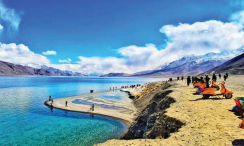
High up in the northern reaches of India lies Ladakh, a land of surreal landscapes, ancient monasteries, and resilient communities. Once largely restricted due to its proximity to international borders with China and Pakistan, Ladakh is now gradually opening up to border area tourism an emerging frontier in Indian travel. This development not only allows adventurous travellers to experience lesser-known parts of the Himalayas but also strengthens India’s strategic, economic, and cultural presence in these sensitive zones.
This article delves into the significance, challenges, opportunities, and future potential of border area tourism in Ladakh, offering a holistic picture of a region that is as geopolitically important as it is visually captivating.
Introduction
Traditionally, the term “border area” evoked images of fenced boundaries, military checkpoints, and restricted zones. However, in the case of Ladakh, India’s northernmost union territory, these borders are home to centuries-old cultures, thriving nomadic communities, and landscapes that defy imagination. In recent years, policy reforms, improved infrastructure, and increased public interest have made parts of these regions accessible to Indian civilians—and to a limited extent, international tourists.
The idea is not merely to open new trekking routes or create scenic stopovers. Border tourism in Ladakh has national and local significance: it helps instill patriotism, brings economic upliftment to border villages, and reinforces India’s presence in geopolitically sensitive regions.
Geographical and Strategic Context
Ladakh shares long international boundaries with both China (via the Line of Actual Control-LAC) and Pakistan (via the Line of Control – LoC). The region has witnessed military stand-offs, including the Kargil War in 1999 and the more recent Galwan Valley clash in 2020. In such a context, the civilian presence through regulated tourism acts as a form of soft assertion of sovereignty.
Key border areas in Ladakh include:
· Turtuk (near the Pakistan border)
· Chushul, Demchok, and Nyoma (near the LAC with China)
· Hanle and Umling La Pass (remote strategic points)
· Daulat Beg Oldie (DBO) and Depsang Plains (military sensitive areas with limited civilian movement)
Major Border Tourism Destinations in Ladakh
1. Turtuk
Once under Pakistani control till 1971, Turtuk is the last Indian outpost in the Baltistan region.
Situated in the Nubra Valley, this village was opened to tourists only in 2010. Its narrow alleys, stone houses, apricot cultivation, cuisines and cheerful Balti-speaking locals tell stories of shifting borders and cultural resilience.
Tourists are drawn to:
· Apricot orchards and organic produce
· Traditional Balti culture and cuisine
· Views of the Shyok River and proximity to the LoC
More than just a scenic retreat, Turtuk is an emotional reminder of India’s military sacrifices and victories.
2. Pangong Tso
Pangong Lake, made famous by films like 3 Idiots, is a saltwater lake that stretches from India into China. Tourists can now travel up to Merak and Spangmik, villages on the lake’s edge.
The lake is a symbol of both natural beauty and territorial tension, often at the center of Indo -China stand-offs. Responsible tourism here becomes a subtle assertion of peaceful Indian presence in contested regions.
3. Hanle
Hanle is home to the Indian Astronomical Observatory, one of the world’s highest observatories. Located in Changthang near the LAC, Hanle offers unmatched stargazing experiences and cultural interactions with the Changpa nomads.
Border tourism here serves a dual role:
· Promoting science and eco-tourism
· Establishing a civilian footprint in a strategically crucial region
4. Umling La Pass
At over 19,000 feet, Umling La in the Demchok region is the world’s highest motorable road. Constructed by the Border Roads Organisation (BRO), it is both an engineering marvel and a tourist magnet.
This pass connects remote villages like Demchok and Chisumle, allowing tourists and bikers to experience life at Himalayan extremes while showcasing India’s infrastructural reach in high altitude zones.
5. Chushul and Rezang La
Located near the LAC, Chushul was the site of the 1962 Battle of Rezang La, where 114 Indian soldiers from the 13 Kumaon Regiment laid down their lives bravely defending the post. A war memorial and access to nearby lakes make this a spiritually and historically moving site for Indian travellers.
Though highly restricted, Chushul is increasingly part of regulated border tours and heritage circuits.
Cultural Insights and Local Life
The opening of these remote areas brings travelers face-to-face with unique cultures:
· The Balti people in Turtuk share ancestry with Central Asian and Tibetan cultures.
· Changpa nomads, living in tents called Rebos, herd yaks and pashmina goats.
· Tibetan Buddhism thrives in these border areas, with monasteries like Tso Moriri, Loma, and Hanle playing a cultural preservation role.
Travellers get a chance to experience:
· Traditional dances (like the Yak dance)
· Butter tea and barley beer
· Pashmina weaving and wool-making
National Significance of Border Tourism
1. Strengthening Sovereignty
The Indian Army can’t be the only presence in these areas. A civilian footprint—homestays, roads, solar energy projects, schools—reinforces India’s long-term presence and legitimacy in contested zones.
2. Emotional Nationalism
Border tourism fosters a connection between citizens and soldiers. Watching the Tricolor fly in the wind at Rezang La or Turtuk evokes a pride that textbooks cannot instill.
3. Local Development
Homestay income, guide services, and local markets have begun transforming fragile, isolated economies into self-reliant communities. Tourism also helps reduce migration to urban centers.
Challenges in Promoting Border Tourism
Despite its promise, several issues hinder the smooth functioning of border tourism:
1. Security Concerns
Sudden geopolitical flare-ups can lead to:
· Cancellation of permits
· Road blockages due to troop movement
· Tourist detentions or restrictions
2. Permit Complexity
Tourists need Inner Line Permits (ILPs) or Protected Area Permits (PAPs), especially near the LAC.
While efforts are on to digitize and streamline this, confusion persists among travellers.
3. Fragile Ecology
Ladakh’s high-altitude deserts are environmentally delicate:
· Tourist littering
· Scarcity of water
· Improper waste management in remote areas
4. Lack of Medical and Communication Facilities
Tourists can suffer from Acute Mountain Sickness (AMS). Limited healthcare in these zones makes it risky. Mobile networks often don’t work near the borders.
Efforts and Policy Support
The Indian government and UT administration have taken several steps to promote border tourism:
· BRO’s road network expansion connecting Leh to border villages
· Homestay schemes and solar power grants for locals
· Public-private partnerships in infrastructure and emergency services
· Cultural festivals like Ladakh Nomadic Festival, held near border areas to attract visitors
The Ministry of Tourism has also proposed Border Tourism Circuits as part of its “Dekho Apna Desh” initiative.
Case Study: Turtuk Transformation
Before tourism, Turtuk relied on subsistence farming. Post-2010, the arrival of tourists changed its landscape:
· Homestay income now supports over 60% of families
· Youngsters trained as guides or porters
· Apricot and handicraft sales reached all-India markets
· Women’s self-help groups empowered through tourism-linked livelihoods
The Role of the Army
The Indian Army in Ladakh plays a dual role:
1. Guardians of national borders
2. Facilitators of local and tourist safety In many cases, the army:
· Offers first aid and rescue to tourists
· Guides permit clearances
· Hosts Republic Day or Independence Day functions in border villages
· Support cultural exchanges with civilians
Future Plannings
For border tourism in Ladakh to thrive, it must be sustainable, inclusive, and secure.
Recommendations:
· Eco-tourism codes of conduct should be made mandatory
· Permit procedures must be digitized and unified
· Healthcare posts and emergency response teams must be deployed in remote regions
· Cultural training for tourists on local traditions and military sensitivity
· Involve locals as stakeholders, not just as service providers
Conclusion
In Ladakh’s borderlands, the mountains don’t just whisper tales of glaciers and rivers; they echo the footsteps of sentries, the prayers of monks, and the hopes of local children waiting for tourists who bring both curiosity and compassion.
Border area tourism in Ladakh is not merely a journey to the edges of maps—it’s a journey to the core of Indian identity. By fostering sustainable travel, preserving local culture, and supporting national interests, this initiative holds the promise of transforming both the traveller and the terrain.