By- Lt Col Ankit Sharma
CLEARING THE CONFUSION AROUND MILLETS
Many people today are turning towards millet’s, yet most of us remain confused about which millet to eat, when and why. Are all millet’s the same? Which ones are best for summer or winter? Should we mix them or eat just one kind regularly? This guide answers all those questions- explaining the types of millet’s grown in India, their several utility, mixing recommendations and how to gradually move from wheat or rice towards a millet-rich balanced diet.
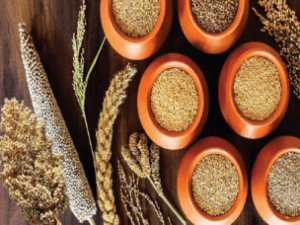
UNDERSTANDING MILLETS: ANCIENT GRAINS FOR MODERN TIMES
Millet’s are small seeded, climate smart grains that sustained Indian civilization for centuries before rice and wheat dominated our plates. They require minimal water, grow in dry soils and are naturally resistant, making them both eco-friendly and farmer friendly. They are rich in:-
- Fibre– Aids digestion and gut health.
- Iron, Zinc and Calcium– Supports bones and immunity.
- Plant Protein– Good vegetarian source of amino acids.
- Antioxidants– Protect against lifestyle diseases.
Millet’s are broadly grouped as:-
- Major Millet’s: Jowar(Sorghum), Bajra(Pearl Millets), Ragi(Finger Millet).
- Minor Millet’s: Foxtail, Little, Kodo, Barnyard, Proso and Browntop.
Each millet has a unique nutrition profile and seasonal suitability and using them intelligently brings balance to body and planet.
SEASONAL GUIDE
India is blessed with a wide variety of millet’s, each suited for different seasons and needs. Here’s how you can understand and choose them better:-
- Summer– Go for cooling millets like Jowar and Foxtail millet. They are light on digestion, reduce body heat and are ideal for roti or upma.
- Monsoon– Kodo and Little millet, which help detoxify the body and manage humidity related sluggishness.
- Winter:- Enjoy Bajra and Ragi in winters, both are warming, rich in calcium and iron and ideal for energy demanding months.
- Year RoundOptions– Banyard millet and Browntop millet can be safely consumed in any season as they are neutral and balanced in nature.
By following this seasonal millet rhythm, you can make your diet more harmonious and naturally balanced.
MAJOR MILLETS AND THEIR UNIQUE QUALITIES
| MILLET | KEY NUTRIENTS | SEASON | BENEFITS |
| Jowar | Iron, Fibre, Protein | Summer | Cooling,easy to digest, good for heart and diabetic |
| Bajra | Iron, Zinc, Folic Acid | Winter | Generates warmth, strengthens bones, builds stamina |
| Ragi | Calcium, Iron, Amino Acids | Monsoon/ Winter | Bone strength, anaemic prevention, ideal for kids and elderly |
| Foxtail | Iron, B complex, Protein | Summer | Light, cooling, great for weight control and blood sugar balance |
| Little | Fibre, Potassium, B vitamins | Summer/ Monsoon | Detoxifying, Keeps digestion smooth |
| Kodo | Iron, Plyphenols | Monsoon | Anti Inflammatory, lowers cholesterol |
| Banyard | Fibre, Phosphophorous, Calcium | Rainy Season | Ideal for fasting days, light on stomach |
| Porso | Protein, Minerals | All seasons | High Energy, quick cooking, good for athletes |
| Borwntop | Magnessium, Iron | All seasons | Supports gut flora, helps reduce acidity |
WHEN TO CONSUME WHAT
Ayurveda and traditional food wisdom both suggest aligning what we eat with the Ritus(seasons). Each millet supports the body differently according to climate.
- Winter(Shishir Ritu): Eat warming millet’s- Bajra and Ragi. They generate internal heat, increase stamina and strengthen muscles and bones. Example- Ragi roti with ghee or Ragi porridge for breakfast.
- Summer(Grishma Ritu): Choose cooling and lighter millets like Jowar and Foxtail millet. They calm body heat, aid digestion and prevent acidity.
- Monsoon(Varsha Ritu): The body’s metabolism slows, detoxifying millet’s such as Kodo and Little millet help cleans and restore balance. Example- Little millet khichdi with moong dal or Kodo millet idli.
- Transitional Seasons(Spring and Autumn): Use balanced millet’s like Proso or Browntop, which are neutral and suit all body types.
MIXING MILLETS: THE ART OF BALANCE
Each millet offers different nutrients. Mixing ensures:
- A Broader Nutrient Profile– Iron from Jowar + Calcium from Ragi + protein from Proso
- Improved Gut Health– Fibre diversity feeds good bacteria.
- Reduced Digestive Load– No single grain strain.
- However over-mixing, using 5 to 6 grains at once can overwhelm digestion, especially for those new to millets.
| SEASON | RECOMMENDED MIX | DISHES |
| Winter | Ragi + Bajra | Multigrain rotis, Ragi-Bajra porridge |
| Summer | Jowar + Foxtail | Jowar khichdi, Foxtail upma, millet salad |
| Monsoon | Kodo + Little Millet | Kodo idli, Little millet pongal |
| All Time | Porso + Browntop + small mix of anyone | Multigrain flour mix, pan cakes |
| l Tips: Rotate your millet mix every 2-3 months, instead of eating all at once. This way your body adapts naturally to seasonal and nutritional changes | ||
HOW TO MIGRATE FROM WHEAT/RICE TO MILLETS
Switching overnight can cause bloating or heaviness because millet’s are high in fibre. Take it step by step:-
- Start Slow– Begin by replacing one meal a day like millet khichdi instead of rice or millet roti twice a week.
- Use Blends– Mix 25% millet flour with wheat initially, then increase gradually to 50- 75 %.
- Soak Before Cooking: Soak millet’s for 4-6 hours or overnight to soften fibre and enhance mineral absorption.
- Add Ghee or Curd: Traditional pairings like Bajra roti with ghee or millet porridge with curd improve digestibility.
- Stay Hydrated: Millets absorb more water, drink sufficient fluids.
- Listen to Your Body: If bloating occurs, reduce portion or change millet type.
Within a month your plate and digestion will naturally adjust and you will start feeling lighter, more energetic and fuller for longer.
THE LARGER PICTURE: MILLETS FOR HEALTH, FARMERS AND PLANET
Millet’s don’t just nourish people, they heal ecosystems. They use 70% less water than rice, need no chemical fertilizers and thrive even in dry lands, making them a lifeline for small Indian farmers. By bringing millet’s back to our plates, we revive an ancient Indian food system that is resilient, sustainable and deeply rooted in our soil.
Millet’s are not a trend, they are tradition rediscovered. When chosen with the season, cooked mindfully and eaten in moderation they offer complete nutrition and support both personal and planetary health. Lets choose food that sustains life not just fills the plate.
LET’S CHOOSE MILLETS- INDIA’S TRUE SUPERFOOD