By Omkar Dattatray
K. Bharti occupies a rare and paradoxical position in the modern intellectual history of Jammu and Kashmir: a figure of profound consequence whose contributions remain insufficiently acknowledged outside discerning literary and journalistic circles. The observance of his death anniversary on January 12, 2026, by the R. K. Bharti Foundation is not merely an act of remembrance but a reaffirmation of a legacy forged through moral courage, intellectual rigour, and an uncompromising commitment to truth.
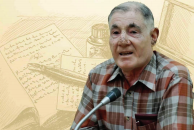
Born on January 19, 1937, in the village of Kakran in present-day Kulgam district—then part of Anantnag—Bharti emerged from an unassuming rural milieu to become a formidable chronicler of his times and an early sentinel against the political and cultural marginalisation of his community. The son of Nath Ram Pandit and Rajrani Pandit, Bharti was initially destined, by familial expectation, to inherit the modest commercial pursuits of his household. Yet his temperament resisted the inertia of tradition. From an early age, he exhibited an insatiable appetite for reading and reflection, coupled with an acute sensitivity to social inequity. Rejecting material continuity in favour of intellectual vocation, he entered government service as a teacher—a decision that would shape both his personal destiny and his public engagement.
While discharging his duties as a schoolteacher, Bharti pursued higher education with extraordinary diligence, earning postgraduate degrees in Hindi and English alongside professional teaching qualifications. His academic trajectory culminated in an M.Ed. undertaken at the Government College of Education, Srinagar, where he developed a lasting association with the eminent educationist Syed Agha Ashraf. What began as a formal pedagogical relationship evolved into a sustained intellectual companionship grounded in mutual respect. Bharti’s ascent within the education department—from master to headmaster and ultimately senior high school headmaster—was marked by administrative probity, personal discipline, and an unwavering insistence on institutional integrity. His tenure as headmaster of the Teachers’ Training School, Shopian, further consolidated his reputation as an educator of uncommon seriousness.
Yet it was beyond the confines of classrooms and official hierarchies that Bharti’s most consequential interventions unfolded. Writing, for him, was neither ornament nor indulgence; it was an instrument of interrogation and dissent. From his student years onward, he contributed prolifically to newspapers in Urdu, Hindi, English, and Gojri, displaying a linguistic versatility matched by analytical sharpness. This intellectual militancy found its most visible expression during the era of land reforms in Jammu and Kashmir, which Bharti denounced as structurally unjust and communally skewed.
He emerged as one of the earliest and most articulate critics of the land reform legislation enacted under the Congress government led by Syed Mir Qasim. Bharti argued that the law, under the guise of egalitarian redistribution, functioned as an expropriatory mechanism that disproportionately dispossessed small landowners—particularly Kashmiri Pandits—while transferring property to tenants without compensation. Taking the struggle into the judicial arena, he filed writ petitions before the Supreme Court of India, engaging the formidable legal acumen of Nani Palkhivala. Although judicial relief proved transient, Bharti’s resolve remained unbroken. He led delegations, confronted political authority at the highest levels, and compelled dialogue through moral persistence rather than numerical strength.
His engagement was not confined to regional politics. Bharti addressed representations to Prime Minister Indira Gandhi and engaged national leaders across ideological divides, including Atal Bihari Vajpayee and L. K. Advani, articulating the discriminatory implications of the legislation. In a characteristically incisive gesture, he challenged communist ideologues such as Harkishan Singh Surjeet by questioning whether comparable reforms in socialist states had ever sanctioned the targeted dispossession of minorities. Through editorials, broadcasts, and political satire, Bharti relentlessly foregrounded the impending socio-economic ruin of Kashmiri Pandits and Dogri-speaking Kashmiri Rajputs.
Possessed of a prescient imagination, Bharti anticipated the historical catastrophe that would later befall his community. One of his most evocative visual commentaries depicted Kashmiri Pandits as suspended in existential limbo—“Na Ghar Ke Na Ghat Ke”—accompanied by a couplet lamenting absolute dispossession and spiritual abandonment. Long before the cataclysm of 1990, Bharti recognised the unmistakable signs of civilisational estrangement. His decision to relocate his family to Jammu in 1978 was neither opportunistic nor impulsive but a calculated act of survival, grounded in a sober reading of political trajectories. Decades earlier, in the 1960s, Bharti had already articulated—at considerable personal and professional risk—the idea of a separate and secure homeland for Kashmiri Pandits. Far from being a product of post-exodus despair, this articulation arose from his acute awareness of demographic vulnerability and institutional abandonment. Time would vindicate his foresight with cruel exactitude.
In Jammu, Bharti continued his service in multiple administrative capacities, including district project officer for adult education and district planning officer in Rajouri, before concluding his career as senior headmaster in Pragwal. His professional life was punctuated by frequent transfers, a testament less to bureaucratic caprice than to his unyielding honesty and refusal to accommodate expediency. Integrity, for Bharti, was non-negotiable.
Journalism remained his most potent medium of influence. He wrote extensively for Daily Excelsior, where his column “All Your Answers” acquired wide readership and was later continued by his son. His professional associations spanned State Times, Northlines, Dehat Sandesh, Hind Samachar, and The Shadow, reflecting both ideological independence and editorial credibility. His post-retirement engagement with Jammu University, where he taught Professional Urdu Journalism, fulfilled a lifelong aspiration. Despite limited formal training in Urdu, his mastery of the language astonished colleagues and students alike.
Embedded deeply within Jammu’s literary ecosystem, Bharti cultivated enduring friendships with scholars, poets, administrators, and political figures. His presence at cultural institutions, academic forums, and literary gatherings was both constant and consequential. A polymath by disposition, he was simultaneously a journalist, academician, translator, cartoonist, critic, palmist, and futurist. His translations of works by Jagan Nath Azad and Dr. Karan Singh further attest to his intellectual breadth.
He passed away on January 12, 2008, after a brief illness. R. K. Bharti’s death elicited widespread mourning across political, cultural, and intellectual domains. Leaders, scholars, journalists, and ordinary citizens gathered to honour a life defined by fearless articulation and ethical steadfastness. His legacy continues through his son, King C. Bharti, whose work in journalism, theatre, and social activism reflects a conscious inheritance of purpose. The R. K. Bharti Foundation stands as an institutional embodiment of this legacy.
The void left by R. K. Bharti is not merely personal but civilisational. To remember him is not enough; to emulate his clarity, courage, simplicity, discipline, and devotion to truth is the only tribute worthy of his life.