By Ravi Rohmetra
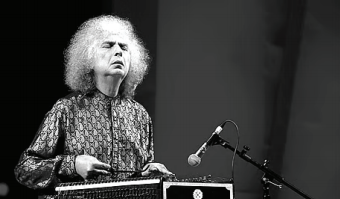
Jammu, the land of temples and culture, has produced distinguished personalities in every field—politics, academics, social service, journalism, literature, cinema, and music. Among its most illustrious sons stands the legendary Santoor maestro Pandit Shiv Kumar Sharma, a global icon of Indian classical music and a proud son of the Duggar soil.
Born on 13 January 1938 in Jammu, Pandit Shiv Kumar Sharma was introduced to music by his father and guru Pandit Uma Dutt Sharma, himself a renowned vocalist and disciple of Pandit Bade Ramdas Ji of Banaras. Before dedicating himself entirely to the Santoor, young Shiv Kumar mastered the tabla and vocal music, laying a strong foundation for his future brilliance.
The Santoor, a trapezoid-shaped hammered dulcimer with 72 strings, was traditionally a folk instrument of Kashmir, once known as the Shata-Tantri Veena and used primarily in Sufiana Mausiqi. It was Pandit Shiv Kumar Sharma’s lifelong dedication and innovation that elevated the Santoor to the status of a respected classical instrument. He expanded its range to three octaves, refined its tonal quality, and developed techniques that allowed smooth gliding between notes, closely imitating the human voice.
His journey to recognition was not easy. In 1955, his national-level concert in Mumbai became a turning point. Though he faced criticism from orthodox quarters, his exceptional artistry gradually won the world. Today, the Santoor stands at par with any classical instrument, largely due to his creative genius.
Pandit Shiv Kumar Sharma collaborated with legendary musicians such as Ustad Zakir Hussain and Pandit Hariprasad Chaurasia, forming the iconic trio that produced timeless albums like Call of the Valley, Sampradaya, Elements: Water, Music of the Mountains, and Megh Malhar. He also enriched Indian cinema with unforgettable compositions for films such as Silsila, Lamhe, Chandni, and Darr.
A deeply spiritual artist, he believed music to be “food for the soul.” His compositions often reflected meditative depth, including musical interpretations of Upanishadic shlokas and the creation of the unique raag Antardhwani.
An inspiring guru, he followed the Guru–Shishya tradition, teaching students from across India and abroad without charging fees, driven purely by devotion to the preservation of classical heritage.
His immense contributions were recognised with numerous honours, including Padma Shri (1991), Sangeet Natak Akademi Award (1986), Maharashtra Gaurav Puraskar (1990), Ustad Hafiz Ali Khan Award (1998), Padma Vibhushan (2001), Honorary Doctorate from the University of Jammu, and honorary citizenship of Baltimore, USA.
Pandit Shiv Kumar Sharma passed away on 10 May 2022 at the age of 84, leaving behind his wife Manorama and sons Rahul Sharma, an accomplished Santoor player, and Rohit Sharma, part of the celebrated Shiv–Hari duo. His passing marked the end of an era. Jammu, Kashmir, and indeed India lost one of their most precious cultural jewels.
Pandit Shiv Kumar Sharma did not merely play the Santoor—he gave it a global voice. His life remains a shining example of dedication, innovation, humility, and devotion to the eternal soul of Indian music.
(Ravi Rohmetra is a Writer and Social Worker and can be reached at [email protected]; 9419652999)