New Delhi, Dec 8 : Prime Minister Narendra Modi on Monday accused India’s first Prime Minister Jawaharlal Nehru of “betraying” the national song Vande Mataram by accepting Muhammad Ali Jinnah’s objections, a move he said set India on the path of appeasement politics that ultimately culminated in Partition.
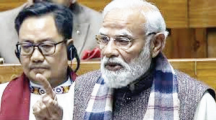
Speaking during a debate in Parliament on the 150th anniversary of Vande Mataram, Modi said the song had energised the freedom struggle, inspired unity, and was held in the same esteem as the national anthem by leaders like Mahatma Gandhi. Written by Bankim Chandra Chatterjee in 1875, Vande Mataram had become a symbol of resistance against British rule, he said.
Modi argued that the national song “suffered grave injustice” in the last century and questioned why it was dragged into controversy despite its deep emotional connection with Indians. He noted that Jinnah objected to the song in October 1937, after which Nehru wrote to Netaji Subhash Chandra Bose expressing concern that its association with the novel Anandmath might “irritate” Muslims.
According to Modi, instead of countering the Muslim League’s “baseless objections”, Nehru and the Congress began questioning the song itself. This, he said, led to the 1937 Congress Working Committee meeting in Kolkata, where the party decided to use only selected portions of the song — a move Modi described as a “compromise under the guise of social harmony”. He claimed the decision demonstrated the Congress “bowing to the Muslim League” and marked the beginning of appeasement politics.
Amid protests from Trinamool Congress MPs, Modi remarked that it appeared the Congress had “outsourced its decision-making”. He added that Congress and its allies continued to promote appeasement and create controversies around Vande Mataram even today.
Modi emphasised that throughout history, India has drawn strength from the spirit of Vande Mataram — whether during the freedom struggle, food crises, wars, or even the battle against Covid-19. The song, he said, symbolises national courage and resolve, and its message aligns with India’s vision for a “Viksit Bharat by 2047”.
He also referenced the Vedic idea of the land as mother, stressing that Vande Mataram reflected India’s ancient civilisational values. Modi recalled Gandhi’s 1905 observation that the song had become so revered it functioned like a national anthem, and questioned why its status was later undermined.
Modi noted that the British had once banned Vande Mataram due to its revolutionary impact, yet it continued to inspire unity, including during the 1905 partition of Bengal. He concluded by calling it a privilege to celebrate 150 years of the national song, which he said remains a timeless source of strength for the nation.