On the 19th Punyatithi (17 January 2026)
By Ravi Rohmetra
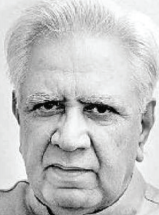
Justice R. P. Sethi, the first Chairman of the Accountability Commission of the erstwhile State of Jammu and Kashmir, was born on 7 July 1937 at Mirpur in undivided Jammu and Kashmir (now in Pakistan). He completed his graduation from the University of Kashmir in 1959 and obtained his LL.B. degree from Aligarh Muslim University in 1961. He was enrolled as a Pleader in 1961, as a Vakil in 1962, and as an Advocate in 1967.
During his student life, Justice Sethi remained deeply engaged in intellectual and organisational activities. He served as President of the College Students’ Union, Secretary of the Debating Society, and Secretary General of the Jammu and Kashmir Students Federation of India. He also edited the college magazine and actively participated in debates at state and national levels, earning recognition and prizes.
Justice Sethi practised law for nearly 25 years. Prior to his elevation as a Judge of the Jammu and Kashmir High Court on 30 May 1986, he served as Special Public Prosecutor under the Jammu and Kashmir Enemy Agents Ordinance. He was appointed Additional Advocate General of the State in 1975, a position he resigned from after nine months, and later served as Central Government Standing Counsel in Jammu and Kashmir for over five years. He also represented prestigious institutions such as the University of Jammu and the Jammu and Kashmir Financial Corporation and appeared before the Supreme Court in important constitutional matters.
A scholar of law and letters, Justice Sethi authored authoritative commentaries on the Hindu Marriage Act, the Code of Civil Procedure, Supreme Court on Words and Phrases, and revised Supreme Court on Criminal Law (six volumes). He edited the Urdu weekly Shagaf and more than a dozen legal journals published across the country. He participated in several national and international seminars and visited nearly 30 countries to study different legal systems.
In October 1993, Justice Sethi was transferred to the Punjab and Haryana High Court, where he served as Acting Chief Justice in March 1996. He was appointed Chief Justice of the Karnataka High Court in June 1996 and was elevated to the Supreme Court of India on 8 January 1999. He retired from the apex court on 7 July 2002.
During his tenure as Chief Justice of the Karnataka High Court, Justice Sethi visited the historic Cellular Jail at Port Blair in the Andaman and Nicobar Islands, where India’s freedom fighters endured immense suffering under British colonial rule. Deeply moved by the conditions in which revolutionaries were incarcerated, he was particularly pained by the distorted and neglected depiction of Comrade Dhanwantri of Jammu, who had been imprisoned there. Overcome with emotion, Justice Sethi took personal interest in restoring her dignity by arranging for an authentic photograph, procured through his brother, veteran revolutionary Comrade Krishan Dev Sethi. The photograph was subsequently installed in the jail cell as a tribute to her sacrifice, reflecting Justice Sethi’s profound respect for India’s freedom struggle and its unsung heroes.
Post-retirement, Justice Sethi returned to Jammu and actively engaged in social work. He established the Durga Mangal Charitable Trust in memory of his parents to support the elderly, the poor, and the ailing. His public commitment continued when he was appointed Chairman of the Accountability Commission of Jammu and Kashmir in 2004. Accepting the responsibility as a moral challenge, he insisted on complete autonomy in functioning and served in an honorary capacity. His firm action against corruption involving ministers and senior officials generated public confidence but also resistance. Faced with institutional hurdles and lack of support, Justice Sethi resigned from the post on 4 May 2006, guided by his conscience.
Justice Sethi’s life was shaped by early hardship. His father passed away when he was only five years old. During the upheavals of Partition, his family was airlifted from besieged Poonch to Jammu and lived for some time in refugee camps. These experiences left a lasting impression on his mind and instilled in him a lifelong empathy for the underprivileged.
Justice R. P. Sethi fell ill on 15 January 2007 and was admitted to GMC Hospital, Jammu. He was later shifted to Chandigarh, where he passed away on 17 January 2007.
Remembered as a jurist of learning, courage, and integrity, Justice R. P. Sethi was equally revered as a compassionate human being. His life stood as a testimony to the belief that service to humanity is the highest form of service. On his death anniversary, his legacy continues to inspire faith in justice, ethical public life, and social responsibility.
“Chaman mein gul khilte nahin sabhi ke liye,
Yahaan bahaar aati hai kisi kisi ke liye.”
( Ravi Rohmetra is a freelancer and social worker and can be reached at Mob. 9419652999)