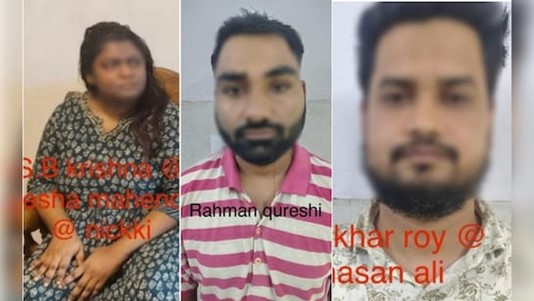
Agra: In a shocking revelation, Agra Police have busted a wide-reaching religious conversion racket with disturbing international links. So far, 14 individuals have been arrested in connection with the operation, which, according to authorities, involved brainwashing young women—often through online games and encrypted messaging apps—with handlers operating from Pakistan.
The investigation began when two sisters, aged 33 and 18, went missing from Agra. A social media post by one of them, brandishing an AK-47 rifle, sparked deeper scrutiny. The trail led the police across six states and to a network allegedly led by Abdul Rehman, a Delhi resident who converted to Islam in 1990, and Ayesha from Goa.
As the probe widened, four more arrests followed, uncovering an organized operation that targeted girls from cities like Dehradun, Bareilly, Aligarh, Raebareli, Jhajjar, and Rohtak. These young women were introduced to Islamic ideology in a manipulated manner, often after being lured via casual conversations on gaming platforms like Ludo.
According to Police Commissioner Deepak Kumar, the radicalization process was subtle and calculated. The girls were first befriended during gaming sessions, and once trust was established, the conversation shifted toward religion. Positive aspects of Islam were highlighted while toxic narratives about Hinduism were planted. Gradually, the girls were added to WhatsApp groups where sustained psychological manipulation took place.
Disturbingly, Pakistani nationals, identified as Tanveer Ahmed and Sahil Adeem, allegedly played a pivotal role in influencing and coordinating these efforts. Their involvement points to cross-border digital radicalization.
To avoid detection, the group relied heavily on encrypted communication tools. Apps like Signal and even the dark web were used to stay off the radar of Indian intelligence agencies. Commissioner Kumar confirmed that at least three members of the gang had advanced knowledge of the dark web and cyber concealment tactics.
This chilling case underscores the growing use of digital platforms for indoctrination and the serious implications of cyber-radicalization. As investigations continue, authorities are working to uncover the full extent of the network and ensure that those rescued receive the support they need to recover from the psychological impact.