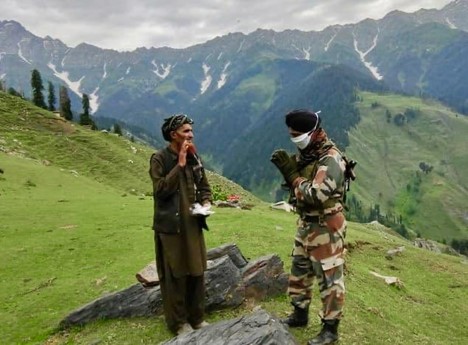
Jammu/Srinagar, Sept 21: With terror groups shifting to higher ridges for shelter, security experts are warning that strained relations between the Army and Gujjar-Bakerwal nomadic tribes could undermine intelligence gathering in Jammu and Kashmir. These communities, long regarded as the “eyes and ears” of the mountains, have historically played a vital role in counter-insurgency.
Officials and analysts believe mistrust has widened due to a series of incidents, including the 2018 Kathua rape case, the Amshipura fake encounter of 2020 where three Gujjar youths were killed, and the 2023 Topa Pir tragedy in Poonch that left three civilians dead in Army custody. Despite disciplinary action, such events have alienated many youths, weakening a partnership critical for security in the Pir Panjal.
The Gujjar and Bakerwal population, estimated at 23 lakh, has a record of sacrifice. Stories of bravery include Rukhsana Kausar, who killed a Lashkar militant in 2009, and Rifleman Aurangzeb, slain by terrorists in 2018. Experts stress that their deep knowledge of remote terrain has been invaluable, notably in operations like “Sarp Vinash” in 2003 that dismantled militant bunkers in Poonch-Surankote.
However, systemic challenges are eroding this bond. Restrictions on traditional grazing routes, lack of livelihood support, and poor communication infrastructure have further marginalized the nomads. Community leaders, such as Congress’s Shahnawaz Choudhary, warn of a “widening void” and demand resolution of long-pending rights to forest lands.
Retired generals D. S. Hooda and Paramjit Singh Sangha have urged renewed engagement, cautioning against alienation of tribes who remain the “first line of defence.” Researchers like Javed Rahi advocate consistent policy, community honouring, and even a museum to preserve tribal sacrifices.
Experts agree that quick reconciliation is vital, especially in difficult terrains like Peer Gali and Surankote ridges, where Gujjar-Bakerwal cooperation remains indispensable for security. (Agencies)