The second largest democracy is still fighting for keeping the polarised nation safe
By T N Ashok
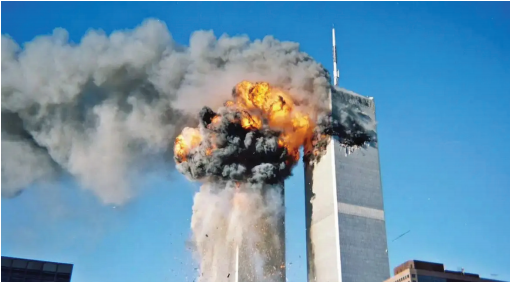
NEW YORK: On a crystalline morning twenty-four years ago, time itself fractured. The world watched in horror as commercial airliners became weapons, transforming symbols of American prosperity into pyres of unspeakable grief. The Twin Towers, once monuments to human ambition reaching toward the heavens, collapsed in cascades of steel, glass, and dreams—taking with them 2,977 souls whose only crime was beginning an ordinary Tuesday.
The images remain seared into our collective consciousness: people clutching loved ones amid the chaos, first responders charging into the very hell others fled, and those impossible choices faced by the trapped—jump or burn. The smell of smoke and ash, the sound of falling debris marking time by floors, the screams that pierced a clear blue sky—these sensory memories have become part of America’s DNA, a wound that has shaped a generation and defined a nation’s trajectory.
In the crucible of that morning, America discovered both its vulnerability and its character. President George W. Bush, initially caught off-guard, found his voice in the rubble. His words to Congress nine days later became a defining moment: “Our grief has turned to anger, and anger to resolution.” He framed the conflict in stark moral terms—”freedom at war with fear”—and transformed national mourning into a call to action that would reshape American foreign policy for decades.
The institutional response was swift and sweeping. Within weeks, the Patriot Act expanded surveillance powers. Within a year, the Department of Homeland Security emerged as a new bureaucratic colossus, reorganizing how America thinks about domestic security. The Transportation Security Administration transformed air travel from convenience to ritual security theatre. Intelligence agencies that had failed to connect the dots were rewired, creating the Director of National Intelligence to prevent future blind spots.
Barack Obama inherited this security architecture and refined it with surgical precision. When Navy SEALs killed Osama bin Laden in May 2011, Obama’s announcement struck a different tone—justice served, not war declared. “We will never forget,” he said, but his emphasis shifted from Bush’s broad military campaigns to targeted operations and intelligence-driven counterterrorism.
Joe Biden, present for many of these pivotal decisions as senator and vice president, brought the perspective of long institutional memory. His observances emphasized the enduring values that terrorists had sought to destroy—democracy, freedom, the American way of life—and how they had ultimately failed.
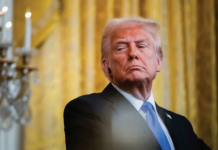
Now Donald Trump, in his 2025 Pentagon commemoration, channels the raw resolve of those early days with updated rhetoric. “If you attack the United States of America, we will hunt you down, and we will find you,” he declared, renaming the Department of Defense the “Department of War”—a symbolic gesture that signals a return to the martial clarity of the immediate aftermath.
The security apparatus born from September 11th represents one of the most dramatic peacetime expansions of federal power in American history. The creation of DHS consolidated 22 agencies under one roof. Intelligence fusion centres sprouted across the country. The NSA’s surveillance capabilities expanded exponentially, monitoring communications in ways that would have been unthinkable before that Tuesday morning.
These changes reflected a fundamental shift in the social contract: Americans accepted reduced privacy and increased scrutiny in exchange for the promise of safety. Airport security became a national ritual of submission—shoes off, laptops out, liquids measured in ounces. The very architecture of public spaces changed, with barriers appearing around government buildings and security checkpoints becoming commonplace.
Yet this security came at a cost beyond convenience. Civil liberties advocates raised alarms about warrantless surveillance, indefinite detention, and the erosion of due process. The debate between security and freedom that began in the ashes of Ground Zero continues to define American politics today.
Behind every policy debate and political speech lies an ocean of personal grief that time cannot heal. Families of the 2,977 victims gather each September 11th to read names aloud, their voices carrying across memorial pools that mark where the towers once stood. For them, this is not history—it is the anniversary of the day their world ended.
The first responders who rushed toward danger that morning continue to pay the price. Hundreds have died from respiratory illnesses linked to the toxic dust they breathed. The 9/11 Health Program was created to address these long-term health consequences, but for many, the help came too late. Firefighters, police officers, paramedics, and volunteers who became heroes in the moment of crisis now struggle with diseases that slowly steal their breath—a cruel irony for those who gave everything to help others breathe.
Cancer rates among first responders exceed national averages. Post-traumatic stress disorder haunts not just those who survived the attacks, but those who spent months digging through the rubble, searching for remains, hoping against hope to find life in the wreckage of dreams.
Perhaps no consequence of September 11th has been more lasting or complex than its impact on American attitudes toward immigration and diversity. In the immediate aftermath, there were inspiring moments of unity—neighbours protecting Muslim families, interfaith services, declarations that America’s strength lay in its diversity.
But beneath this surface solidarity, deeper currents of suspicion and fear began to flow. The hijackers had entered the country legally, exploiting the very openness that America had long celebrated. Suddenly, the foreign student, the tourist, the asylum seeker became potential threats requiring additional scrutiny.
Immigration policy hardened dramatically. Visa processes became more rigorous and time-consuming. The concept of “enhanced screening” became code for racial and religious profiling. Muslim Americans, Sikh Americans, Arab Americans, and anyone who “looked Middle Eastern” faced heightened suspicion, workplace discrimination, and social ostracism.
This shift accelerated existing anxieties about demographic change and cultural identity. The narrative of America as a welcoming beacon for the world’s refugees and immigrants came under sustained attack. Terms like “homeland security” implied that America was primarily a place to be defended rather than shared.
Today, twenty-four years later, debates over immigration policy still carry the DNA of September 11th. Proposals for border walls, travel bans, and enhanced vetting procedures all trace their political viability back to that morning when nineteen foreign nationals weaponized America’s openness against itself.
As we mark this twenty-fourth anniversary, fundamental questions remain unresolved. Have we struck the right balance between security and liberty? Has the enormous expansion of the surveillance state made us meaningfully safer, or have we simply created new forms of vulnerability while sacrificing essential freedoms?
The threat landscape has evolved far beyond what anyone imagined in 2001. Many of the deadliest attacks on American soil since then have come not from foreign terrorists but from domestic extremists radicalized online. White supremacists, anti-government militias, and lone wolves inspired by ideology rather than foreign direction now represent significant portions of the terrorist threat.
Meanwhile, America’s longest war in Afghanistan ended in chaotic withdrawal, raising questions about whether two decades of military intervention achieved lasting results commensurate with their enormous human and financial cost.
The memorial pools at Ground Zero reflect not just the sky above but the depths of loss below. They remind us that September 11th was both an ending and a beginning—the end of one kind of American innocence and the beginning of a more complex, vigilant, and sometimes fearful nation.
The challenge for America today is to honour the memory of that day without being imprisoned by it. To remain vigilant without becoming paranoid. To secure the homeland without abandoning the values that make it worth defending. To remember the heroes without forgetting the humanity of strangers.
Twenty-four years later, the question is not whether we will ever forget September 11th—we will not. The question is whether we will remember it wisely, learning from both its lessons of vulnerability and its examples of courage, unity, and resilience. The true measure of “never forget” lies not in the security theatre at airports or the walls we build around our institutions, but in how we treat one another as fellow human beings sharing a fragile world.
In the end, the terrorists failed in their ultimate objective. America did not break. Democracy endured. Freedom survived. But the America that emerged from the rubble was different—scarred, wiser, more wary, and still struggling to reconcile its founding ideals with the harsh realities of a dangerous world. That struggle continues today, in courtrooms and classrooms, at borders and ballot boxes, wherever Americans grapple with the enduring question of how to remain both safe and free. (IPA Service)