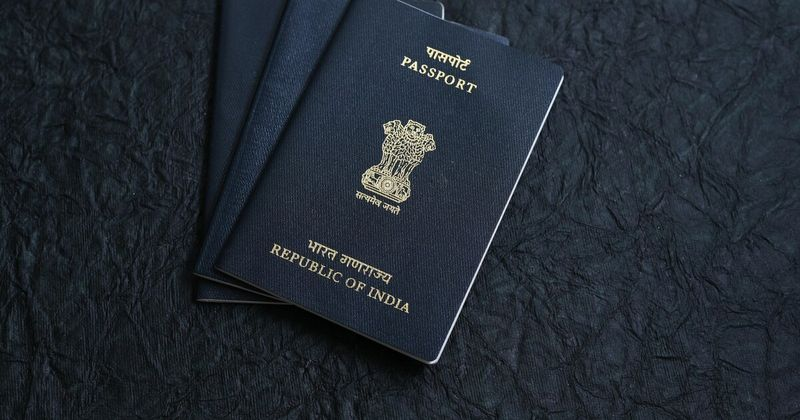
New Delhi, Jun 25: The Centre on Thursday clarified that a passport has never been treated as conclusive proof of Indian citizenship, asserting that no such policy change has been made either recently or during the past 12 years.
The government cited Section 20 of the Passports Act, 1967, which empowers the Central Government to issue passports or travel documents to non-citizens if it considers such issuance necessary in the public interest.
“Notwithstanding anything contained in the foregoing provisions relating to issue of a passport or travel document, the Central Government may issue, or cause to be issued, a passport or travel document to a person who is not a citizen of India if that Government is of the opinion that it is necessary so to do in the public interest,” the provision states.
The clarification also referred to the 2013 Bombay High Court judgments, which held that possession of a passport does not by itself establish citizenship.
The statement followed remarks made by the Ministry of External Affairs (MEA) during a detailed media briefing on Wednesday, where it said an Indian passport is primarily a travel document and should not be regarded as definitive proof of citizenship. The remarks drew criticism from Opposition leaders.
Rajya Sabha MP Kapil Sibal questioned the government’s position, asking which document would then constitute proof of citizenship. In a post on X, he said the clarification could allow Booth Level Officers (BLOs) to question citizens’ status and deprive them of voting rights.
Responding to the criticism, BJP leader Amit Malviya said the MEA had merely reiterated a long-settled legal position and had not announced any new policy. He said Indian courts have consistently held that a passport is not conclusive proof of citizenship and cited the 2013 Bombay High Court ruling along with subsequent reaffirmations.
Malviya said citizenship is determined under the Citizenship Act, 1955, on the basis of eligibility and supporting evidence, not through possession of a single document. He added that citizenship can be established through a combination of official records, including birth certificates, parents’ citizenship records where applicable, school records, electoral roll entries, government service records, land and residence documents, passports and other contemporaneous records.
He further said that while a passport is an important identity and travel document that may support a claim of citizenship, citizenship itself flows from the Constitution and the Citizenship Act. Referring to the Passports Act, 1967, he noted that the law itself permits issuance of passports to non-citizens under specified circumstances, making it clear that possession of a passport cannot be treated as conclusive proof of citizenship.
India recently marked the 14th Passport Seva Divas, commemorating the enactment of the Passports Act on June 24, 1967. The Ministry of External Affairs also organised a three-day Annual Regional Passport Officers’ Conference in New Delhi from June 17 to 19 as part of the celebrations. (Agencies)