
By Shivanand Pandit
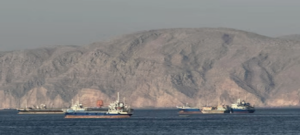
For centuries, economic power has been closely tied to a nation’s ability to secure its trade routes and essential resources. In the modern era, maritime chokepoints have become as strategically important as military strength or economic influence. The 2026 Strait of Hormuz crisis has highlighted this reality with remarkable clarity. The Strait of Hormuz, a narrow waterway connecting the Persian Gulf with the Arabian Sea, carries nearly 21% of global petroleum trade, around 25% of global liquefied natural gas (LNG) movement, about 30% of global liquefied petroleum gas (LPG) trade, and substantial volumes of fertilisers and other commodities. Any disruption in this passage, therefore, has consequences that extend far beyond the Middle East.
Among the world’s major economies, India remains one of the most vulnerable to disruptions in Hormuz because of its increasing energy demand and heavy dependence on imported fossil fuels. India is the world’s third-largest importer of crude oil, fourth-largest importer of LNG, and second-largest importer of LPG. In 2024–2025, the country depended on imports for nearly 89% of its crude oil requirements and around 50% of its natural gas consumption. Although India has diversified crude purchases in recent years, especially by increasing imports from Russia, the Middle East continues to occupy a dominant position in its energy basket.
The dependence on the Strait of Hormuz is particularly significant. Nearly 47% of India’s crude oil imports arrive from the Middle East through this route. The dependence is even greater in the case of household cooking fuels. India consumes approximately 31–32 million tonnes of LPG annually, but domestic production accounts for only about 40% of this demand, forcing the country to import 18–20 million tonnes every year. Approximately 95% of these LPG imports originate from countries such as the UAE, Qatar, Saudi Arabia, and Kuwait and move through the Strait of Hormuz.
The greatest concern is that LPG is not merely an industrial fuel but a necessity for millions of families. Nearly 330 million Indian households depend on LPG cylinders for cooking, while India has only around 16 million piped natural gas (PNG) connections. This limited availability of alternatives means that a prolonged disruption in LPG imports can quickly become a social and economic crisis. The country’s existing strategic LPG storage capacity of about 140,000 tonnes is sufficient for only 1.5–2 days of national consumption, which is far below the level required to manage a prolonged supply shock.
The 2026 Hormuz crisis demonstrated the enormous economic costs of excessive dependence on a single maritime route. Following the disruption, Brent crude prices surged sharply, while India’s crude basket price increased from approximately US$69 per barrel in March to over US$114 per barrel in April. India’s crude import volumes fell, and the cost of imports increased substantially. The impact was visible across the economy: wholesale inflation reached 8.3% in April, fuel and power inflation touched 24.7%, and the merchandise trade deficit expanded from US$20.7 billion in March to US$28.38 billion in April. The Indian rupee weakened from around ₹91 per US dollar to nearly ₹97, while foreign exchange reserves declined from US$728.5 billion at the end of February to US$681.6 billion by early June.
Lessons for India
The first lesson from the crisis is that India must build stronger strategic energy reserves. Unlike countries such as China, which has developed strategic petroleum reserves capable of covering approximately 96 to 120 days of imports, India’s reserves for highly vulnerable fuels such as LPG remain inadequate. Establishing additional refrigerated storage tanks, underground rock caverns, and salt caverns should therefore become a national priority. The estimated investment required to create strategic reserves across LPG, LNG, and crude categories is around US$6.5 to 8.3 billion over a decade, which is lower than India’s annual LPG import bill of nearly US$12.6 billion.
The second strategic requirement is the diversification of supply sources and transport routes. Overdependence on a single region creates unavoidable geopolitical risks. India should expand long-term energy partnerships with countries whose supplies do not pass through Hormuz, including the United States, Australia, Canada, Brazil, and selected Pacific suppliers. The growing partnership with the United States has already shown potential. During the crisis, the United States became India’s largest LNG supplier by supplying around 900,000 tonnes in May, meeting approximately 40% of India’s monthly LNG requirement. It also emerged as the leading LPG supplier with shipments of around 630,000 tonnes.
India should also increase domestic production and improve the efficiency of its existing energy infrastructure. Upgrading domestic natural gas processing facilities to recover more propane and butane, extracting natural gas liquids from rich LNG imports, and reducing gas flaring can significantly enhance domestic LPG availability. International experience demonstrates the benefits of such investments. Countries like Japan and South Korea have developed sophisticated systems to extract valuable LPG components from imported LNG, thereby reducing their dependence on direct LPG imports.
Another major opportunity lies in promoting alternative fuels and reducing the excessive reliance on LPG for cooking. A gradual expansion of PNG networks, particularly in urban areas, can reduce pressure on imported LPG. The government’s objective of expanding PNG coverage in cities must therefore receive greater attention. Similarly, the promotion of electric cooking technologies, improved induction systems, and alternative fuels such as Dimethyl Ether (DME), biogas, ethanol, and hydrogen can strengthen India’s energy independence. The approval of standards allowing up to 20% DME blending in LPG cylinders is an important step, as large-scale adoption can replace a significant portion of imported LPG.
The transition to cleaner energy must be accelerated, but it should be planned carefully. India has already achieved more than 50% of its installed electricity capacity from non-fossil sources, yet the actual share of green electricity generation remains only around 27% because renewable energy sources require adequate storage and grid management. Investments in battery storage, modern transmission systems, nuclear power, sustainable fuels, and renewable technologies will be essential to ensure that the energy transition strengthens, rather than weakens, national energy security.
India must also view energy security from a broader strategic perspective. The country’s ambition of becoming a developed nation by 2047 and achieving net-zero emissions by 2070 requires a reliable, affordable, and diversified energy system. Dependence on a single chokepoint exposes the economy to inflation, supply shortages, currency pressure, and industrial disruption. The experience of the Hormuz crisis should therefore be treated as a warning and an opportunity for long-term reforms.
Securing Tomorrow
The way forward for India is both clear and urgent. While the country cannot completely eliminate its dependence on imported crude oil and natural gas in the immediate future, it can take decisive and well-planned measures to significantly reduce the vulnerabilities arising from its heavy reliance on the Strait of Hormuz — one of the world’s most strategically sensitive and potentially volatile energy transit routes.
A comprehensive and long-term energy security strategy must focus on strengthening India’s ability to withstand potential supply disruptions. This includes substantially expanding strategic petroleum reserves to create a stronger emergency buffer against sudden geopolitical shocks, conflicts, or disruptions in global shipping lanes. At the same time, India must continue diversifying its sources of crude oil and LNG imports by building stronger energy partnerships with a wider range of countries across different regions, thereby reducing excessive dependence on any single route or supplier.
Greater emphasis must also be placed on enhancing domestic energy production through increased exploration and development of India’s oil and natural gas resources. Expanding the nationwide network of PNG infrastructure, encouraging the adoption of alternative and cleaner cooking fuels, and improving energy efficiency can further reduce pressure on imported conventional fuels.
Technological advancement and innovation will play a pivotal role in India’s energy transition. Investments in advanced energy storage systems, green hydrogen, cleaner technologies, and smarter energy management solutions can strengthen the nation’s long-term energy resilience. Furthermore, accelerating the adoption of renewable energy sources such as solar, wind, and other sustainable alternatives will gradually reduce India’s dependence on fossil fuel imports while contributing to environmental sustainability and climate commitments.
The economic and strategic rationale for such preparations is compelling. The financial investment required today to strengthen India’s energy security infrastructure is considerably lower than the enormous economic losses, inflationary pressures, supply shortages, and strategic vulnerabilities that could result from a major disruption in the Strait of Hormuz in the future. Preparing in advance is not merely an option but a strategic necessity to safeguard India’s economic growth, energy stability, and national interests in an increasingly uncertain global environment.