By Er. Rajesh Pathak, Bhopal
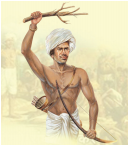
Flute player and painter Birsa Munda was born in a Janjati (Scheduled Tribe) village in Jharkhand called Ulihatu on November 15, 1875. Later, after growing up, he took admission to a German Mission School at Chaibasa to pursue his education.
After completing his studies, Birsa came into contact with the renowned Vaishnav saint, Acharya Anand Pandey. The innate Hindu sanskaras lying dormant within him experienced a resurgence. So profound was this transformation that he eventually became a sanyasi, or ascetic. Inspired by him, many Janjati people became ardent followers of Hinduism, worshipping the basil (Tulsi) plant and the cow, and celebrating Hindu festivals.
This transformation among the tribal people was perceived as a threat by anti-Sanatana forces and their mission. They allegedly conspired with the British Commissioner of Ranchi and had Birsa arrested on false charges.
Although he was released from jail two years later, the conflict between the tribal community led by him and the British authorities continued to simmer. At the behest of missionaries, the British government prohibited tribal people from entering the Jagannath Temple. It also imposed taxes on tribal cultivators, while those who had converted were exempted from this burden.
In an effort to check religious conversions, Birsa Munda administered an oath to tribal people to worship the basil plant, notably drawing upon Sanatana traditions. He also staged a protest in front of the Jagannath Temple, giving up food and water until the British authorities reversed their decision and allowed tribal people entry into the temple.
However, this episode further embittered relations between the tribal community and the British. Eventually, the conflict escalated into violent clashes. The British military was deployed to eliminate Birsa Munda and suppress the movement. Armed with rifles, bombs, and other modern weapons, the British forces overwhelmed the tribal freedom fighters, who possessed only traditional weapons.
Hundreds of tribal fighters were martyred, and many villages were ransacked by soldiers under the command of British officers. Birsa was captured, shackled, and imprisoned in Ranchi Jail. After enduring severe hardships and alleged atrocities, he breathed his last on June 9, 1900. It is widely believed that he was poisoned while in custody by the jail authorities.