Hari Om Dixit
A quiet financial revolution is happening in India’s small towns. The economy, which used to rely heavily on cash, is quickly moving towards digital transactions. This shift is changing how people pay, save, and do business every day.
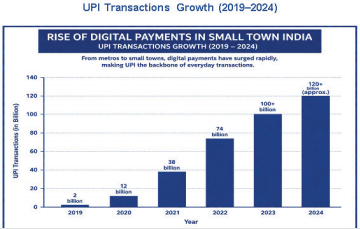
At the heart of this transformation is the National Payments Corporation of India, which runs the Unified Payments Interface (UPI). Official data shows that UPI transactions jumped from just over 2 billion in 2019 to more than 100 billion annually by 2024. This highlights a remarkable growth in digital adoption.
What makes this growth especially notable is its reach beyond big cities. Smaller towns are now responsible for a significant portion of digital transactions. Shopkeepers, street vendors, and local service providers increasingly use QR codes and mobile apps, turning smartphones into payment tools.
Several factors have sped up this change. Affordable smartphones, lower internet costs, and government programs like Digital India have made digital tools easier to access. The COVID-19 pandemic also pushed contactless payments, prompting even reluctant users to try digital options.
The effects are clear in small towns. Digital payments enhance convenience, lessen reliance on cash, and boost financial inclusion. People who once had limited access to traditional banking are now engaging in the digital economy through simple mobile platforms.
However, challenges still exist. Gaps in digital literacy, worries about fraud, and inconsistent internet connections continue to hinder adoption in some areas. Many first-time users are still building trust in digital systems.
Despite these obstacles, the path forward is evident. India is gradually moving towards a less-cash economy, and small towns are keeping pace rather than falling behind. They are becoming important players in this change.
The growth of digital payments is not just a shift in technology; it reflects a deeper change in how people handle money. From street vendors to local markets, the sounds of cash being counted are slowly giving way to the quiet confirmation of a successful digital transaction.
(The writer is an student of Indian Institute of Mass Communication, Jammu)