China is disgraced, India should move as equal partner to befriend new regime
By Nitya Chakraborty
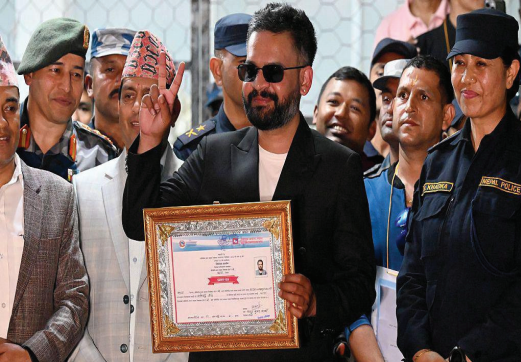
With the final results of the March 5 elections in Nepal, almost available, it is clear that the Gen Z supported Rashtriya Swatantra Party (RSP) is set to form the next government in this tiny Himalayan nation headed by the RSP leader Balendra Shah whose political life began only through 2022 national elections.RSP has got 122 seats in the House of 165 direct seats as against Nepali Congress’s 17, the K P S Oli led CPN(UML)’s 7 and the Nepal Communist Party’s 7. The royalist Rashtriya Prajantratic Party (RPP) which generated a big campaign last year for return of monarchy, got only one seat.
A close look at the results indicates a number of factors for this game changing situation in 2026 after the establishment of democracy through the abolition of monarchy in 2006. In the last two decades, Nepalese people got the taste of vibrant parliamentary democracy with the active participation of Nepali Congress, more than three/four communist parties as also the small parties based on regions. No party on its own , got majority in Nepalese parliament. So coalitions were formed to form a ministry to run the government. These coalition partners changed from time to time leading to fall and instability for a temporary period before a new coalition was formed.
The Nepalese people in general were highly dissatisfied. Nepal had a history of armed struggle by the communists for the abolition of monarchy. That phase was over in 2006 following the transition to democracy from monarchy. The communist rebels led by Prachanda became a part of the democratic process. Prachanda became PM of coalitions a number of times. But the factional war among the communists continued to destabilise the functioning of the coalition governments. The last ruling coalition was led by K P S Oli, the leader of the CPN(UML). He ran a coalition with the support of Nepal Congress while Prachanda led NCP was in the opposition trying continuously to unseat Oli.
The September 2025 Gen Z movement was aimed at the then PM K P S Oli, a veteran of many a battles in the political history of Nepal. His house was attacked, party offices ravaged by the Gen Z. Oli had to go underground for a few days, Later, he was persuaded to tender his resignation at the instance of the Nepalese army chief. For the Gen Z, K P S Oli and his Communist Party emerged as the last symbol of status quo, coalition politics, nepotism and corruption. All the established political parties which were part of coalition regimes, were identified as the villains during the poll campaign before March 5 elections.
So this way, the disastrous defeat of the traditional political parties including the two major communist parties, was caused not just by the Gen Z and the other youth, it was engineered by the Nepalese voters in general who wanted a change from the status quo and the rule of the same people through different combinations. The scale of the defeats of the candidates of the traditional political parties indicates how the electorate in general covering all strata of the population whether belonging to urban and rural, exercised their mandate in favour of a new party RSP which has no real organizational roots in all parts of the country and which made its name after the September 2025 movement only. The RSP leader Balendra Shah defeated K P S Oli in the communist leader’s traditional seat by more than 50,000 votes. All the senior leaders of communist parties and the Nepali Congress were defeated. Only Prachanda retained his seat among the senior leaders. Further, trends show that 80 per cent of the last ruling coalition candidates lost their security deposits.
The results show that the Nepali Congress has emerged as the second largest party though a distant second after RSP, but still much ahead of the two other communist parties. In fact, the post election situation and the formation of the new government by the RSP will be posing problems to China as also K P S Oli’s party as the erstwhile ruling party was very close to China. China has always been very tactful in keeping its options open in diplomacy and it is more pronounced in the South Asian countries including Nepal.
The RSP and the Gen Z are at the moment annoyed with China because all along China has been extending support to the Oli government. Chinese diplomats tried their best to organize an amicable solution to the differences among the communist parties. But the ego problem between Oli and Prachanda defeated the moves. Even early this year, Chinese Communist Party at its highest level tried to work on a compromise, but that also failed.
The new RSP government led by Balen Shah may opt for a pragmatic position in respect of bilateral ties with both China and India, delinking itself from its earlier closeness with China. That offers a big opportunity to India to mend fences with its neighbouring country. Earlier both Nepal and Indian governments made mistakes. India also have big investments in Nepal. Many Indian companies can offer assistance in its industrial development. Nepal has to create its industrial infrastructure for creating jobs. The Gen Z is focusing on this demand of creating huge jobs so that the Nepalese youth stay within the country without going abroad for small jobs.
China is waiting in the wings with its offer on the lines it has offered to Bangladesh to set up industrial clusters in all districts. Narendra Modi has made a good impression on the RSP leaders through his message. This has to be followed up with concrete offers for economic cooperation by the Indian government for setting up industries in Nepal. In the poll campaign, there was not much focus on anti-India issues, while there was an anti-China tenor due to anti-Oli stance. This gap in the diplomatic space is there and India can bridge it if the government moves with caution as well as vision. Prime Minister Narendra Modi has an opportunity to redefine India’s neighbourhood first policy through its diplomatic moves in Kathmandu. (IPA Service)