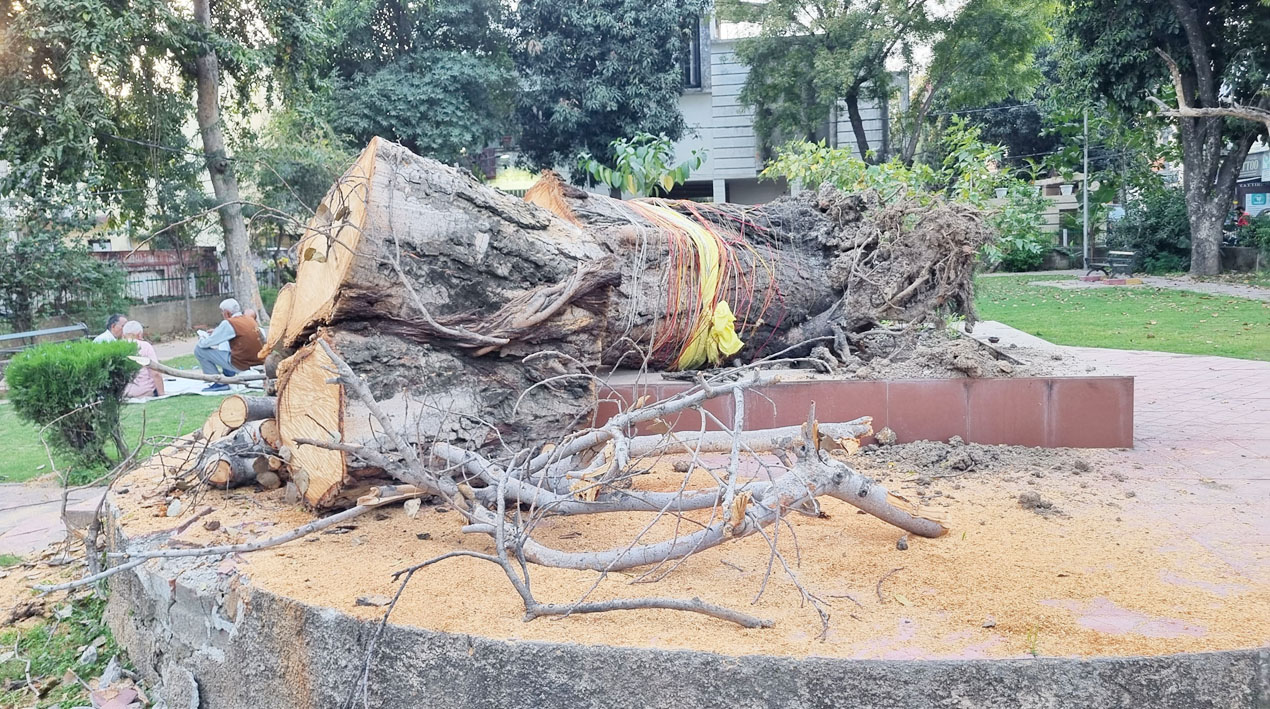
Senior Citizens Raise Alarm as Centuries-Old Trees Face Silent Disappearance
Ashu Kumar
Jammu: The Peepal tree, scientifically known as Ficus religiosa, has long been considered one of the most valuable trees for both the environment and society. Known for its ability to provide large amounts of oxygen and support biodiversity, the Peepal tree plays a vital role in maintaining ecological balance. However, in Jammu city, these important trees are increasingly facing the threat of cutting, raising concern among residents and environmentalists.
One area where this concern is becoming more visible is around Bahu Fort, one of the most popular and historic places in Jammu. The area is widely known for the famous Bahu Fort Temple, also known as Mata Bawe Wali Mandir. Every day thousands of devotees and visitors come here to offer prayers and spend time in the peaceful surroundings. The natural greenery around the fort has always been one of the main reasons people like to visit the area with their families.
But recently, locals say they have noticed several incidents where Peepal trees in and around the Bahu Fort area have been cut down. These incidents have disturbed many residents who feel that such old and important trees should be protected rather than removed.
Environmental experts say trees like the Peepal act as a natural support system for the planet. During the difficult days of the COVID-19 pandemic, when the world was struggling with respiratory problems and oxygen shortages, trees quietly continued doing their job of keeping the air clean and healthy.
Apart from environmental benefits, the Peepal tree also holds deep cultural and spiritual value in India. Many people believe that the Peepal tree represents the balance of the five natural elements — air, water, fire, earth and space. Because of this belief, the tree has been respected and protected in Indian tradition for centuries.
In Jammu, several Peepal trees are believed to be between 300 and 500 years old. These trees are like silent witnesses to the city’s history. They have stood through generations, providing shade to people, cooling the surrounding areas and improving air quality in many neighbourhoods.
Despite their importance, the increasing reports of tree cutting in different parts of the city have started worrying many residents. Environmental activists say that in some cases these trees are being removed due to construction work, encroachments or other private interests.
Local residents say these trees are not just part of the landscape but an important part of Jammu’s natural heritage. According to them, losing such old trees would mean losing a valuable part of the city’s identity.
The concern has already reached the authorities. Recently, several senior citizens from different localities met the Divisional Forest Officer (DFO) to raise the issue and express their concern over the cutting of Peepal trees. During the meeting, officials assured them that the matter would be looked into and necessary action would be taken.
However, many residents claim that so far they have not seen any concrete steps being taken to stop the cutting of these historic trees. This has led to growing frustration among citizens, who are now questioning why stronger action has not been taken to protect such valuable natural resources.
People have also pointed out the gap between government slogans and the reality on the ground. Campaigns promoting messages like “Plant Trees, Save Environment” are often seen, but many believe that protecting the trees that already exist should be the first priority.
Environmental groups are now urging the administration and forest department to take immediate action. They have suggested that old and historically important trees should be identified and declared protected heritage trees so that they cannot be removed easily.
Activists also believe that awareness campaigns and plantation drives are important, but protecting existing trees is even more necessary.
As one resident said, “Planting new trees is good, but if a 300-year-old tree is cut today, it will take centuries to replace it.”
For many people in Jammu, the Peepal tree is not just a tree. It is part of nature, tradition and history. Protecting these trees today may help ensure that future generations can continue to enjoy the same green environment that people have known for centuries.