By Mool Raj
Winter in my village Bhagota is long and unforgiving. Snow covers the land, water bodies freeze, and the earth shuts itself down. For humans, it is a season of hardship, but for birds, it is a season of hunger. Food becomes scarce, seeds disappear beneath the snow, insects vanish, and survival turns uncertain. In these months, birds face the quietest crisis — unseen and mostly ignored.
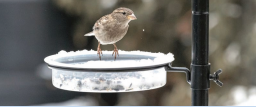
Feeding birds during winter in my village Bhagota is not an act of luxury. It is a necessity. Sparrows, pigeons, bulbuls, crows, and many other species struggle to find even a single grain. Once abundant, many of these birds are now missing from my village Bhagota. There are a number of factors that have thinned their numbers. When birds disappear, the balance of our ecosystem is disturbed. The sky grows silent, and silence is dangerous. Birds are vital to the ecosystem. They disperse seeds, control insects, clean the environment, and keep nature breathing. Their presence is proof that life still circulates freely. Feeding birds in winter helps sustain this delicate cycle. A handful of maize, rice, or grains placed on rooftops or open spaces can mean survival. Small acts, repeated daily, can protect entire species.
Yesterday, I learned this lesson not from books or environmental reports, but from an old woman. On a visit to my village Bhagota in District Doda, I noticed an old woman — anonymous and quiet. She carried no authority, no banner, no sermon. She spread a polythene sheet on the snow and gently placed rice and maize grains on it, slowly, as if time had slowed for her alone. I stood watching. Within minutes, birds arrived. Pigeons descended first, then sparrows, bulbuls, crows, and others whose names remain unknown to me. Wings fluttered. The sky lowered itself to the earth. Hunger met kindness without words.
The woman watched without pride. She did not seek attention. Locals say she feeds birds round the year — thousands of them. Despite having little, she gives. She understands that survival is shared, that humans are not the sole heirs of this land.
At a place where people come seeking blessings, she was giving one.
That old woman was a messenger. She reminded me that compassion does not need noise. It only needs consistency. She taught me that spirituality without care for living beings is incomplete. We must develop this habit. Feeding birds should become part of our daily lives, especially in winter. Children should grow up scattering grains, watching birds return, learning empathy before ambition. If we wish to keep my village Bhagota alive, we must keep its skies alive. The old woman will return tomorrow. Birds will gather again.
(The author is a freelance writer)