By Ravi Rohmetra
A Temple Where Wishes Are Fulfilled and Evil Dissolves
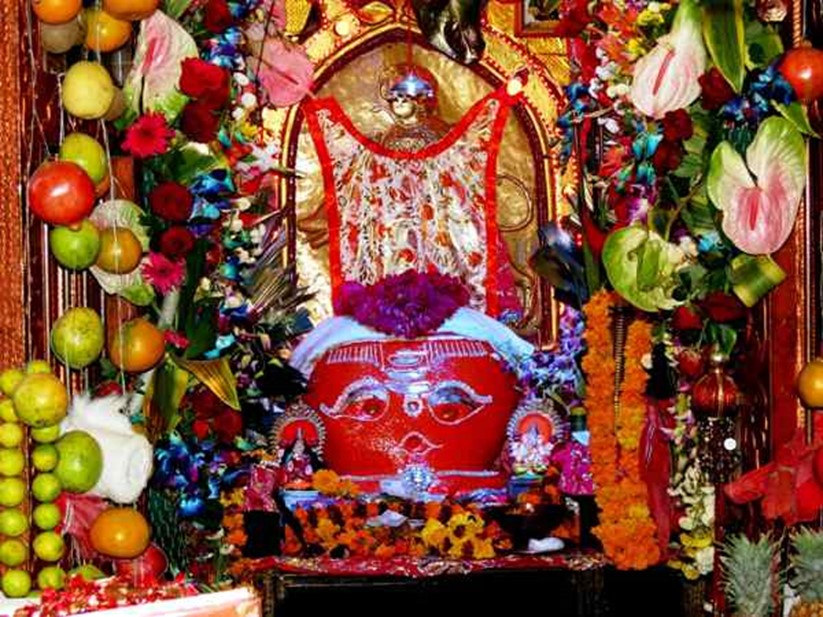
Jammu, revered as the City of Temples, is blessed with countless sacred shrines that enrich its spiritual landscape. Among these, the ancient and deeply venerated Bhairav Mandir at Chowk Chabutra holds a special place. Dedicated to Lord Kaal Bhairav, the fifth Rudra manifestation of Lord Shiva, this temple draws thousands of devotees who seek divine blessings, protection, and fulfilment of desires.
The temple is unique because Lord Kaal Bhairav manifests here in the form of a natural pindi, making it one of the most spiritually charged centres in Jammu.
The Temple’s Origin: A Divine Revelation
According to local history, decades ago, repair work was underway in the Dhounthly Bazar area. Debris from the site was being dumped near the old pond adjacent to the temple. Unaware of the presence of the sacred pindi beneath, labourers accidentally threw debris into the pond.
That very night, Lord Kaal Bhairav is believed to have appeared in the contractor’s dream, directing him to recover the submerged pindi. On searching the next morning, the pindi was indeed found in the pond and was respectfully restored to its original place. A temple structure was later constructed on the site, marking the divine will of Lord Bhairav.
This is how the revered Batuk Bhairav Nath Ji Temple came into existence—through divine intervention, faith, and devotion.
Growing Popularity and Spiritual Importance
Today, the temple continues to grow in prominence, drawing increasing numbers of devotees each year. The shrine is managed by the Prachin Shri Bhairav Mandir Trust, under the stewardship of Mahant Rumil Sharma, who also serves as the head priest. Under his supervision, the temple has expanded its activities, festivals, and facilities for devotees.
Nearly two decades ago, the temple began organising a bhandara that has now grown into one of the largest annual bhandaras in Jammu. Thousands of devotees from across Jammu & Kashmir attend every year to seek the blessings of Lord Kaal Bhairav.
For this year’s Shri Kaal Bhairav Ashtami, Chowk Chabutra and Dhounthly Bazar are beautifully decorated and illuminated, creating a divine and festive ambience.
Kul Devta of Over 52 Biradaris
Lord Kaal Bhairav Ji is revered as the Kul Devta by nearly 52 biradaris, including Dutta, Sooden, Anand, Khukhram, Sasan, and many others. According to Mahant Rumil Sharma, lighting an oil lamp at the entrance of homes and shops is believed to ward off the influence of unseen negative forces, inviting peace and prosperity.
The Mahant has also appealed to the people of Jammu—irrespective of caste, creed, or colour—to participate in the prayers and festivities and seek the blessings of the divine protector.
Architectural and Spiritual Significance
The Bhairav Mandir stands as a symbol of Jammu’s ancient spiritual heritage. Its architecture and idols reflect the age-old traditions and stories associated with Kaal Bhairav, the fierce yet benevolent guardian of devotees. As one of the only temples of its kind in the city, it continues to fascinate pilgrims, historians, and spiritual seekers.
The shrine belongs to the Shri Bhairav Mandir Trust, with Pandit Rumil Sharma as its sole trustee and caretaker. Worship at the temple follows traditional rituals, beginning with prayers to Lord Shiva and then to Lord Bhairava. Followers firmly believe that in Kalyug, it is essential to worship Bhairavnath, who was entrusted by Lord Shiva himself with the responsibility of protecting devotees from suffering and evil.
Twelve Forms of Bhairav Worshipped Here
The temple is known for worshipping all twelve divine forms of Bhairav, including:
- Batuk Bhairav Ji
- Prachand Bhairav Ji
- Swaran Akarshan Bhairav Ji
- Kaal Bhairav Ji
Among these, the temple specially venerates the form of Kaal Bhairav worshipped in Ujjain, believed to be one of the most powerful manifestations of the deity.
Traditional Significance and Ritual Practices
Traditional beliefs indicate that Kaal Bhairav Ji manifested at this very location nearly a century ago. As the deity associated with the navagrahas (nine planets) and various Kul Devtas, Kaal Bhairav attracts devotees from diverse communities seeking peace, protection, and blessings.
Worship in the temple follows strict ritualistic order, beginning with Lord Shiva and followed by Bhairav Ji. Devotees believe that Lord Bhairav helps navigate challenges and dispels negative forces surrounding their lives.
Visiting Hours and Guidelines
Devotees are encouraged to bring essential items for the temple—such as oil, ghee, grains, and pooja samagri—instead of cash donations, to support the temple’s traditional system of worship.
Government departments also participate actively during the annual bhandara and festivities, extending support and seeking blessings.
108 Names of Lord Bhairav
There are 108 names of Lord Bhairav, each representing a distinct aspect of his divine power—protector, destroyer of evil, giver of strength, bestower of wealth, remover of obstacles, and guardian of the universe.
Aarti of Batuk Bhairav Ji
The devotional aarti, “Om Jai Prabhu Bhairav Deva…”, is an integral part of daily worship in the temple. It is believed that reciting the aarti with devotion grants relief from suffering and fulfils heartfelt wishes.
(Ravi Rohmetra is a freelancer and a social worker and can be reached at Mob: 9419652999 e-mail:[email protected])