Special Feature on the Occasion of His 141st Birth Anniversary (October 24, 2025)
By Ravi Rohmetra
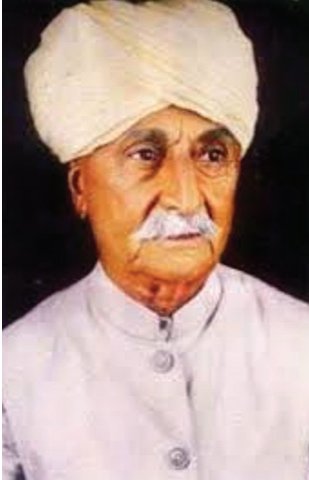
The Duggar land has a brilliant and unique history of its own. It has produced academicians, social workers, politicians, singers, actors, and leaders of great calibre. Among them, one of the most prominent names is that of Pandit Prem Nath Dogra, a towering personality who worked selflessly for the cause of the people.
He was a friend, guide, and social reformer who shared the joys and sorrows of the needy. His primary objective in life was to help families below the poverty line. The spirit of service to humanity was deeply rooted in his heart. He faced every hardship with courage for the welfare of others, firmly believing that “service to humanity is service to God.” For this reason, the poor masses revered him as their godfather, remembering him with love, respect, and honour.
Early Life and Education
Pandit Prem Nath Dogra was born in the village of Smailpur on October 24, 1884. After completing his early education in his village school, he graduated from Foreman College, Lahore, in 1908. Besides being academically accomplished, he was also an excellent athlete and won several prizes in sports.
He later joined the State Government as a Tehsildar, serving with integrity in various administrative positions. His dedication and uprightness earned him the position of Lent Officer in-charge of Bhaderwah Jagir of the Maharaja, and subsequently, he rose to become Wazir Wazarat (Deputy Commissioner). Known for his principled conduct and fair judgment, he handled administrative challenges judiciously.
However, he faced premature retirement on unfounded accusations related to handling Muslim agitators in Kashmir. Despite unrest in various districts, Muzaffarabad, under his charge, remained peaceful. His retirement, in fact, became a blessing in disguise—it gave him time to engage directly with the masses and understand their problems firsthand.
Social Reformer and Institution Builder
On the social front, Pt. Dogra founded the Harijan Sewa Mandal to uplift the Harijan community. He also established the Brahman Mukhya Mandal, later renamed Brahman Pratinidhi Sabha, to eradicate social evils in Brahmin society.
He emerged as a leading member and founder of the Dogra Sadar Sabha and the Sanatan Dharma Sabha. He also served as a member of the Jammu Municipality, remaining its Vice-President for a decade, until 1949. His growing prominence led to his election to the Praja Sabha in the 1945 elections.
Political Journey and Leadership
During 1963–64, Pt. Dogra served as the Sanghchalak (Head) of the RSS in Jammu and Kashmir. Under his stewardship, the organization played a crucial role in providing relief to refugees from West Pakistan and to people uprooted during the 1947 Pakistani invasion.
His relief work and leadership won him immense popularity among the masses. However, his rising influence led to his arrest by the then Prime Minister of J&K, Sheikh Mohammad Abdullah, in 1949 on concocted charges. The strong agitation by the people of Jammu forced his release.
Pt. Dogra later became the President of the Jammu and Kashmir Praja Parishad (1950–1964). A staunch believer in democracy and national unity, he spearheaded the historic agitation under the slogan “Ek Nishan, Ek Vidhan, Ek Pradhan” (One Flag, One Constitution, One Head) for complete integration of Jammu and Kashmir with India. His leadership in this movement led to his imprisonment for nine months, but his resolve never wavered.
He was elected to the State Assembly three times (1957, 1962, and 1967) and to the Praja Sabha twice, earning admiration even from his political opponents, including Ghulam Mohammad Bakshi and G. M. Sadiq. In 1955–56, he rose to the national stage as President of the All India Jan Sangh, where he continued his campaign for national integration.
A Life of Simplicity and Integrity
Throughout his service in the government and public life, Pt. Dogra never availed government accommodation, vehicle, or any privileges. His life was marked by humility, simplicity, and dedication to secular values.
He was an institution in himself—his ideology, concern for Jammu, and commitment to the unity of the nation earned him the title “Sher-e-Duggar” (Lion of Duggarland). His leadership during the “Ek Vidhan, Ek Nishan, Ek Pradhan” agitation compelled even Kashmiri leaders to acknowledge his greatness.
A Legacy of Patriotism and Service
Pt. Dogra’s entire life was dedicated to fighting discrimination against Jammu and ensuring full integration of J&K with India. His deep sense of patriotism and selfless service made him a leader beyond compare.
He passed away on March 21, 1972, leaving behind a legacy of courage, sacrifice, and unflinching devotion to the nation. His ideals continue to inspire generations.
Today, BJP celebrates his birth anniversary as Sports Day in recognition of his love for sports and discipline. Even after more than five decades of his passing, his house—popularly known as “Pandit Ji Ki Kothi”—remains a hub for BJP’s political activities, a living symbol of his enduring presence.
His closeness to the masses was reflected in his simple lifestyle—he often travelled by bus or on foot, making him truly one with the people.
Honouring the Legend
In recognition of his contributions, the General House of Jammu Municipal Corporation, in its meeting on March 8, 2021, passed a resolution to name the Parade Ground as “Pandit Prem Nath Dogra Sports Complex.” Later, on October 28, 2021, under the chairmanship of Lieutenant Governor Manoj Sinha, the Administrative Council decided to name the Samba College after Pandit Prem Nath Dogra as part of the Azadi Ka Amrit Mahotsav celebrations.
Conclusion
Pandit Prem Nath Dogra was a multifaceted leader—an embodiment of simplicity, service, and sacrifice. His ideology, nationalism, and compassion for humanity continue to guide the people of Jammu and Kashmir.
He spent every moment working for the unity of J&K with the rest of India and was instrumental in leading the agitation for the pride of the common people.
Even though he is not with us today, his principles, ideals, and selfless service will forever remain enshrined in our hearts.
As a tribute to this great son of the soil, let us pledge to carry forward his vision of unity and integrity.
“Chaman mein gul khiltay nahi sabhi ke liye,
Jahan bahar aati hai, kisi kisi ke liye,
Aapke jaane ke baad andhera rahega mehfil mein,
Hazaron chirag jalane padenge roshni ke liye.”
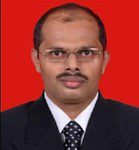
(Ravi Rohmetra is a Social worker & a
Freelance Writer Mob.:
9419652999)