Kathmandu, Sept 14: Nepal’s President Ramchandra Paudel on Saturday announced that fresh elections to the House of Representatives will be held on March 5, 2026, setting the stage for a new political beginning after weeks of violent unrest that rocked the Himalayan nation.
The decision comes in the aftermath of the Gen Z–led anti-corruption protests that swept across the country, leaving 51 people dead and more than 1,300 injured. The demonstrations, marked by student-led mobilisations and public anger against corruption, had plunged Nepal into chaos and led to a nationwide curfew, mass detentions, and thousands of prisoners breaking free from custody.
In a statement, President Paudel called the elections a chance to put democracy back on track. “The people have got the opportunity to move forward on the path of a more advanced democracy by holding the elections to the House of Representatives within six months,” he said. He also appealed to political parties to cooperate and work in the interest of the people during the run-up to the polls.
The announcement was welcomed by many citizens, though wounds from the protests remain fresh. On Saturday, hundreds of Nepalis, including students, monks, activists, and local residents, gathered outside the iconic Bouddhanath Stupa in Kathmandu for a candlelight vigil in memory of those who died. Participants lit candles and observed silence, calling for justice and reforms.
Meanwhile, the political fallout continues. Nepali Congress MP Abhishek Pratap Shah has filed a First Information Report (FIR) against former Prime Minister KP Sharma Oli, accusing him of mishandling the crisis. The FIR was lodged at New Baneshwor police station through Kapilvastu’s chief district officer, Dilkumar Tamang, reflecting growing demands for accountability from senior leaders.
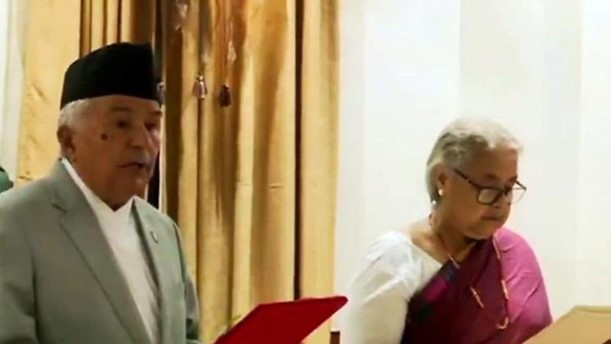
In the wake of the turmoil, Nepal witnessed a historic political development with the appointment of Sushila Karki, the former Chief Justice of Nepal, as the country’s first woman interim Prime Minister. She was sworn in shortly after the curfew was lifted and has pledged to restore peace and stability. On Saturday, Karki visited the civil hospital to meet with injured protestors, a gesture widely seen as an attempt to heal the nation’s wounds.
The Ministry of Health and Population confirmed that among the 51 dead, 30 were killed by gunshot wounds, while 21 succumbed to burns, injuries, and other causes. The toll also included one Indian national and three police personnel, according to Nepal Police co-spokesperson Ramesh Thapa.
With the curfew lifted, public life in Nepal is gradually returning to normal. Transportation has resumed, and long-distance buses are again operating from Kathmandu, signaling a fragile but significant step toward stability.
Indian Prime Minister Narendra Modi congratulated Karki on assuming office, expressing hope that she would steer Nepal toward “peace, stability, and progress.”
The upcoming elections are being closely watched both at home and abroad, as Nepal navigates one of the most turbulent political phases in its modern history. The March 5 polls are expected to determine whether the country can move past weeks of turmoil and chart a new course toward democratic consolidation. (Agencies)