Ajay Kumar, Lucknow
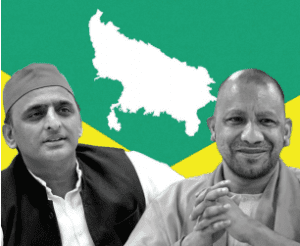
As the 2027 Assembly elections draw closer, political activity in Uttar Pradesh is intensifying. This time, the center of electoral strategies has unexpectedly shifted to a district that for long was considered “inauspicious” from a power perspective. We are talking about Gautam Buddh Nagar, that is, Noida. Bordering Delhi, this district has now acquired such political significance that the wave rising from here can influence nearly 100 Assembly seats in western Uttar Pradesh. That is why the Bharatiya Janata Party, Samajwadi Party, and Bahujan Samaj Party have all decided to kick off their Mission-2027 from here.
Gautam Buddh Nagar is increasingly being referred to as the economic capital of Uttar Pradesh. Over the past five years, investment proposals worth more than ₹1.5 lakh crore have come in the fields of IT, electronics, real estate, and infrastructure. Yamuna Expressway, the developing Yamuna City, the proposed film city, and the international-level Jewar Airport have turned this district into the poster boy of the state’s development story. In politics, development is often the biggest weapon, and the ruling party is preparing to deploy this weapon with full force.
The Bharatiya Janata Party is making solid development data and large projects the backbone of its election campaign. On February 21, the foundation stone of North India’s first semiconductor unit is proposed to be laid in Industrial Sector-28 of Yamuna City. Chief Minister Yogi Adityanath and Union Minister Ashwini Vaishnaw will be present at the event, while Prime Minister Narendra Modi will address the gathering virtually. Spread over about 48 acres, this unit is being invested in by giants such as HCL and Foxconn. Even in the initial phase, it is expected to generate around 4,000 direct and 10,000 indirect jobs. BJP leaders claim that the semiconductor unit is not just an industry but a step toward making Uttar Pradesh technologically self-reliant. The party believes that Noida and Greater Noida have already established themselves as IT hubs, and with chip manufacturing, the region will emerge even more strongly on the global map. Soon after, preparations are underway for the inauguration of the international airport being built in Jewar. Spread over nearly 1,334 hectares, the airport’s first phase will have an annual capacity of 12 million passengers, which is planned to be expanded to 70 million in later phases. The BJP considers this a game-changer for the development of western UP.
On the other hand, the Samajwadi Party has decided to leave behind old superstitions and turn Noida into its political laboratory. Party president Akhilesh Yadav is set to launch his election campaign on March 29 from Mihir Bhoj Degree College in Dadri. The event has been named the “Samajwadi Equality Brotherhood Rally” and the “PDA Participation Yatra.” SP leadership believes that the party’s performance in western UP during the 2024 Lok Sabha elections has clearly shown that if the alliance of backward classes, Dalits, and minorities comes together on the ground, the BJP’s path will not be easy. Strategists argue that Gautam Buddh Nagar’s social structure is favorable to the PDA formula. About 35 percent of the district’s population belongs to backward classes, while Dalits and minorities together account for nearly 30 percent of voters. Additionally, the presence of influential communities such as Gurjars, Jats, and Tyagis makes the local politics even more interesting. Akhilesh Yadav is confident that just as he launched his cycle yatra from here in 2012 and secured a full majority, the wave rising from Noida in 2027 will once again reach Lucknow.
The Bahujan Samaj Party is also not in the mood to take this district lightly. It is the home district of BSP supremo Mayawati, and the party considers it its political show window. On March 15, on the birth anniversary of Kanshi Ram, a major show of strength is being planned at the National Dalit Inspiration Site in Noida. Party leaders claim that lakhs of workers from the Meerut, Saharanpur, Moradabad, Bareilly, Aligarh, and Agra divisions will gather for the program. The BSP’s focus is clear: to reunite its core Dalit vote base and send the message that it remains a strong contender in the race for power.
Political analysts believe that the importance of Gautam Buddh Nagar is not limited to its three Assembly seats. Noida’s political message resonates across the Delhi-NCR. Rallies, announcements, and development projects held here reach every district of western UP through media and social platforms. In the 2022 Assembly elections, the BJP had swept this district, but this time the contest appears far more triangular and intense.
Rapidly growing urban population, the increasing number of migrant voters, and employment-related issues will be at the center of electoral debates this time. According to Noida–Greater Noida Authority data, the population here has grown by nearly 40 percent over the past decade. A large proportion consists of youth and middle-class professionals whose priorities differ from traditional caste politics and are more focused on development, jobs, and basic amenities.
That is why, in the 2027 electoral battle, Noida is no longer just a district but has become a laboratory of power. Whatever experiment succeeds here will be replicated across the state. The BJP is in the fray with development momentum and mega projects, the Samajwadi Party is attempting a comeback with social coalitions and a new message, while the BSP is working on a strategy to strengthen its old base once again. The rallies and programs scheduled over the next month will determine which way the electoral camel turns in 2027, but one thing is certain: this time, the road to power will pass through Noida.
(The writer is a senior journalist from Lucknow and can be reached at Mob:- 9335566111)