Northlines News Desk
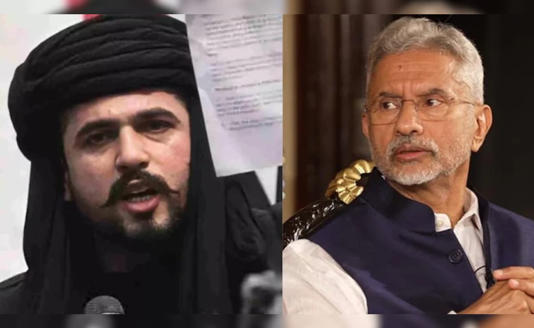
Mir Yar Baloch, a prominent Baloch nationalist leader and human rights campaigner, has issued a powerful open letter to India’s External Affairs Minister Dr. S. Jaishankar, expressing deep concern over the expanding China–Pakistan strategic partnership and its potential military implications for the troubled Balochistan region.
He warned that China may deploy its armed forces in Balochistan within the coming months, a development he described as a serious threat to regional peace, South Asian stability, and the future of both Balochistan and Bharat.
Balochistan’s Struggle and Diplomatic Outreach
Referring to decades of repression under Pakistani rule, Mir Yar Baloch highlighted widespread allegations of state-sponsored violence, enforced disappearances, and systematic human rights violations. He recalled that Baloch nationalist leaders had declared independence in May 2025, and announced that the self-declared Republic of Balochistan will observe the “2026 Balochistan Global Diplomatic Week” in early 2026.
The initiative aims to establish direct diplomatic engagement with governments, global institutions, and international civil society.
Praise for India’s Operation Sindoor
In his New Year message, Mir Baloch strongly praised the Indian government and Prime Minister Narendra Modi for the decisive execution of Operation Sindoor in 2025, following the April 22 Pahalgam terror attack.
He described the operation as a demonstration of India’s strategic resolve, national courage, and commitment to combating cross-border terrorism, asserting that the move significantly weakened Pakistan-backed terror networks.
New Year Greetings and Historic Ties
Extending New Year greetings for 2026, Mir Baloch wrote:
“On behalf of the six crore citizens of the Republic of Balochistan, we convey our warmest wishes to the 140 crore people of Bharat, its Parliament, media, civil society, and leadership. This moment invites reflection on the centuries-old civilisational, cultural, economic, diplomatic, and spiritual ties between our peoples.”
He cited the Hinglaj Mata Temple (Nani Mandir) as a living symbol of this enduring civilisational connection between Bharat and Balochistan.
Unconditional Support for India
Reaffirming full support for India, the Baloch leader expressed commitment to strengthening cooperation in peace-building, trade, energy security, defence collaboration, and counter-terrorism.
He wrote that Balochistan has suffered under Pakistan’s occupation for nearly eight decades, calling it a period marked by oppression and instability, and urged the international community to recognize Balochistan’s legitimate aspirations for sovereignty and self-determination.
China–Pakistan Axis Raises Alarm
Mir Baloch warned that the accelerating China–Pakistan alliance, particularly through the China–Pakistan Economic Corridor (CPEC), has entered what he described as its final strategic phase.
He cautioned that any deployment of Chinese military personnel in Balochistan without the consent of the Baloch people would severely destabilize South Asia.
“The presence of Chinese boots on Baloch soil, against the will of 60 million Baloch, would create an unprecedented security crisis for both Bharat and Balochistan.”
While China and Pakistan continue to portray CPEC as purely economic, India has repeatedly opposed the project, pointing out that it passes through Pakistan-occupied Jammu and Kashmir and poses serious sovereignty and national security concerns.
Emerging Geopolitical Significance
Strategic analysts increasingly view Balochistan as a crucial crossroads of Indo-Pacific geopolitics, energy corridors, and regional trade routes. The evolving situation could influence not only South Asia’s security architecture but also broader global power alignments involving India, China, and Western democracies.