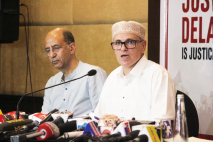
Jammu Tawi, Dec 14: Senior CPI(M) leader M.Y. Tarigami on Saturday criticized the Centre’s proposal to implement the “one nation, one election” concept, calling it detrimental to India’s federal structure and the spirit of its democratic diversity.
Speaking to reporters, Tarigami urged all political parties to rise above their affiliations and oppose this “anti-people” decision. He argued that this move undermines the essence of India’s federalism, which protects the country’s vast diversities and cultures.
“The one nation, one election concept is against the spirit of the idea of India and its federal structure, which upholds our nation’s diversity,” Tarigami said, highlighting that India’s strength lies in its diversity, which has historically kept the nation united despite efforts to fragment it. He stressed that India’s democracy thrives on the inclusion of various cultures, identities, and religious beliefs.
Tarigami also questioned the logic behind holding simultaneous elections, stating that the issues raised in Lok Sabha and state elections are distinct, and municipal or panchayat elections are unrelated to national concerns. “What is the relevance of clubbing all elections together?” he asked, warning that the initiative would harm the country’s unity and federal system, ultimately leading to a stronger centralized authority.
He also drew attention to the impact of policies like “one nation, one tax,” where all tax revenue is directed to the Centre, leaving opposition-led states at a disadvantage. “States that do not toe the Centre’s line are deprived,” Tarigami said, adding that such policies hurt the general public, not just political rivals.
Further, the CPI(M) leader criticized the “one nation, one language” concept, questioning why India cannot maintain its linguistic diversity. He called it a “tyrannical attitude” that would have negative repercussions for the country.
Tarigami also revisited the August 2019 decision to revoke Jammu and Kashmir’s special status under Article 370 and divide the state into Union Territories. He expressed disappointment over the lack of progress in restoring statehood, despite the National Conference-led coalition government passing a resolution on the matter in October.
The leader accused the Bharatiya Janata Party (BJP) of undermining democracy by extending the powers of the Lieutenant Governor in Jammu and Kashmir before the formation of the state government. He criticized the Centre’s dual-power strategy and emphasized the need to respect the people’s mandate for the sake of democracy’s integrity.
“People’s faith in democracy must be respected, or it will lead to extremism,” he warned, stating that such a situation would be harmful both for Jammu and Kashmir and the country as a whole.