By Omkar Dattatray
Are not all those who indulge in selling rotten meat and synthetic cheese — and those who encourage them — playing with the health and lives of the people? Our society, and particularly a section of traders, seems to have stooped too low, dealing openly in adulterated, expired, and unhygienic food items.
This alarming situation exposes a serious moral and legal crisis. Some shopkeepers have no ethics and indulge in corrupt, life-threatening practices, showing the least regard for public health. They are playing with the lives of innocent consumers, and this is happening largely due to the absence of fear of law.
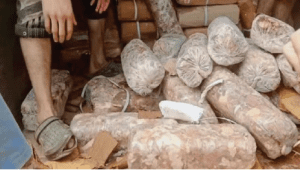
What is even more disturbing is that these illegal practices flourish in the open, suggesting that the law-enforcing agencies and authorities have failed to ensure food safety. The sale of expired meat, synthetic cheese, and other adulterated food items continues unchecked in many markets across Jammu and Kashmir, endangering public health.
Massive Crackdown on Rotten Meat and Fake Cheese
In recent developments, authorities in Jammu and Kashmir have intensified their crackdown against the illegal sale of rotten, expired, and unhygienic foods, especially with the festive season approaching.
In Jammu, hundreds of kilograms of synthetic cheese — manufactured from harmful materials but resembling real cheese — were seized and destroyed. Shockingly, much of this cheese was meant for hotels catering to Vaishno Devi pilgrims in Katra, making the discovery even more disturbing.
Joint teams of the Food Safety Department (FSD) and the Legal Metrology Department (LMD) have been conducting frequent raids across various districts. These inspections have unearthed spurious food items, including rotten meat, expired fish, synthetic cheese, and contaminated sweets. Offenders have been arrested, and tons of unsafe food have been destroyed to protect consumers.
In Baramulla, over two quintals of spoiled mutton were seized and declared unfit for human consumption. Similarly, in Jammu city, 2,700 kg of expired fish and chicken were confiscated during a late-night raid and destroyed at the Kot Bhalwal dumping site.
The Tip of the Iceberg
According to the Controller of the LMD, the situation is “just the tip of the iceberg.” In Jammu alone, 27 quintals of rotten meat products were discovered stored in highly unsanitary conditions.
This operation came just days after authorities destroyed 3,500 kg of adulterated meat in the Kashmir Valley, sparking public outrage and triggering an investigation into the food supply chain.
Across the Valley, disturbing reports continue to emerge from various districts where chicken, kebabs, cheese, and even sweets were found unfit for sale.
The Food Safety Department has issued an appeal to the public:
“People have the right to know what is on their plate. We urge everyone to cooperate with the authorities and report any suspicious or spoiled food items so that strict legal action can be taken.”
Over 12,000 Kilograms of Rotten Meat Destroyed
The crackdown has already resulted in the seizure and destruction of more than 12,000 kilograms of rotten and unhygienic meat across Jammu and Kashmir, according to the Food and Drug Administration (FDA) Commissioner, Smita Sethi.
The seized items include kebabs laced with synthetic colours, meatballs contaminated with chemicals, and chicken stored without proper refrigeration.
Commissioner Sethi clarified:
“Not all meat available in the markets is unsafe. However, several serious issues have been flagged, especially related to improper storage and the use of harmful synthetic colours. These products are being identified and destroyed.”
Poor storage conditions — including lack of cold storage facilities, improper packaging, and unhygienic handling — are the main causes of contamination, putting consumers at serious risk.
District-Wise Seizures
The crackdown has been widespread and intense across multiple districts:
· Kupwara: Over 20 quintals of rotten meat destroyed.
· Handwara: 20 kg seized and discarded.
· Srinagar: A major haul of 1,200 kg of contaminated meat recovered from Zukura Industrial Estate on July 31.
· Across the Valley, more than 3,500 kg confiscated, including 2,500 kebabs tainted with synthetic colouring and 150 kg of spoiled meatballs.
· Ganderbal’s Nagbal area: 250 kg of visibly spoiled meat destroyed on the spot.
· Jammu City: Nearly 1,000 kg of expired packed meat and chicken seized and destroyed at a cold storage facility.
In another recent raid, the Drug and Food Control Organization (DFCO), Jammu, seized 2,100 kg of adulterated cheese and 78 tins of expired mustard oil from Gangyal, exposing the shocking scale of food adulteration.
Government Response and Public Outrage
Following these revelations, Chief Minister Omar Abdullah chaired a high-level meeting with the concerned authorities, directing them to act tough against the culprits.
“No meat or food item should be sold without proper clearance,”
he instructed, adding that
“those deliberately selling adulterated or rotten food to the public will face exemplary punishment.”
Health Minister Sakina Itoo also demanded stricter enforcement of food safety laws and the adoption of robust public health safeguards.
Despite these measures, public anger is growing as people continue to question why such illegal practices were allowed to flourish unchecked for so long, putting the health of thousands at risk.
Public Health at Stake
Medical experts warn that consuming rotten meat or adulterated cheese can cause:
· Food poisoning
· Diarrhoea
· Dysentery
· Typhoid
· Long-term digestive disorders
The sheer scale of recent seizures highlights the magnitude of the health crisis caused by unscrupulous traders.
A Call for Stronger Laws and Public Vigilance
The government must move beyond temporary crackdowns and enact stricter laws to curb food adulteration permanently. Offenders should face harsh punishments to serve as a deterrent.
However, the responsibility does not rest with authorities alone. Public vigilance is crucial. Citizens must remain alert, verify the quality of products they consume, and report violations promptly.
The issue is not just about spoiled meat or synthetic cheese — it is about trust, health, and safety. Without urgent action, consumers will continue to unknowingly consume poison on their plates.
Conclusion
The recent crackdown has exposed the dark underbelly of the food supply chain in Jammu and Kashmir. While the authorities have stepped up efforts, the situation demands long-term reforms, public cooperation, and stricter legal measures.
Until we collectively demand accountability from traders and the government alike, our plates will remain vulnerable to adulteration and contamination. Protecting public health must be the top priority — before it’s too late.
(The author is a columnist, KP activist and freelance).