By Pushp Saraf
Growing up as a teenager in the border region of Jammu, I witnessed the 1965 war from what felt like arm’s length. From the top floor of our house in the old city, we could see artillery fire lighting up the horizon—not far from where we stood. Indian Air Force jets would streak across the sky, engaging Pakistani aircraft in dogfights that, to our young eyes, seemed both terrifying and mesmerising.
Anti-aircraft guns were stationed on either side of the then-lone Tawi Bridge—the vital road link between the rest of the country and the Jammu city and the bulk of the erstwhile Jammu and Kashmir State. Their thunderous bursts served both as a line of defence and a warning against any enemy misadventure.
Evenings were spent in civil defence camps where uniformed personnel trained us on how to conduct ourselves during air raids and blackouts. Those sessions were part drill, part reassurance, as the threat loomed ever close.
Looking back, large parts of the city appeared deserted—many residents had fled to the safety of nearby hill towns or to relatives in the neighbouring Punjab. Yet, a significant number chose to stay and endure. Among them was my grandfather—a revered figure in undivided J&K—who cancelled a scheduled trip to Delhi the moment the war broke out. His decision to remain was an act of quiet defiance and commitment, a gesture that left a lasting imprint on us all.
One of the most haunting challenges we witnessed during that turbulent time was the plight of refugees—both humans and animals—forced to abandon their homes and hearths in desperate search of food and shelter. Their harrowing presence made it painfully clear to us, even as young minds, that war, though waged for self-respect and national honour, never comes without a cost. Moved by their suffering, we mobilised resources from our homes and neighbourhoods to feed them at what is now a police establishment near the city’s Parade Ground. Their hunger was urgent but what lingered in their eyes was the deeper fear—would there be another meal tomorrow?
Discipline and humanity
In those difficult days, there were many in the police, administration and civil society who rose to the occasion with discipline and humanity. I recall one such figure vividly—Ashwani Kumar, a senior police officer and renowned sports administrator. He firmly believed that service demanded sincerity. In one memorable instance, he personally tracked down a few individuals whose casual behaviour while serving refugees fell short of his expectations, and had them corrected through their elders. That was the kind of moral seriousness with which responsibilities were undertaken.
Back then, war was deeply personal. It was fought by individuals whose presence was tangible—whether in the trenches or in the skies. Each soldier or pilot bore a visible identity and the threat they faced was immediate, mutual and unmistakably human.
Today, that reality has changed profoundly. The Tawi now boasts four bridges, ensuring robust road connectivity between much of the Union Territory of J&K and the rest of the country. With greater awareness of the strength of our armed forces and a growing sense of self-assurance, people are now more inclined to remain in place rather than flee when a crisis strikes.
A striking transformation in modern warfare is the absence of direct physical confrontation—at least in its initial stages. In the past, battles began with the visible movement of troops, the roar of advancing tanks or the dogfights of aircraft in contested skies. Today, however, hostilities are often initiated silently and from a distance. Adversaries now rely on unmanned aerial vehicles, precision-guided missiles and loitering munitions that can hover undetected before striking with deadly accuracy.
Shifting contours of conflict
This evolution marks a profound shift in the conduct of conflict. For civilians living in border regions, the threat is no longer heralded by marching boots or air-raid sirens but by the sudden appearance of drones or the quiet arc of a missile—launched remotely, operated anonymously and often arriving without warning. The battlefield has expanded beyond physical frontlines. The question confronting both governments and citizens is urgent: how does one defend against a war that is fought invisibly by machines, and often without a declared beginning?
The answer lies in fundamentally reimagining civilian preparedness. As the arsenal of warfare evolves, so too must the resilience, awareness and response capabilities of communities. In an age where machines strike silently and without warning, our defences must become faster, more adaptive and acutely attuned to the shifting contours of conflict—from traditional ground skirmishes to precision-driven aerial assaults.
Several models of effective civilian preparedness already exist, offering valuable lessons. In Israel, for instance, every residential building is mandated to include a bomb shelter and regular civil defence drills ensure that the population knows exactly how to respond to missile attacks. In South Korea, civil preparedness is institutionalised through monthly air-raid drills and a nationwide alert system that reaches citizens instantly via mobile networks.
Our country, too, has made important strides, particularly in border regions like Punjab and J&K. Villagers near the Line of Control (LoC) and the International Border (IB) have been provided with community bunkers, early warning systems and training in first response technique.
Reasons to applaud
The May 7-10, 2025 escalation brought these emerging realities into sharp relief. Pakistan’s use of drones caused damage when at least one of them crashed in civilian areas in Jammu—underscoring the unpredictable and pervasive nature of modern threats. Although our military defences successfully intercepted multiple drones and missiles, the episode laid bare the limits of civilian preparedness. On May 7, northern India witnessed its largest-ever nationwide civil defence drill—”Operation Abhyaas”—engaging 244 districts in rescue simulations, blackout tests and air raid exercises under the Ministry of Home Affairs and National Disaster Management Authority (NDMA). The mass participation revealed both public willingness and systemic gaps in translating training into active defence. During the drone-triggered blackout at an Indian Premier League match (Punjab Kings versus Delhi Capitals) in Dharamsala (Himachal Pradesh) on May 8, air raid sirens were raised and the stadium with about 25000 spectators was evacuated safely within minutes—a commendable example of community-level readiness backed by efficient planning by security forces and the IPL organisers.
Yet such isolated successes are not enough without broader ongoing vigilance.
The civilian readiness strategy continued with “Operation Shield” on May 31 with focus on enhanced emergency preparedness.
Periodically, experts and institutions have examined how civilian populations in border regions should respond to the realities of modern warfare. These studies do not focus on military tactics—such as strengthening air defence systems to intercept drones and missiles—but rather on the civilian dimension: how to reduce the psychological trauma, anxiety and daily disruption caused by the threat of aerial attacks.
Lessons from Jammu
Consider the case of Jammu—a region whose geography places it at the very heart of the country’s national security concerns. Both the city and the surrounding areas lie in close proximity to the Pakistan border and the LoC, making them frequent targets in times of heightened tension. According to one report, over 45 drone intrusions have been recorded in the region over the past 18 months alone.
Between May 7 and 10, Indian defence forces intercepted no fewer than eight missiles and 20 drones aimed at key locations across Jammu, Samba, and Poonch—marking one of the most concentrated aerial offensives in recent memory. In one particularly alarming incident, fragments of a hostile drone crashed into the upper floor of a residential house in Jammu city. By sheer chance, the family had chosen to sleep on the ground floor that night and narrowly escaped injury—an unsettling reminder of both the randomness and the grave danger that such attacks pose to civilian life.
One of the earliest and most serious drone incidents targeting Jammu city occurred in June 2021 when the Air Force Station was hit by two improvised explosive devices dropped via drones. The terrorist group Lashkar-e¬Taiba (LeT) was widely suspected to be behind the attack. A study by the Observer Research Foundation (ORF) titled “Countering Hostile Drone Activity on the India-Pakistan Border,” highlighted the significance of this event: This incident “demonstrated for the first time the use of drones for terrorist attacks in the domestic context”. The ORF study further noted that while drones and their components can be purchased commercially off the shelf, the technical expertise required to convert them into carriers of explosive payloads suggests the likely involvement of Pakistan’s military establishment. As the report observed, “The Pakistani establishment stands to gain from the melding of terrorism and criminality, as it amplifies India’s threat canvas.”
Poonch: A more sobering story
The situation in Poonch town tells a more sobering story. Civilian casualties and property damage there underscore a harsh and persistent reality: the town’s vulnerability is directly tied to its geography. Poonch lies in close proximity to elevated terrain that remains illegally occupied by Pakistan. These commanding heights offer enemy forces a tactical advantage and an unobstructed line of sight into Indian territory.
For the residents of Poonch, this topographical disadvantage translates into a constant sense of exposure. With every escalation, they face renewed anxiety, knowing they are within range of hostile fire with limited protection. Unlike areas where geography or infrastructure may offer some form of buffer; Poonch remains perilously positioned—its people living under a perpetual shadow of threat.
Until Pakistan is dislodged from these strategically critical heights, the civilian population will remain trapped in a state of precarious existence. While defensive infrastructure and community preparedness offer some protection, they have limited efficacy when the adversary commands the high ground. A lasting solution requires not just technological deterrence but also the restoration of territorial control that rightfully belongs to India.
Hard-earned wisdom
For residents of the border regions, survival is shaped by lived, life-or-death experience. It is no surprise, then that in the wake of the Pahalgam massacre on April 22, those living near the LoC swiftly began preparing for the worst. Many started clearing out existing underground bunkers, reinforcing them for safety and stocking them with first-aid supplies—actions born not of panic but of hard-earned wisdom.
Years of exposure to conflict have steeled their nerves and sharpened their instincts. These communities have learned that preparation is not optional—it is essential. One of the first steps, they now know, is organising mohalla (neighbourhood) surveillance committees to keep watch and report any suspicious movements or unfamiliar individuals. This grassroots vigilance is not just a precaution—it is and must remain a way of life in regions where the threat of war can become reality overnight. It reflects a quiet resilience built over years of adversity and a deep understanding that in the face of modern warfare, community coordination can be as vital as military readiness.
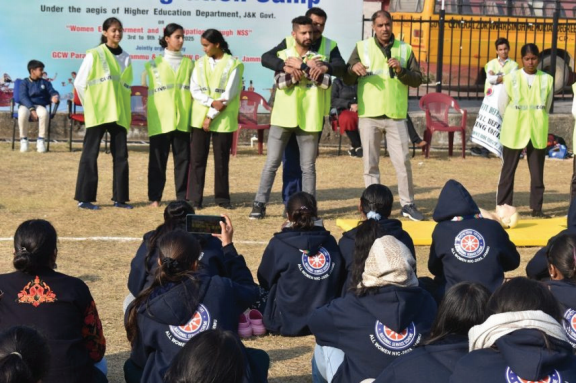
Formal civil defence training plays a crucial role in refining the instincts shaped by real-life experience. It brings structure and efficiency to actions that, in moments of crisis, can mean the difference between life and death. For example, training in the use of stretchers, transport vehicles and coordinated evacuation procedures enables civilians to safely move the injured to nearby medical facilities and extract people trapped during crossfire.
An effective civil defence mechanism is not merely supportive—it is vital. Recognising this, the Union Government has long acknowledged the strategic value of civilian participation in national security. In fact, the importance of organised civil defence came into sharp focus during the Chinese aggression of 1962 and the Indo-Pak conflict of 1965. In response, the Government began to institutionalise civilian training and preparedness. This commitment culminated in the enactment of the Civil Defence Act of 1968, which laid the legal and administrative foundation for a nationwide civil defence framework to provide for “among other things measures not amounting to actual combat, for affording protection to any person, property, place or thing in India or any part of the territory thereof against any hostile attack, whether from air, land, sea or other places, or for depriving any such attack of the whole or part of its effects, whether such measures are taken before, during, at or after the time of such attack.” The Act also authorised the raising of Civil Defence Corps and for making Rules and Regulations for Civil Defence. Its scope was enlarged in 2010 by an amendment to include the disaster management as an additional role for the Civil Defence Corps while retaining its primary role.
A largely voluntary endeavour
Such initiatives highlight the vital role civil defence plays in strengthening national buoyancy. At its core, civil defence remains a voluntary effort—driven by citizens who are willing to step forward in times of need. However, it operates within a structured framework supported by a small, permanent cadre of paid staff. This core team is scaled up during emergencies ensuring that the system can respond swiftly and effectively when required.
Recognising the growing urgency of community-led preparedness in a rapidly evolving security environment, the Union Government has set itself an ambitious yet important target: to raise one crore civil defence volunteers across the country within a span of seven years. As per the latest data available on the Union Ministry of Home Affairs website, the current objective stands at 14.11 lakh volunteers of which 5.38 lakh have already been mobilised—making steady progress toward a more vibrant national fabric.
These volunteers are trained by professional civil defence staff and receive duty or training allowances in recognition of their commitment. The training is not merely procedural; it is transformative. It equips citizens with life-saving skills—ranging from first aid, evacuation techniques and fire safety to crowd management and disaster response protocols—while fostering a strong sense of civic duty, local leadership and collective vigilance.
In an era where the nature of threats is increasingly asymmetric, remote and unpredictable, it is imperative to build such grassroots capacity. It is high time we institutionalise this preparedness by integrating civil defence education into school curricula nationwide. A dedicated and regularly updated chapter on civil defence—tailored to age-appropriate learning—would instill awareness from an early age and nurture a culture of readiness among future generations. Catching them young is not merely a slogan: in this context, it is a strategic necessity.
As India stands on the threshold of a new era in defence—where the civilian front is as critical as the military one—this investment in people, training and awareness will form the strongest and most enduring shield of all. (Courtesy: Border Affairs: July-Sept 2025)