As USA imposes punitive tariffs, India double down on self-reliance
By TN Ashok
The pronouncements from India’s economic policymakers carry an almost defiant optimism these days. Chief Economic Advisor V. Anantha Nageswaran recently projected GDP growth touching 7% for fiscal year 2026—a remarkable forecast given that just months ago, analysts feared the figure might languish around 6%.
Meanwhile, inflation has plummeted to a six-year low of 1.5% in September 2025, down from over 2% in August. For a country facing its most severe trade confrontation with America in decades, such buoyancy seems almost implausible.
Yet beneath these headline figures lies a more complex reality. India finds itself at an inflection point, caught between punishing American tariffs, a controversial energy partnership with Russia, and an ambitious vision of economic self-sufficiency that Prime Minister Narendra Modi has christened “Atmanirbhar Bharat”—Self-Reliant India. The question is whether this vision represents pragmatic adaptation or dangerous insularity.
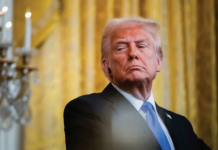
The numbers are stark. American tariffs on Indian goods now stand at 50%—one of the highest rates Washington has imposed on any trading partner. The journey to this point began with a 25% “reciprocal tariff” in April 2025, ostensibly to address India’s higher average tariffs. But in August, President Donald Trump doubled down, slapping an additional 25% penalty explicitly tied to India’s purchases of Russian oil. The move affects an estimated $48 billion worth of exports, representing more than half of India’s $87 billion annual trade with its largest market.
The sectors bearing the brunt read like a cross-section of India’s export-oriented manufacturing base. Textiles and garments, which account for 28% of India’s exports to America, face particular devastation. The gems and jewellery sector, which shipped $11.6 billion worth of products to the US in 2024, expects supply chains to unravel. Shrimp exporters, leather manufacturers, and chemical producers are all bracing for what the Global Trade Research Initiative calls “a strategic shock that threatens to wipe out India’s long-established presence in the US.”
Crucially, however, two major sectors have been spared. Pharmaceuticals and electronics—which together represent significant portions of India’s export portfolio—remain exempt from the additional tariffs. This carve-out reflects not American generosity but pragmatic necessity: India supplies nearly half of all generic drugs consumed in the United States, and any disruption would send healthcare costs soaring. When Trump announced 100% tariffs on branded pharmaceutical products in September, the exemption for generics was carefully preserved.
At the heart of this trade war lies a commodity: oil. Since Russia’s invasion of Ukraine in 2022, India has transformed itself into Moscow’s largest customer for seaborne crude, importing 1.7 million barrels per day in the first nine months of 2025—up from a mere 50,000 barrels daily in 2020. This represents roughly 35% of India’s total oil imports, making Russia the country’s top supplier.
The arithmetic is compelling. Indian sources claim the country saved between $10.5 billion and $13 billion in 2023 and 2024 combined by purchasing discounted Russian crude—though some estimates place this figure as high as $25 billion. For a nation of 1.4 billion people, where energy affordability directly impacts household budgets and industrial competitiveness, such savings carry political weight.
Yet the arrangement has become geopolitically toxic. US Treasury Secretary Scott Bessent has accused India of “profiteering,” claiming Indian refiners buy cheap Russian crude, process it into gasoline and diesel, and resell these products to European markets—the very nations that have sanctioned Moscow. “They’ve made $16 billion in excess profits,” Bessent claimed, adding pointedly that “some of the richest families in India” have benefited.
He did not name the Ambanis, but they are one of the biggest importers of Russian oil and exporters of POL to Europe through Netherlands after processing it at its Nyara refineries in Jamnagar in Gujarat.
The irony, noted by Bob McNally, a former advisor to President George W. Bush, is that India actually began purchasing Russian oil at the Biden administration’s behest. Washington needed India to absorb Russian crude to prevent global oil prices from spiking after Western sanctions took effect. Now, under Trump, that pragmatic arrangement has become a cudgel.
Recent weeks suggest the calculus may be shifting. Following fresh US and European sanctions targeting Russian oil producers Rosneft and Lukoil in October 2025, major Indian refiners—including Reliance Industries, the country’s largest private refiner—have announced plans to “reduce or completely halt” Russian imports. The move appears to be commercial prudence rather than political capitulation: the compliance risks of violating Western sanctions now outweigh the discounts on Russian crude.
If American tariffs and energy politics represent external pressures, Modi’s government has responded with an array of internal supports, particularly for the micro, small, and medium enterprises (MSMEs) that form the backbone of India’s economy. These firms contribute nearly 30% of GDP, employ over 110 million people, and account for 45% of exports. They are also disproportionately vulnerable to trade disruptions.
The government’s support mechanisms are extensive. The Credit Guarantee Fund Trust for Micro and Small Enterprises, recently doubled from Rs 5 crore to Rs 10 crore, promises to unlock Rs 1.5 lakh crore ($18 billion) in additional funding over five years. The Pradhan Mantri Mudra Yojana provides collateral-free loans up to Rs 10 lakh, while the Prime Minister’s Employment Generation Programme offers margin money subsidies on bank loans for new enterprises.
More targeted still are the Production-Linked Incentive schemes, which have channelled Rs 1.97 lakh crore ($24 billion) across 14 critical sectors including electronics, pharmaceuticals, and automotive manufacturing. By October 2024, these schemes had attracted Rs 1.47 lakh crore in investment, generated Rs 13 lakh crore in production, and created approximately 1 million jobs directly and indirectly.
The question is whether these measures constitute sensible industrial policy or expensive market distortions. India’s experience with import substitution in the Nehru era—which Modi’s Planning Commission abolition symbolically repudiated—suggests the dangers of insularity. Yet the Modi government insists its vision of “Atmanirbhar Bharat” is not autarky but strategic resilience: reducing dependence on single suppliers (particularly China for active pharmaceutical ingredients and electronic components) while remaining globally integrated.
Modi’s Independence Day speech in August 2025 crystallised this philosophy. Amid American tariff threats and Chinese supply chain restrictions, the Prime Minister called for self-reliance in semiconductors, defence jet engines, nuclear energy, electric vehicles, critical minerals, and biopharmaceuticals. “The world is witnessing a politics of economic selfishness,” Modi declared, vowing to “stand like a wall” protecting Indian farmers and small businesses.
This language of defiance resonates domestically but complicates diplomatic manoeuvring. The Modi government has carefully avoided retaliatory tariffs against America, preferring negotiation to confrontation. Indeed, reports suggest a potential trade deal could slash US tariffs to 15-16%, with India offering concessions on agricultural imports and gradually winding down Russian oil purchases. Yet the political space for such concessions has narrowed precisely because American pressure has empowered the nationalist voices Modi cultivated.
The broader reorientation of India’s trade strategy is already visible. Exports to the United States surged 23.5% in June 2025, suggesting Indian exporters are front-loading shipments before potential further tariff increases. Simultaneously, New Delhi is accelerating free trade agreements with the United Kingdom (finalised in May 2025, targeting $120 billion in bilateral trade by 2030) and deepening ties with the European Free Trade Association. The India-UK FTA alone eliminates tariffs on 99% of Indian exports to Britain.
Defence exports, virtually non-existent a decade ago, have surged 34-fold to Rs 23,622 crore in 2024-25. This reflects not merely economic diversification but geopolitical hedging: building relationships with nations from Southeast Asia to the Middle East while reducing dependence on any single partner.
Whether India’s economy can sustain 7% growth amid these crosscurrents remains an open question. The macro fundamentals appear sound: foreign exchange reserves stand at $694 billion, the fiscal deficit is on track for 4.4% of GDP, and sovereign credit ratings are improving. Three rating agencies have upgraded India recently, and Standard & Poor’s suggests the country could soon break into “A” status, further reducing borrowing costs.
Yet threats loom. The tariff impact could shave up to 0.5 percentage points off GDP growth, according to Nageswaran himself. The Global Trade Research Initiative projects Indian exports to America could plummet from $86.5 billion to $50 billion by 2026, endangering hundreds of thousands of jobs in labour-intensive sectors. The gems and jewellery sector alone braces for a 70% collapse in exports.
The outcome will likely depend on three factors: whether a US-India trade deal materialises (Trump has claimed progress, though details remain elusive); whether Indian manufacturers can successfully pivot to other markets; and whether domestic consumption can be stimulated sufficiently to offset export weakness. The recent GST reforms, which Nageswaran estimates will save households upward of Rs 1 lakh crore, represent one such stimulus attempt.
What is clear is that India’s economic trajectory—long predicated on deepening integration with Western markets—is being rewritten in real time. Modi’s bet is that India’s scale, its indispensability in global supply chains (particularly pharmaceuticals and IT services), and its strategic importance as a counterweight to China give New Delhi bargaining power. The risk is that in asserting sovereign independence, India finds itself strategically isolated, its exporters battered, and its growth ambitions curtailed.
For now, at least, the defiance continues. As Nageswaran put it, the economy is performing “as well as it can and better than what we feared.” In uncertain times, such qualified optimism may be the most that any economist can honestly offer. (IPA Service)